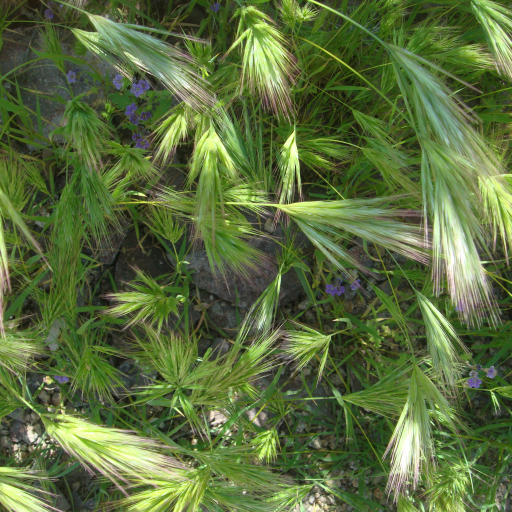
Plant Overview
Originally a traveler from the Mediterranean and North Africa, Bromus madritensis—commonly known as Madrid Brome or Compact Brome—has become a familiar, albeit controversial, sight across the globe. Often nicknamed "Foxtail Brome" due to its brush-like appearance, this annual grass is a master of survival in arid landscapes. While it can provide a soft, swaying texture to a field in early spring, it quickly transforms into a brittle, golden hitchhiker by early summer, seeking out socks and fur to spread its seeds.
🔍 How to Identify
- 🌾 The Seed Head: Look for a dense, upright, and "compact" panicle that resembles a small bottle brush. Unlike some of its relatives that droop, these clusters stay relatively stiff.
- 🎨 Changing Colors: In early spring, the plant is a vibrant green, but as it matures, the seed heads often take on a distinct purplish or reddish-brown hue before turning straw-colored.
- 🧶 Long Bristles: Each seed is equipped with a long, straight "awn" (a needle-like hair). These bristles are rough to the touch and are designed to latch onto passing animals or clothing.
- 🌱 Growth Habit: It typically grows in small tufts or bunches, reaching heights of 8 to 20 inches, depending on how much water it finds in the spring.
🏡 In Your Garden
- 🏜️ The Ultimate Survivor: This grass thrives in "disturbed" soil—think roadsides, empty lots, or the neglected corners of your garden. It doesn't need pampering; in fact, it loves hot, dry conditions that would wither most ornamental plants.
- 🔥 Fire Hazard Potential: Because it dries out so early in the season, Madrid Brome can become a "flash fuel." If it has taken over a large patch of your yard, it's best to clear it before the peak of summer heat to reduce fire risks.
- 🌾 Ecological Bully: In many regions, particularly the American Southwest, it is considered invasive. It grows so fast in early spring that it steals all the moisture and light before native wildflowers even have a chance to wake up.
⚠️ Safety & Toxicity
- 🐕 Physical Hazard: While not chemically toxic, this plant is a major "red flag" for pet owners. The sharp, barbed seeds (foxtails) can become lodged in a dog’s ears, nose, between toes, or even migrate under the skin, leading to serious infections.
- 🧦 Clothing Nuisance: The seeds are expertly evolved to pierce through socks and shoelaces. If you walk through a patch in late summer, be prepared to spend some time picking "hitchhikers" out of your gear.
✨ Fun Fact
The Madrid Brome is a "fire-follower" with a twist. While it is highly flammable, it has evolved to use fire to its advantage; its seeds can survive the heat better than many native plants, allowing it to be the first species to colonize and dominate a landscape immediately after a wildfire.

Detailed Care Instructions
To grow Bromus madritensis, also known as mediterranean brome or foxtail brome, follow these steps:
- Choose the right location: Select a sunny spot in your garden with well-draining soil. The plant can tolerate a variety of soil types, including sandy or loamy soils.
- Soil preparation: Prepare the soil by removing any weeds or grass. Loosen the soil to a depth of about 6 inches and mix in organic matter like compost to improve fertility and drainage.
- Sow the seeds: Bromus madritensis is typically grown from seed. Scatter the seeds evenly over the prepared soil, lightly pressing them into the soil surface. Keep in mind that the germination rate can be somewhat low, so you may want to sow more seeds than needed.
- Watering: Water the seeds immediately after sowing, ensuring the soil is evenly moist but not waterlogged. During germination and seedling stages, maintain consistent moisture by watering regularly.
- Care and maintenance: Once the plants start growing, they generally require minimal care. However, it's important to monitor the growth and provide adequate water during dry periods. Avoid overwatering, as this plant tolerates drought better than excessive moisture.
- Weed control: Monitor and remove any weeds that compete with the young Bromus madritensis plants for resources. Regular weeding is especially important during the early stages of growth.
- Harvesting seeds: If you want to harvest seeds from the bromus madritensis plant, allow the seed heads to fully mature and dry out on the plant. Once they have turned brown and are no longer green, cut the seed heads and place them in a paper bag to continue drying. Shake the bag periodically to release the seeds. Store the seeds in a cool, dry place for future plantings or share with others.
- Controlling spread: Some varieties of bromus madritensis can be invasive, spreading quickly and displacing native species. To prevent any unwanted spread, consider planting the species in containers or using other methods to contain its growth.
Remember to check with your local agricultural extension office or gardening experts for any specific recommendations or regulations regarding the cultivation of Bromus madritensis in your area.

Place in a bright room that is sun drenched almost all day. Or directly in a south-facing window.

The best way to water this particular plant is to ensure that the soil is moist but not too wet. This can be achieved by watering the plant deeply once a week during the growing season. It is important to avoid overwatering as this can lead to root rot and other diseases. It is also important to water the plant at the base, rather than from overhead, to prevent water from sitting on leaves and causing fungal infections. During periods of drought, it may be necessary to water more frequently, but always ensure that the soil has had a chance to dry slightly before watering again. Finally, it is important to use a well-draining soil mix for this plant to prevent waterlogging and promote healthy growth.
To fertilize this plant, apply a slow-release fertilizer that is balanced in nitrogen, phosphorus, and potassium. Apply the fertilizer at the base of the plant, being careful not to get any on the leaves or stems. Water the plant after fertilizing to help the nutrients reach the roots. Repeat every 4-6 weeks during the growing season, or as directed by the fertilizer packaging. Avoid over-fertilizing, as this can harm the plant and contribute to pollution of the surrounding environment.
Bromus Madritensis plant prefers a specific type of soil that is well-draining and has a slightly acidic pH level. It requires a soil that is rich in nutrients and organic matter, as this helps to promote healthy growth and development.
The ideal soil for Bromus Madritensis plant is composed of a mix of loam, sand, and silt. This type of soil allows for good water drainage and aeration, which means that the plant's roots have access to plenty of oxygen.
To achieve this type of soil, it is important to work in plenty of organic matter, such as compost. This helps to improve the soil's structure and nutrient content, which in turn helps the plant to grow strong and healthy.
It is also important to avoid soils that are too heavy or dense, as these can inhibit water drainage and air circulation around the plant's roots. Similarly, soils that are too alkaline can also be problematic, as they can interfere with the plant's ability to take up nutrients and minerals from the soil.
Overall, the key to growing Bromus Madritensis plant successfully is to provide it with a well-draining, nutrient-rich soil that is slightly acidic in pH. By doing so, you can help to ensure that the plant grows strong, healthy, and beautiful.
To propagate this plant, you will need to collect the seeds after they have matured and dried on the plant. These seeds can be stored in a cool, dry place until you are ready to plant them.
When planting, choose a location with well-draining soil and full sun exposure. Sow the seeds in the soil and cover lightly with a thin layer of soil. Water the soil well and keep it moist until the seeds germinate.
Once the seedlings have emerged, thin them out to provide adequate spacing for growth. As the plants mature, they may produce additional seeds, which can be harvested and used to continue growing the plant in new locations. Alternatively, you can also divide mature plants and transplant the divisions to new locations.
It is important to note that this plant can be invasive in some regions, so it is important to consider local regulations and recommended planting techniques before propagating.








