Plant Overview
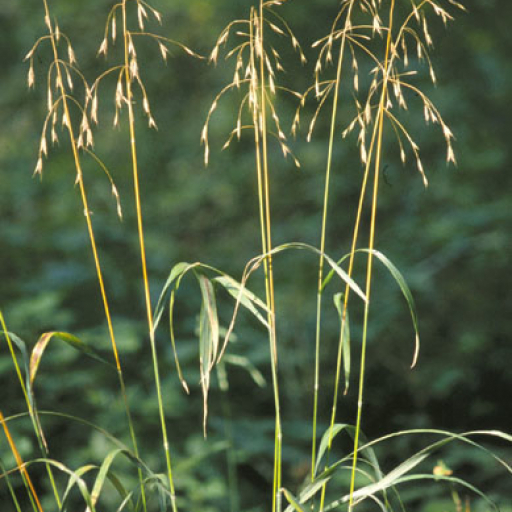
Often called the Hairy Woodland Brome or Hairy Wood Chess, this elegant perennial grass is a hidden gem of North American forests. Unlike many of its cousins that crave the blistering sun, this species thrives in the dappled light of ancient oaks and maples. It adds a touch of wild, swaying texture to woodland edges, looking much like a delicate, green chandelier hanging over the forest floor.
🔍 How to Identify
- 🌾 The "Nodding" Head: Look for its distinctive drooping panicles. The heavy seed heads cause the branches to arch gracefully toward the ground, giving the plant a relaxed, weeping appearance.
- 🧶 Fuzzy Stems: True to its name (pubescens), the lower leaf sheaths are covered in soft, fine white hairs. If you run your fingers along the base, it feels distinctly velvety.
- 🍃 Flat, Wide Blades: The leaves are notably flat and relatively wide for a wild grass, often reaching up to 12 inches in length with a rich, matte-green finish.
🏡 In Your Garden
- 🌳 Shade Specialist: This is a "problem solver" plant for tricky woodland gardens. It excels in dry shade where most traditional turf grasses would wither, making it perfect for under-planting beneath large deciduous trees.
- 🦋 A Butterfly Buffet: It serves as a vital host plant for several species of Skipper butterflies. By planting it, you aren't just adding greenery; you are providing a nursery for local pollinators.
- 🍂 Erosion Control: Because it is a clump-forming perennial with a sturdy root system, it is often used in restoration projects to help hold soil together on shaded slopes or forest edges.
⚠️ Safety & Toxicity
- ✅ Non-Toxic: Bromus pubescens is generally considered safe and non-toxic to humans, dogs, and cats. It lacks the sharp "foxtails" found in some other Bromus species that can get stuck in pet fur or ears.
- 🐜 Habitat Awareness: While the plant itself is safe, its preferred environment (tall, shaded grass) is also a favorite hangout for ticks. Always perform a "tick check" after gardening or walking through wood brome patches.
✨ Fun Fact
The common name "Chess" (shared by many Bromus species) actually comes from an old English word for "cheat." Early farmers believed these grasses were "cheating" them because they looked so much like valuable rye or wheat until they fully matured and revealed themselves as wild grasses!

Detailed Care Instructions
To grow Bromus pubescens, also known as hairy chess, follow these steps:
- Choose a suitable location: Bromus pubescens prefers full sun but can tolerate partial shade. Ensure the soil is well-draining to prevent waterlogging.
- Prepare the soil: Amend the soil with organic matter like compost or aged manure to improve its structure and fertility. This will help the plant establish a healthy root system.
- Planting method: You can either sow the seeds directly into the ground or start them indoors for later transplanting. If starting indoors, sow the seeds in pots or trays and keep them in a warm environment. Transplant the seedlings when they are around 4-6 inches tall or after the last frost date.
- Sowing seeds directly: If sowing the seeds directly, lightly rake the soil to create a smooth surface. Sprinkle the seeds over the prepared soil and press them gently into the ground to ensure good seed-to-soil contact.
- Watering: Keep the planting area consistently moist but not waterlogged during the germination phase. Once the plants are established, they can tolerate some drought but will perform better with regular watering.
- Maintenance: Keep the area around the plants weed-free to prevent competition. Mulching can help suppress weeds while conserving moisture. Additionally, consider fertilizing once or twice during the growing season with a balanced fertilizer.
- Wildlife considerations: Bromus pubescens is often grown to attract wildlife such as birds. If this is your goal, allow the grasses to grow to seed and provide natural forage for birds and other animals.
- Harvesting seeds (optional): If you want to collect seeds for propagation or wildlife feeding, harvest the seed heads when they turn brown and begin to release the seeds. Hang the seed heads upside down in a dry place until they are fully dry. Then, collect the seeds by gently rubbing the seed heads.
Remember to check for any local regulations or invasive species concerns associated with growing Bromus pubescens in your area before planting.

Place in a window with dappled sun or a spot in the middle of a room. Or directly in a window facing west or east.

Bromus Pubescens is a plant that requires adequate watering to grow and thrive. The best way to water this plant is to ensure that the soil is wet to a depth of at least 6 inches, which can be achieved by watering the plant deeply once a week.
It is important to avoid overwatering the Bromus Pubescens plant as this can lead to the development of root rot and other fungal diseases. To prevent overwatering, allow the top 1-2 inches of soil to dry out before watering again.
When watering this plant, it is best to use a watering can or hose with a gentle spray attachment to avoid damaging the delicate leaves and stems. It is also important to water the plant at the base rather than from above to prevent water from collecting in the leaf axils, which can lead to fungal growth.
Overall, the key to watering a Bromus Pubescens plant is to provide consistent moisture without saturating the soil. By following these tips, you can ensure that your Bromus Pubescens plant remains healthy and vibrant for years to come.
To fertilize this plant, apply a balanced granular fertilizer in the early spring or fall. Use a rate of 1 tablespoon per square foot. Water the plant well after fertilizing. Avoid applying fertilizer during hot and dry weather.
The recommended soil for this particular plant species should be well-drained and fertile. The soil should have good moisture retention capability, but avoid excessive water retention as that can lead to root rot. It is also ideal if the soil has a slightly acidic to neutral pH range, ideally between 6.0 to 7.0. Organic matter such as compost can be added to the soil to enrich it with nutrients and improve soil structure. It is important to ensure that the soil is not too compacted as this can limit root growth and nutrient uptake. Soil texture can vary, but it is generally recommended that the soil is loamy or sandy loam, as these textures allow for adequate drainage and water retention without becoming waterlogged. Finally, it is best to avoid soils that have a history of carrying diseases or pests that can impact the growth and health of the plant.
Bromus Pubescens can be propagated through its seeds. The best time to collect seeds is during the summer and early autumn, when the seed heads turn brown and start to dry out. Once the seed heads have fully dried, gently shake them over a container or paper bag to collect the seeds.
Prepare a potting mix with equal parts sand, compost, and perlite. Fill a shallow tray or pot with the potting mix, and sprinkle the seeds evenly over the surface. Press the seeds gently into the soil and cover them with a light layer of the potting mix. Keep them moist, but not waterlogged, and place them in a bright area with indirect light.
Once the seeds have germinated and are about 2-3 inches tall, gently separate them and transplant each seedling into individual small pots filled with fresh potting mix. Keep the soil moist and continue to provide them with indirect sunlight.
After about 4-6 weeks, the seedlings should be strong enough to be planted outdoors. Choose an area with well-draining soil and full sun, and space the plants about 12-18 inches apart. Water the newly planted seedlings thoroughly and keep them well-watered until they are established.








