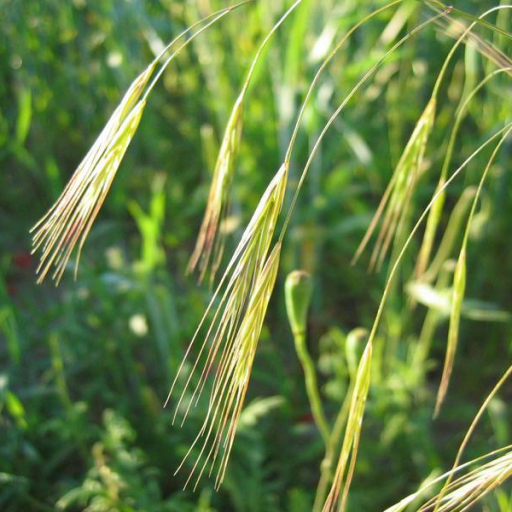
Plant Overview
Often found swaying along sun-drenched roadsides and garden edges, Bromus sterilis—better known as Barren Brome or Sterile Brome—is a graceful but opportunistic grass. While its delicate, drooping seed heads have an airy, romantic aesthetic, it is frequently labeled a "nuisance" plant due to its rapid spread and sharp seeds. In the wild, it acts as a pioneer species, quickly colonizing disturbed ground and paving the way for other vegetation.
🔍 How to Identify
- 🌾 Drooping Seed Heads: Unlike many upright grasses, the panicles (flower clusters) hang heavily to one side on long, slender stalks, giving the plant a "weeping" or fountain-like appearance.
- 🗡️ Long Awns: Each individual seed is tipped with a long, straight bristle called an "awn." These bristles give the seed head a jagged, bristly texture that is very rough to the touch.
- 🎨 Purple Flush: While it starts as a soft green, the entire plant often develops a distinct reddish-purple or burgundy tint as it matures and begins to dry out in mid-summer.
🏡 In Your Garden
- 🌱 The Opportunist: This grass thrives in "disturbed" soil. If you’ve recently tilled a bed or cleared a patch of land, don't be surprised to see Barren Brome moving in quickly to claim the empty space.
- ✂️ Management Strategy: Because it is an annual grass, it relies entirely on its seeds to survive the next year. If you want to keep it out of your lawn or borders, the trick is to pull it or mow it before those purple seed heads begin to shatter and drop.
⚠️ Safety & Toxicity
- 🐾 Physical Hazard: While the plant is not chemically toxic, it poses a physical risk to pets. The sharp, barbed awns act like "hitchhikers" and can become painfully lodged in a dog’s ears, nose, or between their paw pads.
- 🚫 Non-Poisonous: There are no known toxins in Bromus sterilis that would harm humans or animals if touched or accidentally nibbled, but the texture is generally too coarse to be palatable.
✨ Fun Fact
The name "Sterile Brome" is actually a bit of a historical joke! It was named "sterile" because early farmers noticed it didn't produce large, edible grains like wheat or rye. However, it is anything but sterile—a single plant can produce hundreds of seeds, ensuring its survival across almost every continent.

Detailed Care Instructions
To grow Bromus sterilis, also known as barren brome, follow these steps:
- Choose the right location: Bromus sterilis prefers full sun but can tolerate some shade. It can grow in a variety of soil types, but it thrives in well-draining soil.
- Prepare the soil: Before planting, prepare the soil by removing any weeds and loosening it with a garden fork or tiller. Add compost or organic matter to improve the soil's fertility and drainage.
- Sow the seeds: You can sow the seeds directly outdoors in early spring or fall. Scatter the seeds evenly over the prepared soil and lightly cover them with a thin layer of soil or compost. Alternatively, you can start the seeds indoors a few weeks before the last frost and transplant them outdoors when they are a few inches tall.
- Watering and care: Bromus sterilis is relatively drought-tolerant and doesn't require frequent watering. However, water the seeds or seedlings regularly to keep the soil moist until they are established. Once established, water the plants during dry spells.
- Weeding and mulching: Keep the area around the Bromus sterilis plants weed-free to prevent competition for nutrients and water. Apply a layer of mulch around the plants to help retain moisture and discourage weed growth.
- Pruning and maintenance: Bromus sterilis does not require pruning but you can cut back any dead or damaged stems to promote plant health and appearance.
- Harvesting and propagation: Bromus sterilis produces seed heads that can be left on the plants for visual interest or harvested for propagation. Wait until the seed heads turn golden brown, then cut them off and store them in a cool, dry place. Sow the seeds in the desired location or share them with other gardeners.
- Pest and disease control: Bromus sterilis is generally resistant to common pests and diseases. However, occasional grasshopper feeding or aphid infestations may occur. Monitor your plants regularly and take appropriate measures if pests become problematic.
By following these steps, you can successfully grow Bromus sterilis plants in your garden.

Place in a bright room that is sun drenched almost all day. Or directly in a south-facing window.

To properly water the plant of the genus Bromus Sterilis, it is important to consider the plant's specific moisture needs. This may vary depending on factors such as the soil type, temperature, and humidity of the environment.
When watering the plant, it is recommended to water it deeply but infrequently. This means allowing the soil to almost dry out completely before watering it again. Over-watering can cause root rot and other issues.
Ensure that the water is distributed evenly around the plant's root system. It is also important to avoid getting the foliage wet, as this can encourage fungal growth and disease.
Regularly check the soil's moisture level to ensure it is not too dry or too wet. Adjust watering frequency as necessary.
Overall, taking the time to understand the watering needs of the Bromus Sterilis plant will help it thrive and grow healthy.
To fertilize the Bromus sterilis plant, follow these instructions:
- Choose a balanced fertilizer with equal amounts of nitrogen (N), phosphorus (P), and potassium (K). Look for a slow-release granular form for best results.
- Apply the fertilizer in early spring, just as the plant starts to actively grow.
- Before applying the fertilizer, remove any weeds or debris around the plant to ensure the nutrients are absorbed by the intended plant only.
- Sprinkle the granules evenly around the base of the Bromus sterilis plant, taking care not to let the fertilizer touch the leaves or stems.
- Gently work the fertilizer into the top inch of soil using a garden fork or rake, being careful not to damage the plant's roots.
- Water the plant thoroughly after fertilizing to help the nutrients seep into the soil and reach the roots.
- Repeat the fertilizer application once or twice during the growing season, following the same procedure.
- Avoid over-fertilizing, as it can lead to excessive foliage growth and may reduce overall plant health.
- Monitor the plant's response to the fertilizer and adjust the application rate or frequency accordingly to maintain optimal growth and health.
Bromus Sterilis is a type of plant that requires well-draining soil with a neutral to slightly alkaline pH level. A soil mixture that consists of sand, loam, and organic matter such as compost or peat moss is suitable for this plant. It is also important to ensure that the soil is not compacted, as this can hinder root growth and nutrient uptake. Adding perlite or vermiculite to the soil mixture can help improve drainage and aeration. When planting Bromus Sterilis, it is recommended to mix in some fertilizer or bone meal to provide the plant with essential nutrients. Additionally, this type of plant thrives in full sun to partial shade, so it should be located in an area with ample sunlight.
Bromus sterilis is a perennial grass that can be propagated by both seed and vegetative means. Here is a detailed description of how to propagate this plant:
- Seed Propagation:
a. Collect mature seeds from the plant when they are fully ripe. The seeds are usually enclosed in spikelets, which are small clusters of flowers.
b. Spread the seeds out in a single layer on a clean paper towel or newspaper and let them dry for a few days. This helps remove any excess moisture from the seeds.
c. Prepare a seed tray or small pots with well-draining soil mixture. Bromus sterilis prefers sandy or loamy soil.
d. Sow the seeds directly on the soil surface and gently press them down.
e. Water the seeds lightly, ensuring the soil remains moist but not waterlogged.
f. Place the tray or pots in a warm and well-lit area but avoid direct sunlight.
g. The seeds should germinate within 2-3 weeks. Once the seedlings develop a few true leaves, they can be transplanted into larger containers or planted outdoors in a suitable location.
- Vegetative Propagation:
a. Locate an existing Bromus sterilis plant that you wish to propagate.
b. Choose a healthy and mature plant that has developed strong tillers or lateral shoots.
c. Dig around the plant to expose the roots gently. Carefully remove a section of the plant with a sharp knife or garden tool. Ensure that the section includes both roots and shoots.
d. Transplant the section into a prepared hole or container filled with well-draining soil mix. Plant it at the same depth it was growing originally.
e. Water the transplanted section thoroughly to settle the soil and promote root establishment.
f. Place the plant in a suitable location, providing adequate sunlight and water regularly until it becomes established.
Propagation of Bromus sterilis through either of these methods allows for the expansion of the plant's population, making it suitable for use in gardening, restoration projects, or for research and educational purposes.








