Plant Overview
Often called the Amethyst Flower or Bush Violet, Browallia speciosa is a tropical jewel from the Andes that brings rare, cool-toned colors to the darker corners of your garden. Unlike many flowering plants that crave the blazing sun, this elegant bloomer thrives in dappled light, glowing like a violet sapphire under the shade of taller trees. It is a favorite for those looking to add sophisticated pops of purple and blue to hanging baskets or shaded patios.
🔍 How to Identify
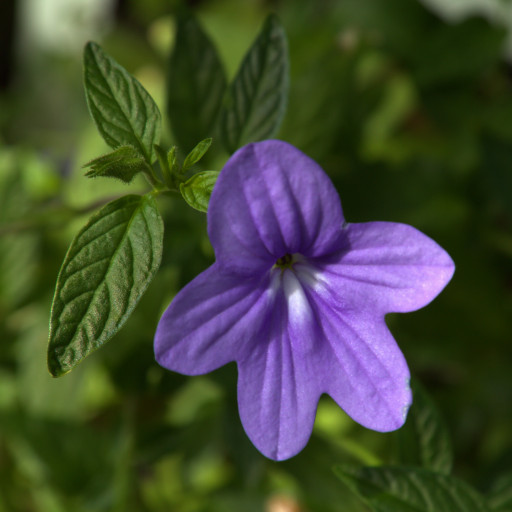
- 🌸 Velvety Blooms: The flowers are star-shaped with five distinct lobes, typically appearing in shades of deep amethyst, violet, or sky blue, often featuring a contrasting white "eye" at the center.
- 🍃 Lush Foliage: Its leaves are a rich, dark green, oval-shaped with pointed tips and prominent veins, providing a dense, bushy backdrop that makes the bright flowers "pop."
- 🌿 Compact Form: It maintains a neat, mounding growth habit, usually reaching about 12 to 18 inches in height, which gives it a tidy, professional look in containers.
🏡 In Your Garden
- ☁️ The Shade Specialist: This plant is a "diva" regarding heat; it much prefers cooler, shadier spots. If it gets too much direct afternoon sun, the delicate petals may wilt or scorch, so keep it in a place where it can enjoy filtered light.
- 💧 Thirsty Roots: Because it produces such a high volume of flowers, it has a fast metabolism. It hates "wet feet" (soggy soil), but it will quickly droop if the soil dries out completely. Consistent moisture and well-draining potting mix are its best friends.
⚠️ Safety & Toxicity
- 🚫 Toxic Status: As a member of the Solanaceae (Nightshade) family, all parts of the Browallia speciosa are considered toxic if ingested.
- 🐾 Pets and Kids: Keep this plant out of reach of curious nibblers. Ingestion can cause stomach upset, drooling, or vomiting in pets and small children. It is best treated as an ornamental "look but don't touch" plant.
✨ Fun Fact
The genus was named by Carolus Linnaeus after his friend (and later rival), Johannes Browallius, a Swedish bishop and botanist. Legend says their friendship soured so badly that Linnaeus named a different, weedier species Browallia alienata just to mock him!

Detailed Care Instructions
To grow Browallia Speciosa plants, also known as Bush Violet, follow these steps:
- Planting: Start by selecting a suitable location that receives partial shade to full sun. The soil should be well-draining and fertile. Sow the seeds directly into the soil or start seedlings indoor 8 to 10 weeks before the last frost. If using seeds, sprinkle them on the soil surface and cover lightly with a thin layer of soil.
- Watering: Keep the soil evenly moist but not waterlogged. Water the plants from the base to prevent fungal diseases. Avoid overhead watering as it can cause damage to the leaves and flowers.
- Mulching: Apply a layer of organic mulch around the plants to help retain moisture, suppress weed growth, and maintain an even soil temperature.
- Fertilization: Feed the plants with a balanced, water-soluble fertilizer every 2-4 weeks during the growing season. Follow the instructions on the fertilizer packaging for the correct dilution and application rate.
- Pruning: Pinch back the tips of the plants when they are about 6 inches tall to encourage branching and bushier growth. Deadhead spent flowers regularly to promote continuous blooming.
- Pests and diseases: Browallia plants are generally free from major pests and diseases. However, keep an eye out for aphids, mealybugs, and spider mites. Treat any infestations promptly using organic insecticides or by washing the leaves with a mild soap solution.
- Winter care: If you live in a region with frost, Browallia plants are usually grown as annuals, and they do not tolerate frost. However, you can try overwintering them by bringing potted plants indoors and providing them with bright light and cooler temperatures around 50-55°F (10-13°C). Reduce watering and fertilization during this period.
- Propagation: Browallia Speciosa plants can be propagated through stem cuttings. Take cuttings from healthy plants in spring or early summer, dip the cut ends in rooting hormone, and place them in well-draining potting soil. Keep the soil moist and provide indirect light until roots develop.
By following these guidelines, you should be able to successfully grow Browallia Speciosa plants and enjoy their beautiful blue, purple, or white flowers.

Place in a window with dappled sun or a spot in the middle of a room. Or directly in a window facing west or east.

To effectively water this plant, you should need to evaluate the plant's moisture level by dipping your finger into the top two inches of soil. If the soil is dry at that depth, water the plant as the soil needs to stay consistently moist. It is better to water deeply and infrequently rather than giving it a small amount of water regularly. Overwatering this plant can result in root rot and declining health. It's ideal to provide the plant water early in the day, allowing any moisture to evaporate before nighttime. It's important to avoid watering the plant's foliage, as wet leaves can encourage fungal growth. Lastly, this plant prefers warm soil, so avoid keeping the plant in a pot with a tray that holds standing water.
To fertilize the plant, one should use a balanced fertilizer that is high in phosphorus every two weeks during the growing season. This should be done during the watering process to ensure that the nutrients are evenly distributed throughout the soil. In addition, the soil should be kept moist but not excessively wet to avoid waterlogging.
Browallia Speciosa is a type of flowering plant that requires well-draining soil for optimal growth. The soil should be rich in organic matter, yet it should also allow excess water to drain away easily. This can be achieved by using a mixture of coarse sand, perlite, and peat moss, which will help to prevent soil compaction and encourage healthy root growth. Additionally, the soil should have a slightly acidic pH level, ranging from 5.5 to 7.0, to ensure that the plant can absorb nutrients and minerals from the soil. Before planting Browallia Speciosa, it is recommended to amend the soil with compost or other organic matter to improve its fertility and structure. Overall, using a well-draining, rich and slightly acidic soil mix will provide Browallia Speciosa with the optimal growing conditions it needs to thrive.
Propagation of this plant can be done using stem cuttings. Take cuttings of mature stems from the plant and remove any leaves from the bottom 2 inches of the stem. Dip the cut end in rooting hormone, and insert the stem into moist potting soil. Cover the pot with plastic and place it in a warm and bright location, but not in direct sunlight. Keep the soil moist and check for visible roots in a few weeks. Once roots have formed, remove the plastic and transfer the new plant to a larger pot or into the garden.
Common pests of the sapphire-flower include Spider mites, aphids, whiteflies, larvae. Make a habit of checking your sapphire-flower frequently for pests so that any infestations can be caught and managed early.








