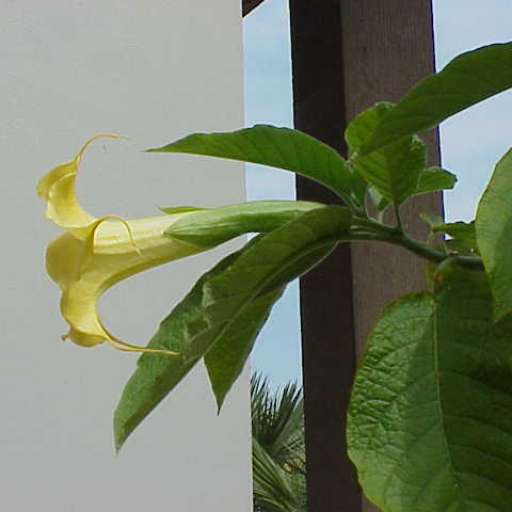
Plant Overview
Known as the "Golden Angel's Trumpet," this breathtaking shrub is famous for its oversized, pendulous flowers that look like heavenly instruments hanging from the sky. Native to the high-altitude Andes of South America, it has been cherished for centuries in traditional medicine and ritual. While it is a showstopper in any landscape, it carries a mysterious duality: its beauty is matched only by its potency and historical reputation as a "witch’s herb."
🔍 How to Identify
- 🎺 The Trumpets: Large, pendulous flowers that can reach up to 10 inches in length. They range from pale lemon to a deep, rich golden yellow.
- 🍃 Fuzzy Foliage: Unlike some of its cousins, Brugmansia aurea often features soft, velvety leaves that are oblong and can grow quite large, providing a lush green backdrop.
- 🌳 Growth Habit: It grows as a woody shrub or small tree, often reaching 10 to 20 feet in height, with a spreading canopy that creates a natural floral umbrella.
🏡 In Your Garden
- 🍽️ A Heavy Feeder: Think of this plant as a hungry teenager. Because it produces such massive blooms, it requires frequent fertilizing during the growing season to keep the "trumpets" coming.
- 🌙 Nighttime Magic: The flowers are relatively scentless during the day but release an intoxicating, sweet fragrance at dusk. This is a strategic move to attract sphinx moths, its primary natural pollinators.
- ❄️ Frost Sensitivity: This is a tropical soul. It hates the cold and will drop its leaves or die back to the roots if temperatures dip near freezing. In cooler climates, it is best grown in large pots that can be moved indoors for winter.
⚠️ Safety & Toxicity
- 🚫 High Toxicity: EXTREMELY DANGEROUS. All parts of the plant—the seeds, flowers, and leaves—contain potent tropane alkaloids (scopolamine and atropine).
- 🐾 Pets & Children: Ingestion can cause vivid hallucinations, paralysis, and in severe cases, can be fatal. It is vital to plant it away from play areas and keep curious pets at a distance. Even handling the plant without gloves can occasionally cause skin irritation or eye dilation if you touch your face afterward.
✨ Fun Fact
Believe it or not, Brugmansia aurea is technically classified as "Extinct in the Wild" by the IUCN. While you can find it in gardens across the globe, it no longer exists in its original wild habitat, meaning its entire survival as a species now depends entirely on the humans who cultivate it.

Detailed Care Instructions
To grow Brugmansia Aurea, also known as golden angel's trumpet, you can follow these steps:
- Choose the right location: Brugmansia Aurea prefers full sun to partial shade, so select a spot in your garden that receives at least 6 hours of direct sunlight per day.
- Prepare the soil: The plant prefers rich, well-draining soil with a pH level between 6.0 and 7.5. If your soil is heavy or clayey, amend it with organic matter, such as compost or well-rotted manure, to improve drainage and fertility.
- Planting: Dig a hole that is slightly larger than the nursery container or root ball of the Brugmansia Aurea. Place the plant in the hole, ensuring that the top of the root ball is level with the soil surface. Backfill the hole with soil, gently firming it around the plant.
- Watering: Brugmansia Aurea requires regular watering, especially during hot and dry periods. Keep the soil consistently moist, but avoid waterlogged conditions. Water deeply, allowing the water to reach the roots. Mulching around the plant can help retain moisture in the soil.
- Fertilizing: This plant is a heavy feeder, so apply a balanced, slow-release fertilizer every six to eight weeks during the growing season. Additionally, you can supplement with liquid fertilizer every two weeks for faster growth and more abundant blooms.
- Pruning: Prune Brugmansia Aurea regularly to maintain its shape and encourage bushier growth. Pruning also helps prevent overcrowding and increases airflow, reducing the risk of diseases. Remove any dead, damaged, or diseased branches as needed.
- Pests and diseases: Watch out for common pests like aphids, whiteflies, and spider mites, which can infest Brugmansia plants. Regularly inspect your plant and treat any infestations promptly with insecticidal soap or neem oil. Keep an eye out for fungal diseases such as powdery mildew, and treat with a suitable fungicide if necessary.
- Winter care: Brugmansia Aurea is not frost-tolerant, so if you live in a colder climate, you'll need to overwinter it indoors. Before the first frost, cut the plant back to about six inches above the soil level. Move the plant to a cool, dark location, such as a basement or garage, where temperatures stay above freezing. Water sparingly during winter dormancy.
By following these guidelines and providing proper care, you can successfully grow Brugmansia Aurea and enjoy its stunning golden blooms.

Place in a window with dappled sun or a spot in the middle of a room. Or directly in a window facing west or east.

Brugmansia Aurea is a tropical plant that requires regular watering to thrive. To water the plant, begin by checking the soil moisture level. Insert your finger into the soil up to the second knuckle to determine if it feels dry. If it does, it's time to water the plant.
Brugmansia Aurea should be watered deeply, but it should not be allowed to sit in water for too long, as this can cause root rot. To water the plant, thoroughly soak the soil around the roots until water runs out of the drainage holes. Allow the excess water to drain away and remove any standing water from the saucer.
During dry spells or hot weather, Brugmansia Aurea may require more frequent watering. However, it is important not to overwater the plant, as this can also cause root rot. Always check the soil moisture level before watering and adjust your watering schedule accordingly.
In addition to watering, Brugmansia Aurea also benefits from regular fertilization and pruning to promote healthy growth and blooming.
To fertilize this plant, you should use a balanced fertilizer with equal parts nitrogen, phosphorous, and potassium. Apply the fertilizer every two to three weeks during the growing season. Be sure to follow the manufacturer's instructions for the proper application rate and method. Avoid fertilizing during the plant's dormant period. Water the plant thoroughly before and after fertilizing to prevent fertilizer burn.
The ideal soil mixture for this plant should be a well-draining mix that is rich in nutrients. It is best to use a combination of peat moss, perlite, and vermiculite to create a loose and airy mixture. The soil should have a pH between 5.5- 6.5, slightly acidic to slightly neutral. It is also recommended to add some organic matter like compost or aged manure to provide additional nutrients but not too much as it can cause root burn. The soil should be kept moist but not waterlogged, as the plant prefers moist conditions, and too much water can lead to root rot. The soil should also be fertilized regularly during the growing season with a balanced fertilizer with a nitrogen-potassium-phosphorus ratio of 10-10-10. Overall, the soil for this plant should provide the right balance of nutrients, moisture, and drainage to ensure a healthy and thriving plant.
To propagate this plant, you will need a healthy and mature Mother Plant that has developed strong and healthy stems. You will also need to gather clean and sharp cutting tools such as pruning shears.
- Identify the stem from where you want to take the cutting. It should be a healthy, mature stem, around 6-8 inches in length.
- Clean your cutting tool and disinfect it by wiping it with alcohol or a solution of water and bleach.
- Cut the selected stem at a 45-degree angle, making sure to make a clean cut without causing any injury or damage to the Mother Plant.
- Remove any leaves or branches from the lower half of the cutting, leaving only a few leaves at the top.
- Dip the bottom end of the cutting into rooting hormone powder to stimulate root growth.
- Place the cutting into a pot or container filled with well-draining soil. You can also use a mixture of perlite and peat moss.
- Water the cutting well and cover it with a clear plastic bag or wrap to create a mini greenhouse. This will help retain moisture and humidity around the cutting, promoting root growth.
- Place the container in a warm, brightly-lit spot, but out of direct sunlight. Ideal temperatures for rooting are between 65-75°F.
- Check the cutting regularly and keep the soil moist but not soggy. After a few weeks, you should notice new growth and roots starting to emerge.
- Once the new plant has established strong roots, you can transplant it into its permanent location in the garden or into a larger pot.
Common pests of the golden angel's trumpet include Scale insect, mealybugs, spider mites, aphids, thrips. Make a habit of checking your golden angel's trumpet frequently for pests so that any infestations can be caught and managed early.








