Plant Overview
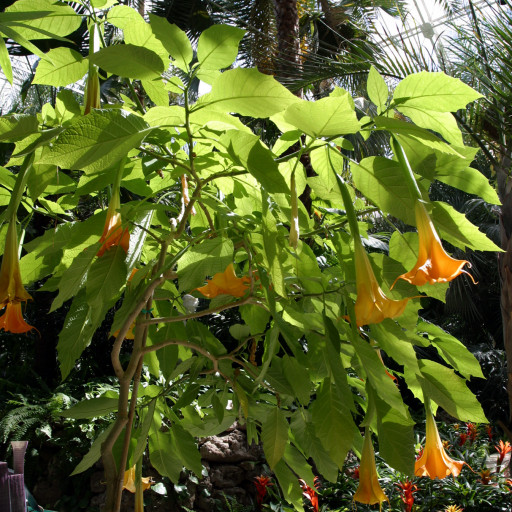
Known as the Angel’s Trumpet, Brugmansia is one of the most dramatic spectacles in the botanical world. Native to the tropical regions of South America, these woody shrubs are famous for their oversized, pendulous flowers that release a sweet, intoxicating perfume at night to attract pollinating moths. Though they look heavenly, they carry a dark, mysterious reputation in both folklore and ancient medicine.
🔍 How to Identify
- 🎺 The Flowers: Massive, pendulous (hanging) trumpet-shaped blooms that can reach up to 20 inches in length. Unlike their cousin Datura, these flowers always point downward.
- 🍃 The Foliage: Large, ovate, and often slightly fuzzy leaves that provide a lush, tropical backdrop for the blooms.
- 🌳 Growth Habit: These are not small garden flowers; they grow as woody shrubs or small trees, reaching heights of 10–20 feet in ideal conditions.
🏡 In Your Garden
- 🍽️ Hungry Giants: Brugmansia are heavy feeders. To keep those massive trumpets appearing all summer, they require high-quality fertilizer more frequently than most garden plants.
- 💧 Water Management: Because of their large leaf surface area, they lose moisture rapidly. They need consistent watering but "hate wet feet," so well-draining soil is a non-negotiable requirement to prevent root rot.
- ❄️ Winter Protection: These are tropical royalty and cannot survive a hard frost. Gardeners in cooler climates often grow them in large pots to move them into a basement or greenhouse for winter dormancy.
⚠️ Safety & Toxicity
- 🚫 High Toxicity: Every single part of the Brugmansia—leaves, seeds, and flowers—is highly toxic if ingested. It contains potent tropane alkaloids like scopolamine and atropine.
- 🐾 Pets & Kids: Ingestion can lead to severe hallucinations, paralysis, and even death. Always plant them in a location where curious pets or small children cannot reach the falling flowers or seeds.
- 🧤 Handling Care: It is recommended to wear gloves when pruning, as the sap can cause skin irritation or accidentally dilate your pupils if you touch your eyes.
✨ Fun Fact
- ✨ Extinct in the Wild: Despite being common in gardens worldwide, all seven species of Brugmansia are officially classified as "Extinct in the Wild" by the IUCN. They survive today solely because humans have continued to cultivate and pass them along for centuries!

Detailed Care Instructions
Brugmansia is relatively easy to care for. They require regular watering and fertilizer and are not too fussy about much else.
How fast does a Brugmansia grow?
Brugmansia is a fast-growing plant, often adding 2 to 3 feet per year.
How long can Brugmansia live?
Brugmansia is a long-lived plant; it can live for decades with proper care.
What is the meaning behind a Brugmansia?
Brugmansia gets its name from Dutch botanist and physician Sebald Justinus Brugmans. The plant was used in tribal Andean culture for its curative and psychotropic effects. In some circles, it symbolizes a new beginning; in others, it represents danger.
| Humidity | High |
| Difficulty | Easy |
| Temperature | 30°C - 40°C |
| Hardiness Zones | 10 - 11 |
To successfully grow a Brugmansia plant, also known as Angel's Trumpet, follow these steps:
- Choose the right location: Brugmansia plants prefer full sun to partial shade. They need at least 6-8 hours of direct sunlight daily. Select a location that is protected from strong winds.
- Prepare the soil: Brugmansia plants thrive in rich, well-draining soil. They prefer a slightly acidic soil with a pH ranging from 6.0 to 6.5. Amend the soil with compost or well-rotted manure to improve nutrient content and drainage.
- Planting: Dig a hole that is slightly larger than the root ball of the Brugmansia plant. Place the plant in the hole, ensuring that the top of the root ball is level with or slightly above the ground. Fill the hole with soil, gently firming it around the plant.
- Watering: Brugmansia plants require regular watering, especially during dry periods. Keep the soil consistently moist but not waterlogged. Water deeply once or twice a week, allowing the top few inches of soil to dry out slightly between waterings.
- Fertilizing: Feed Brugmansia plants with a balanced, slow-release fertilizer or a water-soluble fertilizer formulated for flowering plants. Apply the fertilizer according to the manufacturer's instructions. Repeat every 4-6 weeks during the growing season.
- Pruning: Brugmansia plants benefit from regular pruning to maintain shape and promote bushier growth. Prune back any dead, damaged, or diseased branches. You can also trim to shape the plant and encourage branching.
- Overwintering: In cooler climates, Brugmansia plants may not survive frost. Before the first frost, cut back the plant to about 12-18 inches from the ground. Insulate the base of the plant with mulch or straw, and cover it with a loose-fitting frost cloth or burlap. Move potted Brugmansia plants indoors to a frost-free area and reduce watering.
- Pests and diseases: Brugmansia plants are susceptible to aphids, spider mites, and whiteflies. Regularly inspect your plants for any signs of pests or diseases and take appropriate action, such as using insecticidal soap or natural remedies like neem oil.
Remember, Brugmansia plants contain toxic compounds and should be kept away from children and pets. Follow proper safety precautions while handling and gardening with these plants.

Place in a window with dappled sun or a spot in the middle of a room. Or directly in a window facing west or east.

To water this particular plant, it is important to keep the soil consistently moist. This means watering it regularly, but making sure not to over-water and cause root rot. One way to check if the plant needs water is to stick your finger about an inch into the soil - if it feels dry, it's time to water. It's also important to water at the base of the plant and avoid getting the leaves wet, which can lead to fungal disease. During periods of growth or hot weather, the plant may need more water than usual. Additionally, adding mulch around the base of the plant can help retain moisture in the soil.
To fertilize this plant, use a balanced fertilizer with an NPK ratio of 20-20-20. Dissolve the fertilizer in water according to the package instructions and apply it to the soil once a month during the growing season (spring and summer). Be careful not to apply too much fertilizer, as excessive amounts can damage the plant. Additionally, make sure to water the plant thoroughly before and after fertilizing to prevent fertilizer burn. Happy gardening!
The ideal soil for a Brugmansia plant should be well-draining, rich in organic matter, and slightly acidic. A soil with a pH between 5.5 and 6.5 is optimal. In general, a mix of peat moss, perlite, and composted bark is a good choice. It is important to avoid using heavy clay soils or soils that are too sandy, as they can adversely affect the growth and health of the plant. Additionally, it is recommended to amend the soil with an all-purpose fertilizer to provide the necessary nutrients for the Brugmansia plant to thrive.
To propagate this plant, first, select a healthy branch with a minimum of two nodes. Cut the branch at a 45-degree angle and apply rooting hormone to the cut end. Fill a pot with well-draining soil, and insert the cutting into the soil, with the cutting's lower node placed into the soil. Water the plant, and cover it with a clear plastic bag to retain moisture. Place it in a bright area where it receives indirect sunlight. After a few weeks, signs of root growth should be visible, and the plastic bag can be removed. Once the plant is well-established, it can be repotted into a bigger pot or planted into the garden.







