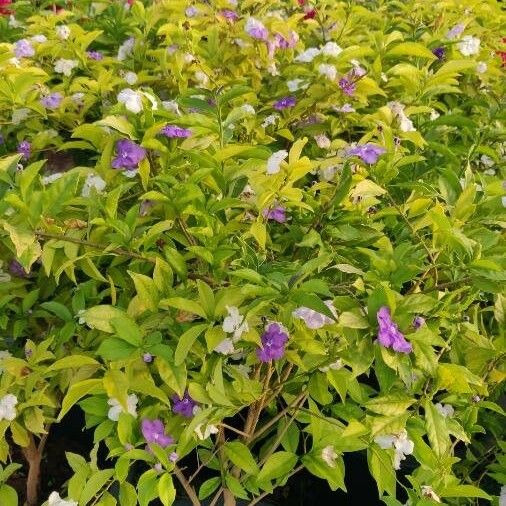
Plant Overview
Known as the botanical "mood ring," Brunfelsia uniflora is most famously nicknamed Yesterday-Today-and-Tomorrow. This name refers to the plant’s magical ability to change its flower colors over a three-day cycle, moving from deep violet to pale lavender and finally fading to pure white. In its native Brazil, it is beloved as the Manacá, a plant steeped in folklore and traditional medicinal history.
🔍 How to Identify
- 🌸 The Color Shift: Look for a shrub where three distinct colors of flowers appear simultaneously. The newest blooms are purple, day-old flowers are lavender, and the oldest are white.
- 🍃 Lush Foliage: The leaves are dark green, leathery, and oblong. They provide a dense, evergreen backdrop that makes the pale flowers pop.
- 👃 Intoxicating Scent: This plant is a sensory powerhouse; the flowers emit a sweet, heavy fragrance that becomes particularly intense during the evening hours.
🏡 In Your Garden
- 🌱 Soil Sensitivity: Unlike many hardy shrubs, the Manacá is a "heavy feeder" that craves acidic, well-draining soil. If the leaves start turning yellow, it’s often a sign that the soil pH is too high (alkaline).
- 🌤️ Dappled Light: While it loves the sun, it prefers "bright shade" or morning sun with afternoon protection. Too much harsh, direct sunlight can scorch the delicate petals and cause the colors to fade prematurely.
- 💧 Thirsty Roots: It dislikes drying out completely. However, it’s sensitive to "wet feet," so the goal is to keep the soil consistently moist, like a wrung-out sponge.
⚠️ Safety & Toxicity
- 🚫 High Toxicity: Every part of the Brunfelsia—from the roots to the berries—is toxic if ingested. It contains alkaloids similar to those found in deadly nightshade.
- 🐾 Pet Warning: This plant is especially dangerous for dogs. The berries can cause tremors, seizures, and vomiting. If you have a "curious chewer" at home, it is best to plant this in an area they cannot access.
- 👶 Child Safety: Keep away from toddlers, as the berries can look tempting but are highly purgative and neurotoxic.
✨ Fun Fact
In Brazilian Tupi-Guarani culture, the name "Manacá" refers to the most beautiful girl in the tribe. Legend says the plant’s flowers are her changing dresses as she moves through the different stages of her life.

Detailed Care Instructions
To grow Brunfelsia uniflora plant, also known as the Brazilian Raintree or Yesterday-Today-and-Tomorrow plant, you can follow these steps:
- Climate: Ensure that you live in a suitable climate for the plant. Brunfelsia uniflora thrives in warm, tropical or subtropical climates.
- Light: Choose a location that receives full to partial sunlight. The plant needs at least four to six hours of direct sunlight per day.
- Soil: Plant your Brunfelsia uniflora in well-draining soil rich in organic matter. Aim for a slightly acidic soil pH ranging from 5.5 to 6.5.
- Watering: Keep the soil consistently moist but not waterlogged. Water the plant deeply whenever the top inch of soil feels dry to the touch.
- Fertilizer: Apply a balanced, slow-release fertilizer in spring and mid-summer. Follow the package instructions for the correct dosage. Avoid excessive fertilization, as it can negatively impact the plant.
- Pruning: Prune Brunfelsia uniflora to maintain its desired shape and size. Remove dead or damaged branches, as well as any thin or weak growth to encourage a strong structure.
- Mulching: Apply a layer of organic mulch around the base of the plant to conserve moisture, suppress weeds, and improve soil health.
- Protection from frost: If you live in an area prone to frost, protect the plant during cold winter months by covering it or moving it into a greenhouse or protected area.
- Propagation: Brunfelsia uniflora can be propagated through stem cuttings. Take 4-6 inch stem cuttings from a healthy parent plant, remove the lower leaves, and plant them in a well-draining medium. Keep the cuttings moist and provide them with indirect light until they root.
- Pest and disease control: Monitor the plant for common pests such as aphids, whiteflies, and spider mites. Treat any infestations promptly with organic insecticidal soaps or horticultural oils. Ensure good airflow around the plant to prevent fungal diseases.
With proper care and attention, your Brunfelsia uniflora plant should grow and thrive, providing you with beautiful blooms in shades of purple, lavender, and white.

Place in a bright room that is sun drenched almost all day. Or directly in a south-facing window.

The plant should be watered moderately, allowing the soil to dry slightly between watering. When watering, avoid getting water on the leaves of the plant as this can lead to fungus growth. The amount of water needed may vary depending on the location and environmental conditions of the plant. It is recommended to regularly check the soil moisture level before watering to prevent over or under-watering. The plant should also be placed in a well-draining pot to prevent water from pooling at the bottom and causing root rot.
To properly fertilize this plant, use a balanced fertilizer with equal amounts of nitrogen, phosphorus, and potassium. Apply the fertilizer once a month during the growing season, which is typically in the spring and summer months. Be sure to water the plant well before and after fertilizing to prevent burning the roots. Avoid over-fertilizing, as this can lead to foliage burn and weakened growth.
Brunfelsia uniflora prefers a well-drained, fertile soil that is slightly acidic in nature, with a pH range of 5.5-6.5. The soil should be rich in organic matter and have good water-holding capacity without becoming waterlogged. Sandy loam soil with good drainage is ideal for this plant. The addition of peat moss, compost or leaf mould can improve soil quality. Avoid using heavy clay soil that is prone to waterlogging, as it can cause root rot and other diseases. When planting Brunfelsia uniflora, it is important to amend the soil to make it suitable for the plant's specific needs. Regular fertilization with a balanced fertilizer is also beneficial to ensure optimal growth and flowering of the plant.
Propagation of this plant can be done through various methods such as seed propagation, cutting propagation, and layering propagation. The most common and reliable method is through stem cuttings. Select a healthy, non-flowering stem and cut it at a 45-degree angle, making sure the stem is at least 10cm long. Remove the leaves from the bottom half of the stem and dip the cut end in rooting hormone powder. Then, plant the stem in a well-draining potting mix and water it thoroughly. Cover the pot with a plastic bag to create a greenhouse effect and place it in a warm, bright spot.
Keep the soil moist and mist the plant regularly. After a few weeks, you should see some new growth, which is a sign that the cutting has rooted. Once the roots have established, you can remove the plastic bag and transplant the new plant into a bigger pot with regular potting soil. Keep the pot in a bright, but not direct, sunlight and water it regularly.
Propagation through layering is also possible, but it takes a longer time to establish roots. To do this method, select a low-growing branch on the plant and scratch the bark where it touches the soil. Then, bury the scratched area in soil and wait for the roots to develop. Once the roots have established, you can cut the branch from the main plant and transplant it into its own pot.








