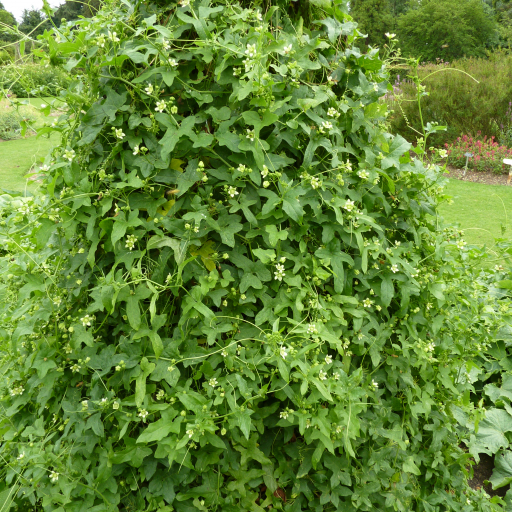
Plant Overview
Commonly known as the "English Mandrake" or "False Mandrake," White Bryony is a vigorous climbing vine native to Europe and North Africa. In the past, its massive, man-shaped roots were often sold as a substitute for the legendary Mandrake plant to ward off evil spirits. While it looks delicate with its lace-like tendrils, it is a hardy survivor often found scrambling over hedgerows and through garden fences.
🔍 How to Identify
- 🍃 The Leaves: Look for five-lobed, palm-shaped leaves that feel rough to the touch, similar to sandpaper. They are a dull green and look slightly like ivy but are much thinner and more textured.
- 🌸 The Flowers: It produces small, star-shaped flowers that are a subtle greenish-white with delicate veins. Because it is "dioecious" (meaning male and female flowers grow on separate plants), you may see different clusters depending on the individual vine.
- 🍒 The Berries: In late summer and autumn, female plants produce clusters of small, pea-sized berries. They start green and ripen into a brilliant, translucent red that can look deceptively like currants.
- 🌀 The Tendrils: The plant navigates its environment using tightly coiled, spring-like tendrils that allow it to "climb" several meters in a single season.
🏡 In Your Garden
- 🌱 Growth Habit: White Bryony is an opportunistic climber. It loves the dappled shade of a hedge or the base of a sturdy shrub. If it finds its way into your garden, it will use other plants as a ladder to reach the sunlight.
- 🪵 The Taperoot: This plant develops a massive, yellowish-white tuberous root deep underground. If you wish to remove it, you must dig deep; the plant can regenerate from even a small piece of the root left in the soil.
- 🦋 Wildlife Value: While it can be a nuisance to gardeners, it is the exclusive food source for the Bryony Bee (Andrena florea), a specialist pollinator that ignores almost all other flowers.
⚠️ Safety & Toxicity
- 🚫 High Toxicity: Every part of Bryonia dioica is poisonous if ingested, especially the berries and the large root. It contains the toxin bryonin, which causes severe gastrointestinal distress.
- 🐾 Pets and Kids: The bright red berries are the biggest risk for children and pets who might mistake them for edible fruit. Ingesting just a few berries can cause vomiting, abdominal pain, and in severe cases, more serious cardiac issues.
- 🧤 Skin Irritation: The sap can be an irritant. It is highly recommended to wear gloves when pruning or digging up this plant to avoid "Bryony dermatitis" or itchy skin rashes.
✨ Fun Fact
In medieval times, unscrupulous herbalists would carve the large roots of White Bryony into human shapes, insert millet seeds into the "head" to mimic hair, and bury them. Once the seeds sprouted, they would dig them up and sell them as "living" Mandrake roots for high prices!

Detailed Care Instructions
| Humidity | Normal |
| Lighting | Part Sun |
| Toxicity | Poisonous |
| Difficulty | Medium |
| Hibernation | Cold Period |
| Hardiness Zones | 5 - 9 |
To grow Bryonia dioica, also known as red bryony or wild hops, you can follow these steps:
- Choose a suitable location: Bryonia dioica prefers full sun or partial shade. Find a spot in your garden that receives at least 4-6 hours of direct sunlight daily.
- Prepare the soil: The plant prefers well-draining, fertile soil. Amend the soil with organic matter, such as compost or well-rotted manure, to improve its fertility and drainage.
- Planting: Sow the seeds directly into the garden soil in early spring or late autumn. Make sure the soil temperature is consistently above 50°F (10°C) for successful germination. Space the seeds 6-12 inches apart and plant them 0.25-0.5 inches deep.
- Watering: Keep the soil moist but not waterlogged. Water regularly, especially during dry periods, to ensure the plants have adequate moisture.
- Support: As Bryonia dioica is a climbing plant, provide a trellis, fence, or other support structure for it to climb. This will help the plant grow vertically and prevent it from sprawling on the ground.
- Mulching: Apply a layer of organic mulch, such as straw or wood chips, around the base of the plants. Mulching helps conserve moisture, suppresses weed growth, and regulates soil temperature.
- Pruning: Regularly prune the plant to control its growth and maintain its shape. Remove any damaged or dead vines and trim back excessive growth to keep the plant tidy.
- Pests and diseases: Watch out for common pests like aphids and spider mites. Regularly inspect the plant for any signs of pests or diseases. If necessary, treat the affected areas with organic insecticides or other appropriate measures.
- Harvesting: B. dioica produces small, red berries in the autumn. Harvest the berries when they are fully ripe and avoid consuming any unripe or green berries, as they are toxic.
Remember that Bryonia dioica is a climbing plant, so ensure it has ample space to grow vertically and provide the necessary support structure to guide its growth.

Place in a bright room that is sun drenched almost all day. Or directly in a south-facing window.

To water the Bryonia Dioica plant, you will need to follow a specific watering technique. Begin by filling a watering can or container with room temperature water. Ensure that the container has a narrow spout or a fine sprinkler head to provide a gentle and precise water flow.
Position yourself next to the plant and direct the water at the base of the plant, near the soil surface. Carefully pour the water onto the soil, avoiding wetting the leaves or stems excessively. It is important not to create a large puddle or pool of water around the plant as excess moisture can lead to root rot or other fungal diseases.
Slowly pour the water onto the soil, allowing it to gradually soak in and reach the plant's root system. Ensure that the water reaches the depth of the roots, which usually requires watering deeply and thoroughly. Larger Bryonia Dioica plants may have deeper roots, so adjust the duration and amount of water accordingly. The goal is to moisten the soil evenly around the plant's root system.
Monitor the moisture levels of the soil regularly. Before each watering session, check if the top inch or two of soil is dry. If it feels moist, it is likely unnecessary to water the plant just yet. However, if the soil feels dry, it is an indicator that the plant requires watering. Additionally, observe the appearance of the plant and look for signs of drooping or wilting leaves, which can suggest a need for water.
Remember that the watering frequency will depend on factors such as the size of the pot or the surrounding environmental conditions. It is essential to strike a balance between providing enough moisture to keep the plant hydrated without causing waterlogged soil. Regular observation and adjustment will help you ensure optimal watering practices for Bryonia Dioica plants to thrive.
- Start fertilizing Bryonia Dioica plant during the early spring season, once the plant has started actively growing.
- Use a balanced, water-soluble fertilizer designed for flowering plants. Dilute the fertilizer according to the instructions on the package.
- Water the soil around the plant thoroughly before applying the fertilizer.
- Apply the diluted fertilizer evenly to the soil around the base of the plant. Avoid direct contact with the foliage to prevent potential burn.
- Repeat the fertilization process every 4-6 weeks throughout the growing season, but do not exceed the recommended dosage.
- In late summer or early fall, reduce or stop fertilizing as the plant naturally prepares for winter dormancy.
- Monitor the plant's growth and adjust the fertilization frequency or dosage if necessary. Avoid over-fertilization, as it can lead to poor plant health or damage.
- Additionally, consider adding organic matter to the soil, such as compost or well-rotted manure, to provide additional nutrients and improve soil quality.
- Regularly water the plant to keep the soil moist but not soggy, as proper hydration supports nutrient uptake. Adjust watering frequency based on specific environmental conditions and plant needs.
- Observe the plant for any signs of nutrient deficiencies or excesses, such as yellowing leaves or stunted growth, and make appropriate adjustments to the fertilization routine.
Bryonia dioica is a perennial plant that has specific soil requirements to thrive and grow. It is important to choose the right type of soil to provide optimal conditions for this plant. Here are some details about the recommended soil for Bryonia dioica:
- Well-drained soil: Bryonia dioica prefers well-draining soil that allows excess water to escape and prevents waterlogging. This helps to prevent the roots from being waterlogged, which can lead to root rot and other issues.
- Loamy soil texture: Loamy soil is a mix of sand, silt, and clay particles, resulting in a balanced soil texture. Bryonia dioica generally prefers loamy soil as it provides a good balance of water retention and drainage capabilities.
- Neutral to slightly acidic pH: Bryonia dioica prefers soil with a neutral to slightly acidic pH range of 6.5 to 7.5. This pH range ensures that essential nutrients are readily available to the plant and helps maintain optimal soil conditions for growth.
- Organic matter content: Adding organic matter to the soil improves its structure, fertility, and moisture-holding capacity. Compost, well-rotted manure, or leaf litter can be incorporated into the soil to increase its organic matter content, which in turn benefits Bryonia dioica.
- Adequate nutrients: Providing the necessary nutrients is essential for the healthy growth of Bryonia dioica. Before planting, it is beneficial to conduct a soil test to determine the nutrient content and adjust accordingly. Adding balanced organic or slow-release fertilizer can ensure the plant receives essential nutrients for optimal growth.
These are some general details about the suitable soil for Bryonia dioica. It is always recommended to refer to specific guidelines or consult a local horticulturist for more precise information based on your location and the specific needs of your plant.
Bryonia dioica is a perennial vine in the family Cucurbitaceae. The plant can be propagated through various methods, including seed propagation, stem cuttings, and division. Below are details on each propagation method:
- Seed Propagation:
- Collect ripe fruits from the Bryonia dioica plant. Remove the pulp and extract the seeds.
- Wash the seeds thoroughly to remove any remaining pulp.
- Fill seed trays or pots with a well-draining potting mix and place the seeds on the surface.
- Press the seeds lightly into the soil and cover them with a thin layer of potting mix.
- Water the seeds gently, ensuring the soil remains consistently moist but not waterlogged.
- Place the trays or pots in a warm location with indirect sunlight.
- Germination can take several weeks or even months, so be patient.
- Once the seedlings develop a few true leaves, they can be transplanted into individual pots or directly into the garden.
- Collect ripe fruits from the Bryonia dioica plant. Remove the pulp and extract the seeds.
- Stem Cuttings:
- Choose a healthy, mature stem from the Bryonia dioica plant. Cut a 4-6 inch long section of the stem, making the cut just below a leaf node.
- Remove any lower leaves from the cutting, leaving only a few leaves at the top.
- Dip the cut end of the stem into a rooting hormone powder to encourage root development.
- Fill a small pot with a well-draining rooting medium, such as perlite or vermiculite.
- Make a hole in the potting medium using a pencil or your finger and insert the cutting into it.
- Firmly press the potting medium around the cutting to hold it in place.
- Water the cutting gently and cover the pot with a plastic bag or a transparent container to create a humid environment.
- Place the pot in a warm location with bright, indirect light.
- Mist the cutting occasionally to maintain humidity and check for root development after a few weeks.
- Choose a healthy, mature stem from the Bryonia dioica plant. Cut a 4-6 inch long section of the stem, making the cut just below a leaf node.
- Division:
- Dig up the mature Bryonia dioica plant during early spring or late fall when it's dormant.
- Carefully separate the plant into smaller clumps, ensuring each division has the roots and a portion of the rhizome.
- Trim off any dead or damaged parts of the plant to promote healthy growth.
- Replant each division in a well-draining soil mixture, making sure to plant them at the same depth they were originally growing.
- Water the divisions thoroughly and keep the soil evenly moist until they become established.
Remember, while propagating Bryonia dioica can be rewarding, it's essential to handle the plant with caution as it can be toxic if ingested.
- Dig up the mature Bryonia dioica plant during early spring or late fall when it's dormant.








