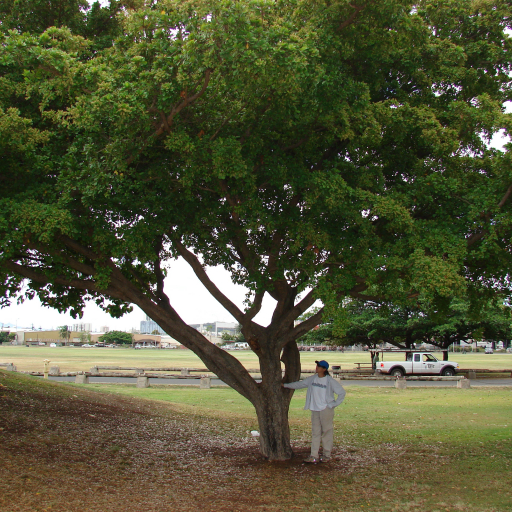
Plant Overview
Often called the "Shady Lady" for its dense, umbrella-like canopy, the Bucida buceras is a masterpiece of natural architecture. Despite its common name, the "Black Olive," it isn’t a true olive tree; it earns the title from the small, dark seed pods it produces. Native to the Caribbean and Central America, it is a favorite for those wanting a "bonsai look" on a much grander scale.
🔍 How to Identify
- 🌿 Leaf Structure: Features small, leathery, spoon-shaped leaves that grow in tight, lush clusters at the ends of the branches.
- 🌳 Layered Branching: The tree is famous for its horizontal, tiered branching pattern, which creates a distinct "layered" aesthetic as it matures.
- 🦴 The "Oxhorn" Fruit: It produces small, curved seed pods that look like tiny black olives or, as the Latin name buceras suggests, the horns of an ox.
🏡 In Your Garden
- 🧂 Coastal Warrior: This tree is incredibly salt-tolerant and wind-resistant, making it one of the best choices for seaside landscapes where other trees might wither.
- 🏗️ Hardscape Caution: While beautiful, the fruit and spent blooms contain tannins that can leave dark stains on driveways, sidewalks, and patios. It is best planted as a lawn specimen away from concrete.
- ☀️ Sun Seeker: It thrives in full sun and becomes quite drought-tolerant once established, though it prefers well-draining soil to prevent root rot.
⚠️ Safety & Toxicity
- 🐾 Pet Friendly: The Black Olive is generally considered non-toxic to dogs, cats, and horses, making it a safe addition to a pet-friendly yard.
- 🩹 Hidden Thorns: Some wild varieties can have small, sharp spines hidden along the branches. Always wear gloves when pruning to avoid unexpected nicks.
✨ Fun Fact
The "Shady Lady" is actually a specific cultivar of Bucida buceras. It was selected by growers because it grows more upright and has a more predictable, symmetrical shape than the wild species, which can sometimes grow quite crooked!

Detailed Care Instructions
To grow Bucida Buceras (Black Olive Tree), follow these steps:
- Location: Choose a location that receives full sunlight or partial shade. Bucida Buceras thrives in warm climates with temperatures between 60-80°F (15-27°C).
- Soil: Plant the tree in well-draining soil. Bucida Buceras prefers slightly acidic to neutral soil. If your soil is heavy or clay-like, amend it with organic matter such as compost or peat moss to improve drainage.
- Planting: Dig a planting hole slightly larger than the size of the root ball. Place the tree in the hole, ensuring it is planted at the same depth as it was in the nursery pot. Backfill the hole with soil and gently firm it around the base of the tree.
- Watering: Water the newly planted tree thoroughly and regularly. Keep the soil evenly moist but not waterlogged. During hot, dry periods, water deeply once or twice a week to encourage root development. Reduce watering in winter when the tree is dormant.
- Mulching: Apply a 2-3 inch layer of organic mulch, such as wood chips or bark, around the base of the tree. This will help retain moisture, suppress weeds, and regulate soil temperature.
- Pruning: Bucida Buceras typically has a dense, bushy growth habit. Prune the tree in late winter or early spring to shape it and remove any dead, diseased, or crossing branches.
- Fertilizing: Apply a balanced slow-release granular fertilizer in early spring to promote healthy growth. Follow the manufacturer's instructions for dosage and application method.
- Pests and diseases: Bucida Buceras is generally resistant to pests and diseases but keep an eye out for common issues like aphids, scale insects, or fungal diseases. Treat any problems promptly with appropriate insecticide or fungicide.
Remember to regularly monitor the plant's moisture levels, sunlight exposure, and overall health. With proper care and maintenance, your Bucida Buceras plant should grow into a beautiful tree.

Place in a bright room that is sun drenched almost all day. Or directly in a south-facing window.

Bucida Buceras is a type of plant that requires regular watering to maintain its health and growth. The watering schedule should be adjusted based on the weather and the quality of the soil in which it is planted. It is important to ensure that the plant is not overwatered, as this can lead to root damage and the development of fungal diseases.
When watering the Bucida Buceras plant, it is recommended to water deeply, allowing the soil to become saturated. This helps to encourage deep root growth, which makes the plant more resilient to drought. It is also a good idea to water the plant in the morning, as this allows the leaves to dry off before nightfall, which reduces the risk of fungal infections.
If the soil is particularly dry, it may be necessary to water the plant more frequently than usual. However, it is important to avoid watering the plant too much or too often, as this can lead to waterlogging and root rot.
Overall, the key to successfully watering a Bucida Buceras plant is to strike the right balance between ensuring that the soil is adequately moist and avoiding overwatering. This can be achieved through careful observation of the plant's growth and the moisture levels of the soil, as well as through regular maintenance and upkeep of the surrounding soil and environment.
To fertilize your Bucida Buceras plant, follow these instructions:
- Choose a balanced fertilizer: Look for a slow-release, all-purpose fertilizer with equal N-P-K (Nitrogen-Phosphorus-Potassium) ratios or close to it. This will provide the necessary nutrients for healthy growth.
- Dilution: Mix the recommended amount of fertilizer with water based on the instructions provided on the packaging. Be cautious not to use a higher concentration than recommended, as it may damage the plant's roots.
- Timing: Fertilize the plant during the growing season, which is typically spring and summer. Avoid fertilizing during the dormant period or winter months.
- Application: Apply the diluted fertilizer evenly around the base of the plant. Be careful not to pour it directly on the leaves or stem, as this may lead to burns or other damage.
- Watering: After fertilizing, water the plant thoroughly. This helps to distribute the nutrients evenly and prevents the roots from getting burned by concentrated fertilizer.
- Frequency: Depending on the specific fertilizer chosen, repeat the fertilization process every 4-6 weeks during the growing season. However, it's essential to follow the instructions on the fertilizer packaging for accurate guidance.
- Monitoring: Pay attention to any signs of over-fertilization, such as yellowing leaves, burnt edges, or stunted growth. Adjust the fertilizer dosage or frequency if necessary.
Remember to also consider other care requirements, such as proper sunlight, watering, and pruning, to ensure overall plant health.
The best soil type to use for Bucida Buceras plant is well-draining soil that has a neutral pH level. The soil must be able to retain moisture and nutrients for the plant to thrive, but also avoid waterlogging or water retention that could cause root rot. It's also recommended to add organic matter like compost or peat moss to improve soil structure and enhance nutrient retention. This type of plant prefers soil that is rich in nutrients and has a sandy-loamy texture. Therefore, it is advisable to use a well-mixed potting mixture that is specifically designed for tropical trees and plants. The right type of soil will help the Bucida Buceras plant grow healthy, strong, and more resistant to pests and diseases.
Propagation of Bucida Buceras plants can be achieved through various methods. One commonly used technique is propagation by seeds. To propagate through seeds, collect mature seeds from a healthy parent plant. Soak the seeds in warm water for 24 hours to enhance germination. Afterward, plant the seeds in well-draining soil in seed trays or pots, ensuring they are covered with a thin layer of soil. Maintain a warm and humid environment to promote germination, and water the seeds regularly.
Another method of propagation is through stem cuttings. Select a healthy, mature stem from the parent plant and cut a 6-8 inch section, ensuring there are several nodes present. Remove the lower leaves from the cutting and dip the cut end in rooting hormone powder to encourage root development. Plant the cutting in a well-draining rooting medium, such as a mixture of peat moss and perlite, and place it in a warm and humid environment. Mist the cutting regularly and ensure the soil remains moist, but not overly saturated. Roots should begin to develop within a few weeks.
Air layering is another effective method of propagation for Bucida Buceras plants. Select a healthy stem and make a small incision, approximately 1/3 through the stem, just below a leaf node. Apply rooting hormone to the wound and wrap the area with damp sphagnum moss. Cover the moss with plastic wrap or a plastic bag to create a humid environment, ensuring the moss remains moist throughout the process. After a few weeks, roots should start forming at the incision. Once a sufficient root system has developed, cut below the rooted area and plant the newly rooted section in a well-draining soil mixture.
Regardless of the propagation method chosen, it is essential to provide proper care to the newly propagated plants. Maintain a warm and humid environment, shield them from direct sunlight, and ensure they receive adequate water and nutrients. With patience and careful attention, successful propagation of Bucida Buceras plants can be achieved.
Common pests of the gregorywood include Scale insect, mealybugs, spider mites. Make a habit of checking your gregorywood frequently for pests so that any infestations can be caught and managed early.








