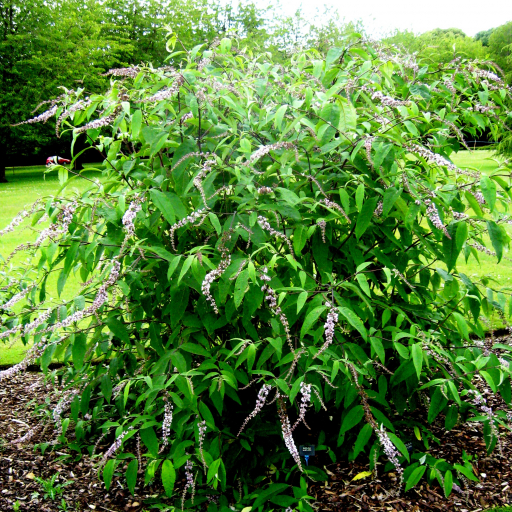
Plant Overview
Known as the Long-clump Butterfly Bush, this elegant Chinese native is the sophisticated cousin of the common garden Butterfly Bush. While its relatives often boast loud, neon purples, Buddleja albiflora offers a more refined palette of soft lilac-white blooms with glowing orange centers. It is a magnet for late-summer pollinators, creating a fluttering sanctuary in any sunny corner of the garden.
🔍 How to Identify
- 🌸 Slender Panicles: Unlike the chunky flower spikes of other species, these blooms appear in long, narrow, cylindrical clusters that can reach up to 18 inches in length.
- 🍃 Willow-like Foliage: The leaves are long, tapered, and dark green, featuring a distinctive silvery-white felt on the underside that shimmers when the wind catches it.
- 🌿 Upright Arching Habit: This shrub grows with a graceful, fountain-like shape, reaching heights of 10 to 12 feet if left unpruned, making it much taller and more slender than hybrid varieties.
🏡 In Your Garden
- 🦋 Pollinator Paradise: This plant is an essential "gas station" for monarch butterflies and bees. Because it blooms in late summer when other flowers are fading, it provides a vital nectar source for migrating insects.
- ✂️ Spring Rejuvenation: To keep it from becoming "leggy" or sparse at the bottom, it should be cut back hard in early spring. It flowers on "new wood," so don't be afraid to prune—this encourages the long, vigorous shoots that produce the best flowers.
⚠️ Safety & Toxicity
- ✅ Low Risk: Buddleja albiflora is generally considered non-toxic to humans, dogs, and cats. It is a safe choice for family gardens where curious pets or children might wander.
- 🐜 Garden Friend: While safe to touch, the plant can sometimes harbor spider mites in very hot, dry weather. Keeping the base of the plant mulched and hydrated helps prevent these tiny pests from moving in.
✨ Fun Fact
The genus was named after Reverend Adam Buddle, an English vicar and botanist. Ironically, despite having one of the world’s most popular garden plants named after him, he died before the first Butterfly Bush was ever introduced to England from the Americas!

Detailed Care Instructions
To grow Buddleja Albiflora plant, you can follow these steps:
- Find the right location: Buddleja Albiflora prefers full sun, so choose a spot in your garden that receives at least 6 hours of direct sunlight each day. It also requires well-draining soil.
- Prepare the soil: Before planting, prepare the soil by loosening it and removing any weeds or debris. You can also add compost or organic matter to improve soil fertility and drainage.
- Planting: Dig a hole that is slightly larger and deeper than the root ball of the plant. Place the plant in the hole and backfill with soil, gently firming it around the roots. Water the plant well.
- Watering: Buddleja Albiflora requires regular watering, especially during its first growing season. Keep the soil moist but not waterlogged. Water deeply once or twice a week, depending on the weather conditions. Mulching around the plant can help retain moisture.
- Pruning: Prune Buddleja Albiflora in late winter or early spring before new growth begins. Remove dead or damaged branches and shape the plant to maintain a desired size and form. Pruning also promotes better flowering and overall health.
- Fertilizing: Apply a balanced, slow-release fertilizer in spring and again in mid-summer to provide nutrients for healthy growth. Follow the instructions on the fertilizer packaging for proper application.
- Pests and diseases: Buddleja Albiflora is generally resistant to pests and diseases. However, keep an eye out for common garden pests like aphids or spider mites. If necessary, use organic or chemical controls to manage pest infestations.
- Winter protection: In colder climates, Buddleja Albiflora may need protection during winter. Apply a layer of mulch around the base of the plant to insulate the roots from extreme temperatures. If necessary, cover the plant with burlap or a frost blanket during freezing periods.
By following these steps, you can successfully grow and enjoy your Buddleja Albiflora plant.

Place in a bright room that is sun drenched almost all day. Or directly in a south-facing window.

1. Determine the water requirements of the plant: Before watering the Buddleja Albiflora plant, it is important to know its water requirements. The plant prefers moist soil but not waterlogged conditions, so it is important to avoid overwatering.
2. Check the soil moisture: The best way to determine when to water the plant is to check the soil moisture. Stick your finger into the soil to about an inch or so. If it feels dry, it is time to water. If it feels moist, hold off on watering for a few more days.
3. Use a watering can: When watering, it is important to use a watering can or a bucket to deliver the water directly to the soil around the plant. Avoid watering the foliage or flowers as this can lead to fungal diseases.
4. Water deeply: When watering, make sure to water deeply to encourage the roots to grow deeper into the soil. This will help the plant become more drought-tolerant.
5. Water in the morning: It is best to water the plant in the morning to avoid waterlogging the soil and promote quicker drying of the foliage to prevent fungal growth.
6. Adjust watering frequency: The frequency of watering may need to be adjusted depending on the weather conditions. During hot, dry spells, the plant may need more frequent watering, while during cooler, wet weather, less frequent watering is necessary.
7. Mulch the soil: Adding a layer of organic mulch, such as wood chips or shredded leaves, around the plant can help retain soil moisture, reduce weed growth, and provide nutrients as it decomposes.
To fertilize this plant, apply a slow-release fertilizer in the early spring before new growth emerges. Use a balanced fertilizer with equal amounts of nitrogen, phosphorus, and potassium. Be sure to follow the instructions on the package for application rates. Avoid over-fertilizing, as this can lead to overly lush growth and decreased flowering. Water the plant thoroughly after fertilizing.
Buddleja Albiflora thrives in soil that is well-draining and has a good mixture of organic matter and minerals. The soil should have a neutral to slightly acidic pH level and be able to retain moisture while still allowing excess water to drain away. The ideal soil type should be loamy or sandy with some clay content that allows proper root development and growth. It is recommended to mix in some compost or organic matter to increase the soil's fertility. Avoid heavy clay soil or soil that has poor drainage as it can cause root rot in the plant.
Propagation of this plant can be done using semi-hardwood cuttings taken from healthy stems of the parent plant. The stem cuttings should have several leaves and be around 8-10cm in length. Remove the lower leaves and dip the cut end of the stem in rooting hormone powder before planting in a well-draining potting mix. Water the cutting thoroughly and cover with a plastic bag to create a humid environment. Place the pot in a bright, partially shaded spot and keep the soil damp but not waterlogged. After several weeks, the cutting should have rooted and new growth will appear. Once roots are established, gradually acclimate the new plant cutting to outdoor conditions before planting in the ground.








