Plant Overview
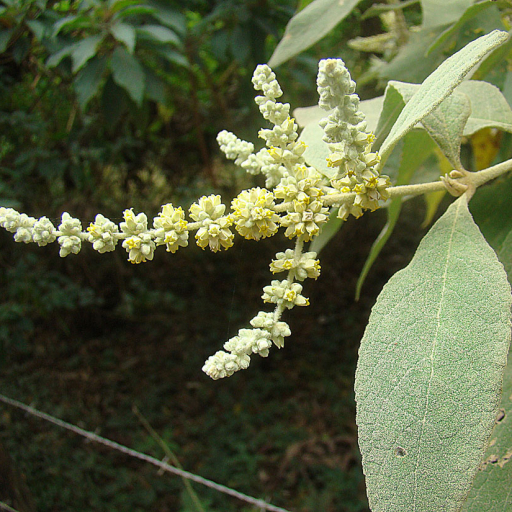
Known as the "Tepozán" in its native lands, Buddleja americana is a hardy, aromatic shrub that bridges the gap between wild scrublands and cultivated gardens. Unlike the common purple butterfly bushes found in many temperate yards, this species offers a golden-hued, honey-scented display that acts as a magnetic beacon for local biodiversity. In many Central American cultures, it is nicknamed "Lengua de Vaca" (Cow's Tongue) because of the uniquely rough, velvety texture of its large, lance-shaped leaves.
🔍 How to Identify
- 🍃 Velvety Foliage: The leaves are large, pointed, and covered in a fine, white "fuzz" or woolly hairs (tomentum), particularly on the undersides, giving them a dusty green appearance.
- 🌼 Golden Clusters: The flowers are small, creamy-yellow to pale orange, and gathered in dense, fragrant clusters along the ends of the branches.
- 🪵 Growth Habit: This is a vigorous woody shrub that can reach heights of up to 5 meters. Its young stems are square-ish and fuzzy, eventually maturing into gray, fissured bark.
🏡 In Your Garden
- 🦋 The Pollinator Hub: This plant is high-octane fuel for butterflies and hummingbirds. Because it produces copious amounts of nectar, it is one of the best choices for a "living laboratory" in your backyard.
- 🏜️ Drought Specialist: Once established, it is incredibly resilient. It thrives in rocky, well-drained soil and can handle dry spells that would cause other ornamental shrubs to wither.
- ✂️ Pruning for Shape: It has a tendency to become "leggy" or sparse if left to its own devices. A strategic hard prune after the flowering season encourages a bushier, more compact form and more prolific blooming the following year.
⚠️ Safety & Toxicity
- ✅ Generally Safe: Buddleja americana is not known to be toxic to humans, cats, or dogs. It is often used in traditional landscapes without safety concerns.
- 🖐️ Skin Sensitivity: While not poisonous, the tiny hairs on the leaves (the "fuzz") can occasionally cause mild skin or eye irritation for sensitive individuals during heavy pruning. Wearing gloves is a simple fix.
✨ Fun Fact
The name "Tepozán" comes from the Nahuatl language of the Aztecs. It was so highly regarded in ancient Mexico for its cooling properties that it was documented in the Libellus de Medicinalibus Indorum Herbis, one of the oldest botanical manuscripts in the Americas!

Detailed Care Instructions
To successfully grow Buddleja americana, also known as the American Butterfly Bush, follow these guidelines:
- Choose the right location: Pick a sunny spot in your garden with well-draining soil. Buddleja americana prefers full sun but can tolerate some shade.
- Planting: Prepare the soil by removing any weeds or grass. Dig a hole slightly larger and deeper than the container the plant came in. Place the plant in the hole, ensuring the top of the root ball is level with the soil surface. Backfill the hole with soil and gently firm it around the plant.
- Watering: After planting, water the plant thoroughly to settle the soil around the roots. Buddleja americana prefers regular watering, especially during dry spells. However, it is also drought-tolerant once established, so be careful not to overwater it.
- Mulching: Applying a layer of organic mulch around the base of the plant helps retain soil moisture, suppresses weeds, and keeps the roots cool. Mulch with materials such as wood chips or straw, ensuring the mulch does not touch the stem.
- Fertilizing: Buddleja americana doesn't require heavy fertilization. However, applying a balanced, slow-release fertilizer in spring can promote healthy growth. Follow the package instructions for proper application rates.
- Pruning: It is recommended to prune Buddleja americana in late winter or early spring, before new growth appears. This will help maintain a more compact and tidy shape. Remove any dead, damaged, or crossing branches to improve airflow and reduce disease risk.
- Pests and diseases: Buddleja americana is generally resistant to most pests and diseases. However, keep an eye out for common garden pests like aphids or caterpillars. Treat any infestations promptly with organic or chemical insecticides if necessary.
- Propagation: Buddleja americana can be propagated from softwood cuttings taken in late spring or early summer. Dip the cuttings in rooting hormone, place them in well-draining soil, and keep them in a warm and slightly shaded area until they root.
By following these steps and providing proper care, your Buddleja americana plant should thrive in your garden and attract beautiful butterflies with its fragrant flowers.
To water this plant, first, assess the moisture level of the soil by inserting your finger about an inch deep into it. If the soil feels dry to the touch, it's time to water. Water the plant slowly and evenly, taking care not to overwater or underwater. Watering too much can lead to root rot, while watering too little can cause the plant to wilt and dry out. Be sure to water at the base of the plant, avoiding getting water on the leaves and flowers. It's best to water early in the morning or late in the day to prevent evaporation and ensure the plant has time to absorb the water before the heat of the day.
To fertilize this plant, you can use a balanced, slow-release fertilizer with equal parts nitrogen, phosphorus, and potassium. Apply the fertilizer at the base of the plant during the active growing season, typically in spring and summer. Be sure to follow the manufacturer's instructions for application rates and frequency. Over-fertilizing can lead to excess leaf growth rather than flowering, so use caution and monitor the plant's growth and health.
Buddleja Americana plant prefers to grow in a well-draining soil that is moderately fertile. It is recommended to use a soil mixture that contains a blend of organic matter such as compost, leaf mold, or peat moss, along with sand or perlite to improve the drainage. The pH of the soil should ideally be neutral to slightly acidic, with a range between 6.0 and 7.0. Additionally, it is important to ensure that the soil is not too compact, as this can lead to poor root development and hinder the plant's growth. Regular fertilization with a balanced fertilizer can promote healthy growth and flowering of the Buddleja Americana plant.
Buddleja Americana can be propagated through several methods, including seed propagation, cutting propagation, and dividing the root system.
Seed propagation involves collecting seeds from mature plants and planting them in a suitable growing medium. Before planting, the seeds should be scarified to increase germination rates. Once planted, they should be kept moist and warm until germination occurs, typically within two to four weeks.
Cutting propagation involves taking softwood or hardwood cuttings from a mature plant and planting them in a suitable growing medium. Softwood cuttings should be taken in the spring, while hardwood cuttings should be taken in the fall. After planting, the cuttings should be kept moist and warm until roots form, which typically takes several weeks to several months.
Dividing the root system involves digging up a mature plant and separating the root system into smaller sections. Each section should have at least one shoot and a portion of the root system. The sections can then be replanted in a suitable growing medium and kept moist until they establish themselves.
Regardless of the propagation method used, it is important to provide adequate light, water, and nutrients to promote healthy growth and development of the new plants.








