Plant Overview
Often called "Escobilla" or the "Sage-leaf Butterfly Bush," this resilient shrub is a hidden gem of the Chihuahuan Desert. Unlike its showier garden cousins with their massive flower spikes, Buddleja scordioides opted for a rugged, minimalist look to survive the harsh sun of the Southwestern US and Mexico. It is a master of adaptation, trading large leaves for velvety, silver-green foliage that smells faintly of honey when brushed.
🔍 How to Identify
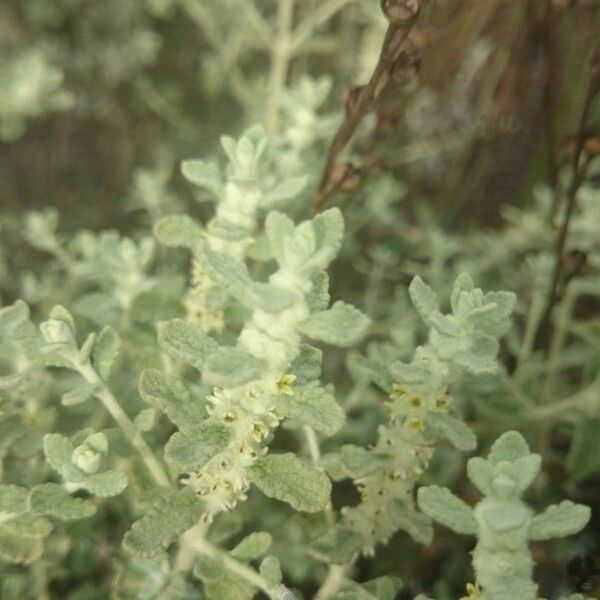
- 🍃 Velvet Foliage: The leaves are small, narrow, and covered in a dense layer of fine, silver-grey hairs (tomentose). This "fuzz" isn't just for show; it protects the plant from intense UV rays and prevents water loss.
- 🌕 Golden Orbs: Instead of long cones, this species produces tiny, fragrant yellow-to-orange flowers that grow in tight, spherical clusters (capitula) tucked along the leaf axils.
- 🌿 Wavy Margins: If you look closely at the leaf edges, they are "crenate"—meaning they have small, rounded teeth that give them a crinkled, sage-like appearance.
🏡 In Your Garden
- 🏜️ Thrives on Neglect: This plant is a "xeric" specialist. It demands excellent drainage and actually prefers poor, gravelly soil. Over-watering or high-quality potting soil can often lead to root rot or "floppy" growth.
- 🦋 A Pollinator's Buffet: Despite the flowers being miniature, they are incredibly nectar-dense. It is a vital pit stop for native bees and butterflies in arid regions where other nectar sources might dry up in the heat.
⚠️ Safety & Toxicity
- ✅ Non-Toxic Status: Buddleja scordioides is generally considered safe and is not listed as a toxic plant for cats, dogs, or horses.
- 🧤 Leaf Irritation: While not poisonous, the fine "felt" on the leaves can be a mechanical irritant. If you have sensitive skin, the tiny hairs might cause a slight itch or sneeze during heavy pruning.
✨ Fun Fact
In various regions of Mexico, this plant is used in traditional folk medicine to create a bitter tea known as "Escobilla." It has been historically used to treat stomach ailments, though most modern enthusiasts prefer to keep it in the garden to watch the butterflies!

Detailed Care Instructions
To grow Buddleja Scordioides, also known as the Mexican butterfly bush or orange butterfly bush, follow these steps:
- Choose the right location: Select a sunny spot in your garden with well-draining soil. Buddleja Scordioides prefers full sun but can tolerate partial shade.
- Prepare the soil: Make sure the soil is well-draining and amend it with organic matter, such as compost, to improve its fertility and drainage. This will provide a good growing medium for the plant.
- Planting: Dig a hole that is slightly larger than the root ball of the plant. Place the plant in the hole, making sure the top of the root ball is level with or slightly above the soil surface. Backfill the hole with soil, firming it gently around the plant to eliminate air pockets.
- Watering: Water the plant thoroughly after planting and keep the soil consistently moist but not waterlogged. Buddleja Scordioides is drought-tolerant once established but still needs regular watering during its initial growth stages.
- Mulching: Apply a layer of organic mulch, such as wood chips or straw, around the base of the plant. This will help retain soil moisture, suppress weed growth, and regulate soil temperature.
- Pruning: Buddleja Scordioides benefits from regular pruning to maintain its shape, promote bushiness, and encourage more flowers. Prune in late winter or early spring, before new growth begins, by removing dead, damaged, or weak branches. You can also prune lightly after each flowering cycle to encourage reblooming.
- Fertilization: While Buddleja Scordioides can grow in nutrient-poor soil, applying a balanced fertilizer once or twice a year can help promote healthy growth and abundant flowers. Use a slow-release fertilizer according to the manufacturer's instructions.
- Pests and diseases: Buddleja Scordioides is generally resistant to pests and diseases. However, keep an eye out for common garden pests like aphids and caterpillars. If necessary, treat them with organic pest control methods like insecticidal soap or neem oil.
By following these steps and providing appropriate care, your Buddleja Scordioides plant should thrive and reward you with fragrant orange flowers that attract butterflies and other pollinators.
The best way to water this plant is by using a watering can or a hose with a gentle flow setting. It is important to water the plant deeply and thoroughly, ensuring that the soil is evenly moistened. It is recommended to water the plant once a week, or more often during hot and dry periods. Avoid over-watering, as this can lead to root rot and other problems. It is also important to allow the soil to dry slightly between waterings, as this promotes healthy root growth. Finally, be sure to water the plant at the base, rather than overhead, to prevent disease and fungal growth.
To fertilize this plant, use a balanced, slow-release fertilizer in early spring, before new growth appears. Apply according to package instructions, and water well after application. Repeat every 4-6 weeks during the growing season. Avoid over-fertilizing, as this can lead to excessive growth and weaker stems. If soil is poor, add organic matter such as compost or well-rotted manure to improve soil fertility.
The ideal soil for Buddleja scordioides would be well-draining and slightly acidic with a pH between 5.5 and 6.5. The soil should have good organic matter content, be rich in nutrients and have good water-holding capacity. A sandy-loam soil with high organic matter content is a good choice as it would provide good drainage while retaining enough moisture. It is also important to ensure that the soil is not compacted as this would impede root growth and reduce water absorption. The recommended soil type for Buddleja scordioides is therefore a loose, well-draining loam soil consisting of a mixture of sand, silt, and clay with a high organic matter content.
Buddleja Scordioides is a perennial plant that can be propagated using several techniques. One method is through taking cuttings from the plant.
To start, choose a healthy parent plant with strong branches and plenty of foliage. Take a sharp, clean pair of pruning shears and make a clean cut just below a leaf node on a branch. The cutting should be approximately 6-8 inches long.
Remove the bottom leaves from the cutting, leaving only a few leaves at the top. Dip the cut end of the cutting in rooting hormone, and then plant it in a pot filled with moist potting soil. Cover the pot with plastic wrap or a clear plastic bag to create a mini greenhouse. Place the pot in a warm, bright location that receives indirect sunlight.
Keep the soil moist but not soggy, and mist the cutting regularly to maintain humidity. After several weeks, gentle tugs on the cutting will indicate whether roots have formed. Once roots have developed, carefully transplant the new plant into a larger pot or outdoors into its permanent location.
Another way to propagate Buddleja Scordioides is through division. This method involves digging up the parent plant and separating the root ball into sections, each with its own stem and foliage. Replant each section in a new location, watering thoroughly.
Propagation by seed is also possible. Allow the plant to flower and produce seed pods, then collect the pods when they are dry and ready to burst. Remove the seeds from the pods and plant them in pots or directly in the garden in spring or fall. Keep soil moist and protect young seedlings from harsh weather and animals.








