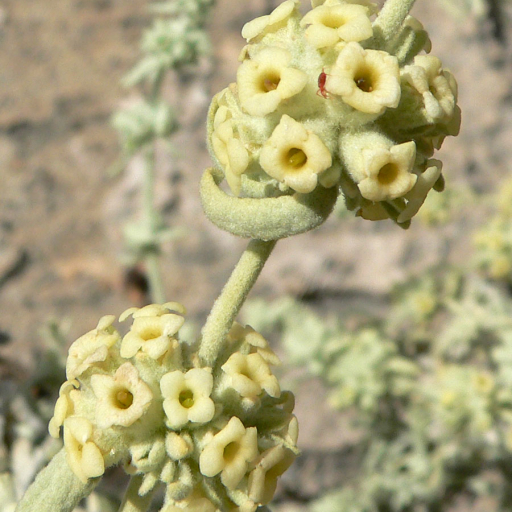
Plant Overview
Known as the Utah Butterfly Bush or Panamint Butterfly Bush, this desert-dwelling shrub is a far cry from the lanky, purple-flowered varieties found in English gardens. A true specialist of the American Southwest, it thrives where most plants wither—clinging to limestone cliffs and sun-scorched rocky slopes. It is a master of conservation, using its silvery foliage to reflect the intense Mojave sun.
🔍 How to Identify
- ☁️ The Foliage: Small, narrow leaves that appear almost white or silvery-grey due to a dense covering of fine, woolly hairs.
- 🌕 The Blooms: Unlike the long spikes of common butterfly bushes, this species produces tight, spherical "pom-pom" clusters of pale yellow to creamy flowers.
- 📏 The Shape: A low, rounded, and compact shrub that usually stays under 3 feet tall, looking more like a dusty desert sage than a typical garden shrub.
🏡 In Your Garden
- 🪨 The Soil Secret: This plant is a "calciphile," meaning it craves lime. It is best suited for rock gardens or xeric landscapes where the soil is alkaline and extremely well-draining.
- 💧 Drought Strategy: It hates "wet feet." In a garden setting, the most common cause of death is over-watering or heavy clay soil. It prefers to be ignored once its roots are established.
- 🦋 Pollinator Magnet: Despite its rugged, dusty appearance, its nectar is highly attractive to native bees and smaller butterfly species looking for a drink in the arid heat.
⚠️ Safety & Toxicity
- ✅ Status: Non-toxic and safe.
- 🐾 Details: There are no known toxic effects for dogs, cats, or horses. Its fuzzy leaves are generally unappealing to most grazers, making it somewhat deer-resistant as well.
✨ Fun Fact
The Utah Butterfly Bush is often used by geologists as a "bio-indicator." Because it almost exclusively grows on limestone or dolomite, seeing a patch of these silvery shrubs from a distance tells scientists exactly what kind of rock layers are hiding beneath the desert surface.

Detailed Care Instructions
To grow Buddleja utahensis, also known as Utah butterfly bush, follow these steps:
- Choose a suitable planting location: Buddleja utahensis thrives in well-draining soil with full sun exposure. Ensure the site has good air circulation.
- Prepare the soil: Amend the soil with organic matter, such as compost, to improve its fertility and drainage. Remove any weeds or grass from the planting area.
- Planting: Dig a hole slightly larger than the root ball of the plant. Place the plant in the hole, ensuring the top of the root ball is level with the soil surface. Backfill the hole with soil, gently firming it around the plant. Water thoroughly.
- Watering: Water the plant deeply but infrequently, providing enough moisture to keep the soil evenly moist but not waterlogged. During hot, dry spells, increase watering frequency.
- Mulching: Apply a layer of organic mulch around the base of the plant, such as wood chips or straw. This helps retain moisture, suppresses weeds, and regulates soil temperature.
- Pruning: Buddleja utahensis does not require frequent pruning, but you can remove dead or damaged wood in early spring. Light shaping can also be done to maintain an attractive shape.
- Fertilizing: Utah butterfly bush is generally low-maintenance and does not require heavy fertilization. However, you can apply a balanced slow-release fertilizer in early spring to support healthy growth.
- Pests and diseases: Monitor the plant for common pests like aphids or spider mites. If needed, use organic insecticidal soap or neem oil to control pests. Buddleja utahensis is generally resistant to diseases.
- Overwintering: In colder climates, provide winter protection by mulching heavily around the base of the plant. This will help protect the roots from freezing temperatures.
- Propagation: Buddleja utahensis can be propagated through seed or softwood cuttings in late spring or early summer. Sow seeds in well-draining potting mix or take 4 to 6-inch long cuttings from new growth, dip them in rooting hormone, and plant them in a well-draining medium.
By following these steps, you can successfully grow Buddleja utahensis and enjoy its beautiful flowers while attracting butterflies to your garden.

Place in a bright room that is sun drenched almost all day. Or directly in a south-facing window.

Buddleja utahensis is a lovely perennial shrub native to the Western United States. Proper watering is essential for the health and growth of this plant. Here are some details on how to water Buddleja utahensis without mentioning its common names:
1. Watering Schedule: Buddleja utahensis prefers consistently moist but well-draining soil. To determine the appropriate watering frequency, check the moisture level of the soil regularly with your fingers. Only water when the top inch of soil feels dry.
2. Watering Technique: When watering Buddleja utahensis, it is important to ensure that water reaches the root zone. Instead of surface watering, deeply and slowly apply water directly to the base of the plant, allowing the soil to absorb moisture gradually. This encourages the roots to grow deeply and strengthens the plant's overall resilience.
3. Amount of Water: Each time you water, aim to provide an adequate amount of water to fully moisten the roots without causing waterlogging. Generally, providing around 1 inch of water per week is sufficient during the growing season. However, adjust the quantity based on the weather conditions and the moisture needs of the plant.
4. Mulching: Applying a layer of organic mulch around the base of the shrub helps to retain soil moisture and regulate its temperature. This minimizes water evaporation and reduces the frequency of watering required. Spread 2-4 inches of mulch, such as bark chips or compost, around the base, leaving a small space around the stems to prevent rotting.
5. Rainwater Harvesting: If possible, make use of rainwater for watering Buddleja utahensis. Capturing and storing rainwater in barrels or containers is an environmentally friendly and cost-effective way to provide water. It is also free from any chemicals like chlorine, which could potentially harm the plant.
Remember that Buddleja utahensis, like any other plant, may have specific water requirements based on its location, soil condition, and climate. Monitor the plant closely, observe signs of overwatering or underwatering, and make adjustments to your watering routine accordingly.
To fertilize the Buddleja Utahensis plant, follow these instructions:
- Choose a balanced, slow-release fertilizer that is specifically formulated for flowering shrubs or perennials. Look for a NPK (nitrogen-phosphorus-potassium) ratio close to 10-10-10 or 14-14-14.
- Apply the fertilizer in early spring, just as new growth is starting. This will provide nutrients when the plant needs them the most.
- Follow the manufacturer's instructions for the fertilizer dosage. Generally, sprinkle the granules evenly around the base of the plant, keeping them a few inches away from the stem to avoid burning.
- Gently work the fertilizer into the top inch of soil using a hand cultivator or rake.
- Water the plant thoroughly after fertilizing to help the nutrients reach the plant's roots. Ensure the soil is evenly moist, but avoid waterlogging.
- Reapply the fertilizer once more in mid-summer if desired, following the same steps outlined above. This additional application can promote a second round of blooming.
- Avoid over-fertilizing, as this can lead to excessive vegetative growth at the expense of flowering. Follow the recommended dosage and frequency mentioned on the fertilizer packaging.
- Monitor the plant's response to the fertilizer. If you notice any signs of nutrient deficiency or excess (e.g., yellowing leaves, stunted growth, or leaf burn), adjust the fertilizing routine accordingly.
Remember to consider the specific needs and preferences of your Buddleja Utahensis plant, as different garden conditions and genetic variations may influence its fertilizing requirements.
Buddleja utahensis is a species of plant that has specific soil requirements for optimal growth and health. The soil recommended for this plant should ideally be well-draining and loamy, with a slightly acidic to neutral pH level. It should have good moisture retention capacity while also allowing excess water to drain away easily.
A mixture of organic matter such as compost or well-rotted manure, along with garden soil or sandy soil, can be used to create a suitable soil blend. This combination helps maintain a balance between moisture and aeration, benefiting the plant's root development.
Adding perlite or coarse sand to the soil mix can further improve drainage and prevent waterlogging, especially in heavy clay soils. This helps to prevent root rot and allows the plant to take up essential nutrients efficiently.
It is important to avoid using soil with high clay content, as it tends to hold water for longer periods, increasing the risk of root rot and other moisture-related problems.
Regularly enriching the soil with organic matter can also benefit Buddleja utahensis, as it improves the soil structure, fertility, and overall health.
When planting this species, it is essential to prepare the soil well in advance by loosening it to a depth of around 12-18 inches (30-45 cm) and removing any weeds or rocks. This encourages healthy root growth and establishment.
Overall, a well-draining, loamy soil enriched with organic matter and slightly acidic to neutral pH is recommended for successful cultivation of Buddleja utahensis.
Propagation of Buddleja utahensis can be done through various methods such as seed germination, stem cuttings, and layering. Each method has its own requirements and steps. Here are the details for propagating Buddleja utahensis:
- Seed Germination:
- Collect ripe seed pods from a healthy Buddleja utahensis plant.
- Gently open the pods and collect the seeds.
- Soak the seeds in water for 24 hours to soften the seed coat.
- Fill a seed tray or small pots with a well-draining potting mix.
- Sprinkle the seeds on the soil surface, ensuring they are evenly spaced.
- Cover the seeds lightly with a thin layer of soil or vermiculite.
- Mist the soil surface with water and place a clear plastic bag or a propagator lid over the tray to create a humid environment.
- Keep the tray in a warm location with indirect sunlight.
- Maintain moist soil by misting regularly.
- Germination can take anywhere from a few weeks to a few months.
- Once the seedlings are large enough to handle, transplant them into individual pots filled with a well-draining potting mix.
- Continue to provide appropriate care until the seedlings establish themselves.
- Collect ripe seed pods from a healthy Buddleja utahensis plant.
- Stem Cuttings:
- Take stem cuttings from a healthy Buddleja utahensis plant during the active growing season (typically in spring or early summer).
- Choose young, non-flowering shoots that are around 4 to 6 inches long.
- Make a clean cut just below a leaf node using a sharp and sterile pruner.
- Remove the lower leaves, leaving a few upper leaves intact.
- Dip the cut end of the stem into a rooting hormone powder or gel (optional but can improve rooting success).
- Fill pots with a well-draining rooting medium, such as a mix of perlite or vermiculite with peat moss.
- Insert the cut end of the stem into the medium, ensuring at least two leaf nodes are buried.
- Firmly press the medium around the stem to provide stability.
- Mist the cuttings with water and cover them with a clear plastic bag or propagator lid to create a humid environment.
- Place the pots in a warm location with bright, indirect light.
- Maintain moisture in the rooting medium by misting regularly.
- Roots should start forming within a few weeks to a couple of months.
- Once rooted, transplant the cuttings into individual pots filled with a well-draining potting mix, and provide appropriate care to encourage growth.
- Take stem cuttings from a healthy Buddleja utahensis plant during the active growing season (typically in spring or early summer).
- Layering:
- Select a healthy and long branch from a Buddleja utahensis plant.
- Bury a section of the branch, typically a few inches long, into a pot filled with a well-draining potting mix.
- Make a small wound on the buried section by gently scraping off a small portion of the bark.
- Dust the wound with a rooting hormone powder (optional but can enhance root formation).
- Firmly press the potting mix around the wounded section to ensure good contact.
- Water the potting mix thoroughly and place the pot in a location with bright but indirect light.
- Keep the soil slightly moist, but not waterlogged, throughout the rooting process.
- After a few months, roots should form along the wounded section of the branch.
- Once roots are well-established, cut the branch from the parent plant, severing it just below the rooted section.
- Transplant the rooted section into an individual pot filled with a well-draining potting mix, and provide appropriate care for further growth.
Remember to provide proper care, such as adequate light, water, and nutrients, to the newly propagated plants to help them establish and thrive.
- Select a healthy and long branch from a Buddleja utahensis plant.








