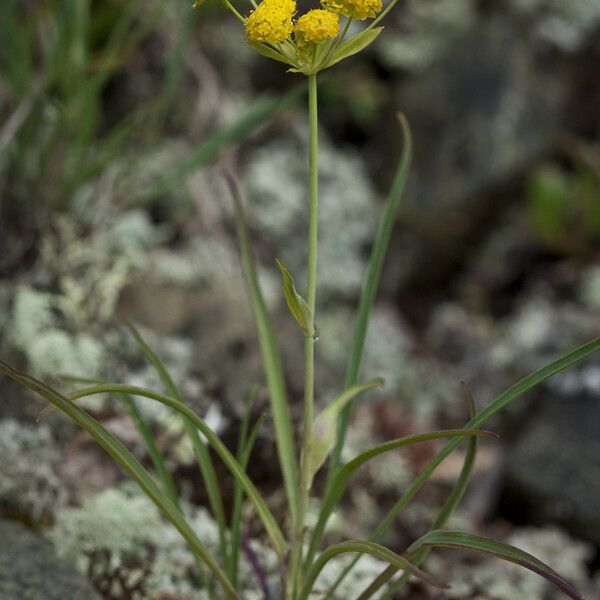
Plant Overview
The American Thorough-wax is a resilient mountaineer of the botanical world, often found clinging to rocky slopes or braving the chilly winds of the northern plains. While it may look like a delicate garden herb, this native North American wildflower is a survivor, uniquely adapted to high altitudes and subarctic temperatures. Its nickname, "Thorough-wax," comes from an old English term describing how the stem appears to grow right "through" the center of the leaves.
🔍 How to Identify
- ☀️ The Flowers: It features tiny, yellowish-green blossoms clustered in "umbels" (umbrella-like shapes). Unlike showy garden flowers, these are subtle and blend in with the surrounding foliage.
- 🍃 The Leaves: Look for smooth, waxy, blue-green leaves. The upper leaves are particularly distinctive because they lack a traditional stem (petiole) and instead clasp or wrap entirely around the main stalk.
- 📏 Growth Habit: This plant typically grows upright, reaching between 4 to 20 inches tall, emerging from a thick, woody taproot that helps it stay anchored in shifting mountain soils.
🏡 In Your Garden
- ⛰️ Highland Heritage: Because it is naturally found in alpine and subarctic regions, it thrives in "lean" soil. It prefers rocky, well-drained spots and will struggle if planted in heavy, nutrient-rich potting mix or waterlogged clay.
- 🌬️ Hardiness: This is a fantastic choice for rock gardens or native restoration projects in cold climates. It is exceptionally wind-tolerant and doesn't mind a bit of a chill, making it a low-maintenance resident once established.
⚠️ Safety & Toxicity
- ✅ Status: Generally considered non-toxic.
- 🐾 Details: While there are no widespread reports of toxicity to pets or humans, the American Thorough-wax belongs to the Apiaceae (Parsley) family. This family contains some extremely poisonous look-alikes, such as Water Hemlock. Always be 100% certain of your identification before handling or allowing pets to graze near wild umbellifers.
✨ Fun Fact
The American Thorough-wax is a "disjunct" species. This means it grows in two widely separated areas: one population lives in the mountains of the Western US (like the Rockies), while the other lives thousands of miles away in Alaska and Siberia, with almost nothing in between!

Detailed Care Instructions
To grow Bupleurum Americanum, also known as American Hare's Ear, you can follow these steps:
- Climate and Soil: Bupleurum Americanum is native to North America and thrives in full sun to partial shade. It prefers well-draining soil with a pH level between 6.1 and 7.8. If your soil is heavy or clay-like, add organic matter like compost to improve drainage.
- Sowing Seeds: The plant can be grown from seeds, and it is usually sown directly outdoors in the spring. Start by preparing the soil by removing any debris and loosening it. Sow the seeds by scattering them on the soil surface and lightly pressing them into the soil. The seeds need light to germinate, so don't cover them with too much soil.
- Watering: Keep the soil consistently moist until the seeds germinate, which usually takes around 10-15 days. After that, reduce watering frequency, allowing the soil to dry out slightly between watering. Bupleurum Americanum is relatively drought-tolerant once established, so be careful not to overwater.
- Thin and Transplant: Once the seedlings have grown a few inches tall, thin them out, spacing them around 12 inches apart to allow proper air circulation and growth. If you have sown the seeds too densely, you can transplant the seedlings to other locations to give them more space.
- Maintenance: Bupleurum Americanum doesn't require a lot of maintenance. However, you can improve its appearance by removing any dead or yellowing leaves. Applying a layer of mulch around the base of the plant can help retain moisture and suppress weed growth.
- Harvesting: Bupleurum Americanum produces attractive yellow flowers in late summer, which can be cut for floral arrangements. You can also collect the mature seeds in the fall if you want to propagate the plant or use the seeds for future sowing.
Remember to keep an eye out for pests and diseases, such as aphids or powdery mildew. If necessary, use appropriate organic insecticides or fungicides to protect your plant.

Place in a bright room that is sun drenched almost all day. Or directly in a south-facing window.

To properly water the Bupleurum Americanum plant, it is essential to adhere to a few guidelines:
1. Observe the soil: Perform regular checks to determine the moisture level of the soil. Before watering, it is advisable to ensure that the top inch of the soil feels dry to the touch. You can gauge this by using your finger or a moisture meter.
2. Watering method: When watering the Bupleurum Americanum, opt for a direct watering technique. Try to avoid overhead watering methods, as excessive moisture on the foliage can lead to diseases and rot. Aiming the water at the base of the plant ensures that the roots receive an adequate amount.
3. Water volume: Provide an appropriate amount of water to the Bupleurum Americanum plant. Water until you notice the moisture reaching a depth of around 6 inches into the soil. This depth encourages the roots to grow deeper, promoting a healthier and more resilient plant.
4. Frequency: The watering frequency for Bupleurum Americanum depends on various factors such as climate, season, and soil type. It is generally recommended to water deeply once or twice a week, rather than frequent, shallow watering. This helps the roots fully absorb the moisture and encourages strong root development.
5. Adjust for weather conditions: Consider adjusting your watering routine based on weather conditions. During hot and dry periods, the plant may require more frequent watering. Conversely, during cooler and rainy seasons, it is better to reduce watering frequency to avoid over-saturation.
6. Drainage: Ensure that the pot or planting site provides adequate drainage for the Bupleurum Americanum plant. This helps prevent waterlogging and the development of root rot. If the plant is potted, ensure that the container has drainage holes.
Following these guidelines will help to provide the appropriate amount of water for the Bupleurum Americanum plant and contribute to its overall health and vitality.
To fertilize the Bupleurum Americanum plant, follow these instructions:
- Choose a balanced, all-purpose fertilizer with an N-P-K ratio of around 10-10-10.
- Dilute the fertilizer according to the package instructions, usually one tablespoon per gallon of water.
- Water the plant thoroughly before applying the fertilizer to ensure it is adequately hydrated.
- Apply the diluted fertilizer directly to the soil around the base of the plant, avoiding contact with the leaves.
- Use a watering can or a hose with a gentle spray nozzle to avoid damaging the plant's roots.
- Ensure that the fertilizer is evenly distributed around the plant's root zone.
- Water the plant again lightly after applying the fertilizer to help it absorb the nutrients.
- Fertilize the plant once every four to six weeks during the growing season.
- Monitor the plant for any signs of over-fertilization, such as yellowing leaves or stunted growth. If this occurs, reduce the fertilizer application or dilute it further.
- Remember to follow the manufacturer's instructions for the specific fertilizer product you are using, as different brands may have slightly different recommendations.
When selecting the appropriate soil for Bupleurum Americanum, it is important to consider its natural habitat and growing requirements. It thrives in well-draining soils that are rich in organic matter. A slightly acidic to neutral pH range of 6.0-7.0 is most suitable for this plant.
A soil mix composed of loam, which is a balance of sand, silt, and clay, is often recommended for Bupleurum Americanum. Loamy soil provides excellent drainage while retaining adequate moisture and nutrients. The addition of organic matter, such as compost or well-rotted manure, can further improve soil structure and fertility.
To enhance drainage, it may be beneficial to amend the soil with perlite or sand to increase porosity. This helps prevent waterlogging, which can lead to root rot. However, care must be taken not to overdo it, as excessively sandy or quick-draining soils may lead to water stress and nutrient leaching.
The ideal soil for Bupleurum Americanum should also be airy and well-aerated, allowing the roots to breathe. Avoid heavy clay soils that can become compacted and inhibit root growth.
Regular monitoring of soil moisture levels is essential. As Bupleurum Americanum prefers consistently moist, but not waterlogged, conditions, maintaining proper soil moisture is crucial for its well-being. Providing ample water while ensuring thorough drainage will help this plant thrive.
Overall, a well-draining loamy soil that retains moisture and is enriched with organic matter is the best choice for Bupleurum Americanum to promote optimal growth and health.
Propagation of Bupleurum Americanum can be achieved through various methods. Here is a detailed explanation on how to propagate this plant:
- Seeds: Collect the seeds from matured plants in late summer or early autumn. The seeds can be sown directly in the garden bed or propagated indoors.
- Indoor sowing: Fill small pots or seed trays with a well-draining seed starting mix. Moisten the soil before sowing the seeds.
- Scatter the seeds on the surface of the soil, making sure they are evenly distributed.
- Lightly press the seeds into the soil, but do not cover them, as they require light to germinate.
- Place the pots or trays in a warm location with indirect sunlight.
- Maintain the soil moisture by misting or using a watering tray to avoid disturbing the seeds.
- Germination usually takes around 2-3 weeks. Once the seedlings are large enough to handle, they can be transplanted to individual pots or directly into the garden.
- Division: Propagation through division is best done in early spring or late fall when the plant is dormant.
- Carefully dig up an established Bupleurum Americanum plant, ensuring to minimize root damage.
- Gently separate the clumps into smaller sections, ensuring each division has a sufficient number of healthy roots.
- Replant the divisions immediately in a prepared garden bed or pots.
- Water thoroughly after planting and keep the soil consistently moist until new growth appears.
- Stem Cuttings: This method involves taking stem cuttings from a healthy parent plant to propagate new individuals.
- Select healthy stems that are not flowering or producing seeds.
- Cut 3-4 inch (7.5-10 cm) sections from the tips of the stems, just below a leaf node.
- Remove the lower leaves, leaving a few at the top.
- Dip the cut end in rooting hormone to enhance rooting success, although it is not always necessary.
- Plant the cuttings in a well-draining potting mix or a mixture of perlite and peat moss.
- Place the planted cuttings in a warm, bright location with indirect sunlight.
- Mist the cuttings regularly to maintain humidity and keep the soil moist but not waterlogged.
- After around 4-6 weeks, roots should start to form. Once the roots are well-established, the new plants can be transplanted to larger pots or the garden.
By following these propagation methods, you can successfully propagate the Bupleurum Americanum plant and enjoy its unique features in your garden.








