Plant Overview
Often referred to as the Long-leaved Hare's Ear, this elegant perennial is a favorite among floral designers for its architectural silhouette and "ethereal" chartreuse glow. Native to the mountain meadows of Europe, it brings a wild, meadow-like aesthetic to any landscape. It is most famous for its unique foliage that seems to "clasp" the stem, making it look like a plant from a botanical fantasy novel.
🔍 How to Identify
- 🍃 The "Perfoliate" Leaves: The upper leaves are a standout feature; the stem appears to grow directly through the center of the leaf, creating a striking circular or heart-shaped base.
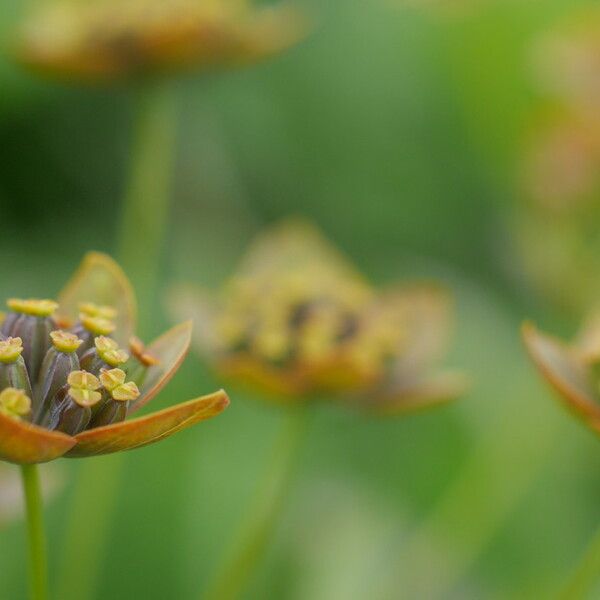
- 🌼 Chartreuse Umbels: Instead of traditional petals, it produces tiny yellowish-green flowers arranged in umbrella-like clusters, surrounded by large, leafy bracts that turn a coppery-gold as they age.
- 📏 Growth Habit: It typically grows in a clump-forming habit, reaching about 2 to 3 feet in height with slender, wiry stems that give it an airy, transparent quality.
🏡 In Your Garden
- 🌱 The Taproot Rule: This plant develops a deep taproot early in life. This makes it very drought-tolerant once established, but it also means it hates being moved. Choose its "forever home" carefully, as transplanting adult plants often leads to failure.
- ☀️ Light and Air: While it thrives in full sun, it is one of the few members of its family that can handle partial shade gracefully. It prefers well-drained, alkaline or lime-rich soil; if the ground is too soggy, the roots may rot during the winter dormancy.
⚠️ Safety & Toxicity
- 🟢 General Safety: Bupleurum longifolium is generally considered non-toxic to humans and is not known for being aggressive or invasive.
- 🐾 Pets & Kids: While not listed as a high-risk poisonous plant, the sap contains compounds that could cause mild stomach upset if ingested in large quantities. As with all ornamental plants, it is best kept out of reach of curious nibblers.
✨ Fun Fact
The name Bupleurum is derived from the Greek words for "ox" and "rib," a reference to the distinct, rib-like veins that run through the leaves of many species in this genus!

Detailed Care Instructions
To successfully grow Bupleurum Longifolium plant, also known as Hare's Ear, follow these steps:
- Choose a well-draining soil mix: Bupleurum Longifolium prefers slightly alkaline to neutral soil that drains well. Amend the soil with organic matter if necessary to improve drainage.
- Select an appropriate location: Place the plant in a sunny or partially shaded area. It needs at least 6 hours of direct sunlight daily.
- Start seeds indoors: Bupleurum Longifolium can be grown from seeds. Sow the seeds indoors about 8-12 weeks before the last expected frost date in your region. Use seed starting trays or small pots filled with seed-starting mix. Press the seeds lightly into the soil and water gently.
- Transplant seedlings: Once the seedlings have grown a few inches tall and have developed several true leaves, they can be transplanted into larger pots or directly into the garden. Space them about 12 inches apart to allow for their mature size.
- Care for the plant: Water the plant regularly to keep the soil slightly moist but not waterlogged. Bupleurum Longifolium prefers moderate watering and may suffer from root rot if overwatered. Mulching around the plant can help retain moisture and suppress weeds.
- Support and groom: To prevent the tall, slender stems from flopping over, you can use stakes or plant supports, especially if there is regular wind or heavy rain in your area. Pinch back the stems when the plant reaches around 12 inches to encourage bushier growth.
- Fertilize: Feed the plant with a balanced organic fertilizer every 4-6 weeks during the growing season to promote healthy growth. Follow the instructions on the fertilizer packaging for the appropriate amount.
- Monitor pests and diseases: Bupleurum Longifolium is generally resistant to pests and diseases. However, occasional issues with aphids or powdery mildew may occur. Monitor the plant regularly and treat any problems promptly with organic insecticides or fungicides if necessary.
- Harvesting: Harvest the foliage or flowers of Bupleurum Longifolium during the flowering season, which usually occurs in summer. Cut the stems just above the base of the plant, taking care not to remove too much foliage at once.
By following these steps, you can successfully grow Bupleurum Longifolium plant and enjoy its beautiful foliage and flowers.

Place in a bright room that is sun drenched almost all day. Or directly in a south-facing window.

To water this plant, ensure that the soil is thoroughly moistened but not waterlogged. Check the soil regularly and water only when the top 1-2 inches of soil feels dry to the touch. When watering, avoid pouring water onto the leaves and stems, as this can cause damage or encourage disease. Instead, aim for the base of the plant and water slowly and evenly, giving the soil time to absorb the moisture. It is also important to provide good drainage to prevent water from sitting in the soil and causing root rot.
To fertilize this plant, apply a balanced, slow-release fertilizer in spring, just as new growth begins to emerge. Use a fertilizer with a balanced ratio of nitrogen, phosphorus, and potassium, such as a 10-10-10 or 20-20-20 blend. Follow the manufacturer's instructions for application rates and frequency. Be sure to water the plant thoroughly after fertilizing to prevent burning the roots.
When planting Bupleurum longifolium, it is important to select a suitable soil type. This plant thrives in well-draining soil that is nutrient-rich and has a pH range between 6 and 7.5. A soil that is too acidic or alkaline can lead to poor growth and development.
It is recommended to use a high-quality garden soil mixed with organic matter such as compost or well-rotted manure. This will improve soil structure, increase water retention, and provide a source of nutrients for the plant.
Bupleurum longifolium prefers soil that is slightly moist but not waterlogged. To ensure proper drainage, it may be beneficial to incorporate sand or perlite into the soil mixture. Additionally, adding mulch around the base of the plant can help conserve soil moisture and regulate soil temperature.
Overall, selecting the right soil type and providing proper care can help Bupleurum longifolium thrive and produce healthy, vibrant foliage and blooms.
Bupleurum Longifolium is a herbaceous perennial plant that can be propagated through both seeds and cuttings.
Propagation via seeds:
- Collect mature seeds from the plant when the seed heads turn brown and dry.
- Plant the seeds in a well-draining potting mix in a small container or a seed tray.
- Water the seeds and cover them with a plastic sheet to create a humid environment.
- Keep the container in a warm and bright location, but away from direct sunlight.
- The seeds will take 2-4 weeks to germinate, and once they have sprouted, remove the plastic sheet and give them regular water and light.
- When the seedlings have grown several inches tall, they can be transplanted into larger containers or directly into the ground.
Propagation via cuttings: - Take a cutting from a healthy mature plant by using a sharp knife or pruning shears to cut off a 4-6 inch stem.
- Remove the lower leaves from the stem and dip the cut end in a rooting hormone.
- Pot the cutting in a well-draining soil mix and water it thoroughly.
- Cover the cutting with a plastic sheet to create a humid environment.
- Keep the container in a warm and bright location, but away from direct sunlight.
- After several weeks, the cutting will have rooted and new growth will appear. Remove the plastic sheet and continue to care for the plant as usual.








