Plant Overview
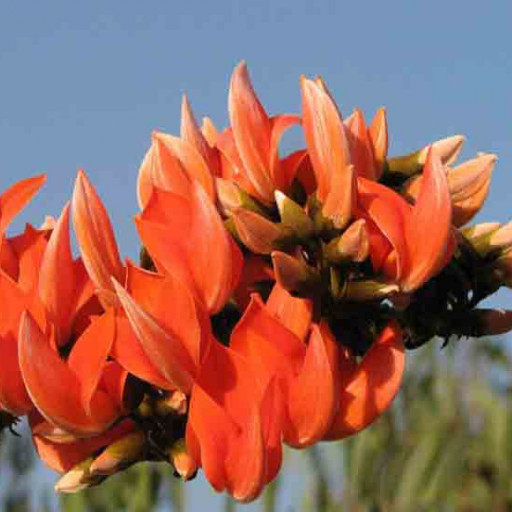
Known as the "Flame of the Forest" or "Palash," this legendary tree is a masterpiece of the Indian subcontinent. When it blooms in the height of the dry season, it sheds all its leaves, leaving the branches covered in a sea of brilliant orange-red flowers that look like a forest fire from a distance. It is deeply rooted in folklore and is famously associated with the arrival of spring and the colorful festival of Holi.
🔍 How to Identify
- 🔥 The Flowers: The most striking feature is the bright orange, velvet-textured blossoms shaped like a parrot’s beak, which is why it’s also called the "Parrot Tree."
- 🍃 The Foliage: It features large, leathery "trifoliate" leaves (leaves grouped in threes). The leaflets are broad and somewhat round, providing a coarse texture.
- 🪵 The Trunk: The tree often grows with a gnarled, crooked trunk and grayish-brown bark that becomes deeply fissured as the plant matures.
🏡 In Your Garden
- ☀️ Sun & Space: This is a sun-worshipper that requires plenty of vertical space. It is incredibly drought-tolerant once established, making it perfect for xeriscaping or low-maintenance landscapes.
- 🌱 Root Logic: It develops a very deep taproot, which helps it survive harsh dry spells but makes it very difficult to transplant. Choose its permanent "forever home" in your garden carefully while it is still a sapling.
- 🦜 Wildlife Magnet: If you plant one, expect a flurry of activity; the nectar-rich flowers are a favorite buffet for sunbirds, squirrels, and various pollinators.
⚠️ Safety & Toxicity
- ✅ Safe Status: Generally considered non-toxic to touch and is widely used in traditional medicine and for making natural dyes.
- 🐾 Pet & Child Safety: While the flowers are used to create non-toxic Holi colors, the seeds contain certain alkaloids. It is best to discourage pets or curious children from ingesting any part of the tree, especially the seeds.
✨ Fun Fact
The flowers of the Butea monosperma were traditionally soaked in water to create a vibrant saffron-colored dye. This "liquid gold" was the original, natural pigment used for the Holi festival long before synthetic powders existed!

Detailed Care Instructions
Growing Butea monosperma, commonly known as the Flame of the Forest, Palash, or Dhak, can be a rewarding endeavor due to its strikingly beautiful flowers and cultural significance in parts of South Asia. Here’s a detailed guide to help you grow this vibrant plant:
1. Climate and Location
- Climate: Butea monosperma thrives in tropical and subtropical climates. It prefers warm temperatures and can tolerate dry conditions, but it is not frost-hardy.
- Sunlight: Choose a location that receives full sunlight. The plant needs at least 6-8 hours of direct sunlight daily.
2. Soil Requirements
- Type: Well-drained sandy or loamy soil is ideal. It can grow in poor soil conditions, but well-drained soil will yield the best results.
- pH Level: Slightly acidic to neutral soil (pH 6.5-7.5) is preferable.
3. Propagation
- Seeds: The most common method of propagation is by seeds.
- Seed Collection: Collect seeds from mature pods.
- Germination: Seeds should be soaked in water for 24 hours before sowing to enhance germination.
- Planting: Sow the seeds about 1 inch deep in seed trays or directly in the ground. Keep the soil moist during the germination period.
- Seed Collection: Collect seeds from mature pods.
- Cuttings: While less common, it’s possible to propagate Butea monosperma through cuttings.
- Cuttings: Use semi-hardwood cuttings and plant them in a mixture of sand and compost.
4. Planting
- Cuttings: Use semi-hardwood cuttings and plant them in a mixture of sand and compost.
- Spacing: If planting multiple trees, space them about 12-15 feet apart to allow ample room for growth.
- Planting Time: The best time to plant is during the monsoon season, providing natural moisture for establishment.
5. Watering
- Initial Stage: Water the seeds or cuttings regularly to keep the soil moist but not waterlogged.
- After Establishment: Once established, Butea monosperma is quite drought tolerant. Water during dry spells, but reduce frequency to avoid waterlogging.
6. Fertilizing
- Butea monosperma doesn’t require heavy fertilization. However, a basic application of well-rotted manure or compost at planting time can be beneficial.
- Annual Feeding: Apply a balanced fertilizer during the growing season to support growth.
7. Pruning and Maintenance
- Pruning: Minimal pruning is needed. Remove dead or diseased branches to maintain the health of the tree.
- Pests and Diseases: Generally, Butea monosperma is not prone to severe pest problems. Watch for common garden pests and treat them with appropriate organic or chemical methods if necessary.
8. Growth and Flowering
- Maturity: Butea monosperma can take several years to mature and start flowering. Patience is key.
- Flowers: The tree produces vibrant orange-red flowers, usually in spring, which stand out when the tree is leafless.
9. Cultural Practices
- Mulching: Applying mulch around the base can help retain moisture and regulate soil temperature.
- Weeding: Keep the area around the young plants free from weeds to reduce competition for nutrients and water.
By following these guidelines, you can successfully grow Butea monosperma and enjoy its striking beauty and ecological benefits. Remember that patience and consistent care are crucial as the tree establishes itself and grows.

Place in a bright room that is sun drenched almost all day. Or directly in a south-facing window.

Butea Monosperma plant requires regular watering, and it should be done promptly when the soil dries out. It is recommended to water the plant thoroughly, so that the water reaches the roots, but care should be taken not to overwater it, which could lead to root rot.
One way to water Butea Monosperma plant is to allow water to flow slowly into the soil by using a watering can or hose with a gentle setting. It is important to make sure that the water reaches all areas of the soil and is not just concentrated in one area.
Another way to water Butea Monosperma plant is to set up a drip irrigation system. This system slowly releases water directly to the roots over time, which helps to conserve water and ensures that the plant receives a constant supply of moisture.
During the winter months or when the plant is dormant, it is best to reduce the amount of watering to avoid waterlogging the soil. Additionally, it is important to avoid watering the plant during periods of heavy rainfall or if the soil is already wet.
Overall, regular and consistent watering is crucial for the health and growth of Butea Monosperma plant.
Butea monosperma, a beautiful flowering tree, benefits from appropriate fertilization to promote healthy growth and vibrant blooms. Here's a simple guide to fertilizing this plant:
- Type of Fertilizer:
- Use a balanced, slow-release fertilizer with an N-P-K ratio like 10-10-10 or 14-14-14.
- Alternatively, you can use compost or well-rotted manure to provide organic nutrients.
- Use a balanced, slow-release fertilizer with an N-P-K ratio like 10-10-10 or 14-14-14.
- Application Timing:
- Spring: Begin fertilizing in early spring as new growth starts to emerge.
- Mid-Summer: Apply a second round of fertilizer to support sustained growth through the summer.
- Spring: Begin fertilizing in early spring as new growth starts to emerge.
- Application Method:
- Granular Fertilizer: Sprinkle the granules evenly around the base of the tree, taking care not to let the fertilizer touch the trunk. Lightly work the fertilizer into the top layer of soil and water thoroughly.
- Organic Matter: Spread a 1-2 inch layer of compost or manure around the base of the tree, again keeping it away from direct contact with the trunk. Water well to help it integrate into the soil.
- Granular Fertilizer: Sprinkle the granules evenly around the base of the tree, taking care not to let the fertilizer touch the trunk. Lightly work the fertilizer into the top layer of soil and water thoroughly.
- Amount to Use:
- Follow the specific product instructions based on the size and age of your plant. Generally, younger trees require less fertilizer than mature ones.
- Follow the specific product instructions based on the size and age of your plant. Generally, younger trees require less fertilizer than mature ones.
- Additional Tips:
- Ensure the soil is well-drained, as waterlogging can harm the roots.
- Mulch around the base of the tree with organic material to help retain moisture and improve soil quality.
These steps should help your Butea monosperma thrive, developing healthy foliage and striking flowers.
- Ensure the soil is well-drained, as waterlogging can harm the roots.
When planting Butea Monosperma, it is recommended to use a well-draining soil that is enriched with organic matter. The soil should have a balanced pH level, ideally between 6.0 and 7.5. Butea Monosperma prefers a loamy soil that is rich in nutrients, such as nitrogen, phosphorus, and potassium. Soil that is too compacted or clayey should be avoided, as it can lead to poor soil drainage and stunted plant growth. Additionally, it is important to ensure that the soil is moist but not waterlogged, as this can also lead to root rot and other plant diseases.
Butea monosperma, a tropical tree native to the Indian subcontinent, can be propagated using a few different methods: seeds, root suckers, and cuttings. Here are detailed steps for each method:
Seed Propagation
- Seed Collection:
- Collect mature seeds from healthy trees during the seed season, which typically occurs in the summer.
- Mature pods turn brown and start to crack open, which is an indication the seeds are ready.
- Collect mature seeds from healthy trees during the seed season, which typically occurs in the summer.
- Seed Preparation:
- Soak the seeds in water for 24 hours to help germination.
- Scarify seeds if they have a hard coat. This can be done by rubbing them gently with sandpaper or by making a small cut on the seed coat with a knife.
- Soak the seeds in water for 24 hours to help germination.
- Planting:
- Fill seed trays or pots with a well-draining potting mix. A mix of sand and compost in equal parts works well.
- Plant seeds about 1-2 cm deep.
- Water the planted seeds gently but thoroughly.
- Fill seed trays or pots with a well-draining potting mix. A mix of sand and compost in equal parts works well.
- Germination:
- Place the seed trays or pots in a warm, sunny location.
- Keep the soil consistently moist but not waterlogged.
- Germination typically takes around 2-3 weeks.
- Place the seed trays or pots in a warm, sunny location.
- Transplanting:
- Once seedlings have developed a few sets of true leaves, they can be transplanted into larger pots or directly into the ground.
- Make sure the transplant site has well-draining soil and receives full sunlight.
Root Sucker Propagation
- Once seedlings have developed a few sets of true leaves, they can be transplanted into larger pots or directly into the ground.
- Identification:
- Root suckers are young shoots that emerge from the roots of the parent plant.
- Root suckers are young shoots that emerge from the roots of the parent plant.
- Separation:
- Carefully dig around the base of the parent tree to identify and isolate a healthy sucker.
- Ensure that the sucker has a good amount of root attached.
- Carefully dig around the base of the parent tree to identify and isolate a healthy sucker.
- Planting:
- Immediately plant the separated sucker in a prepared hole with well-draining soil.
- Water it thoroughly.
- Immediately plant the separated sucker in a prepared hole with well-draining soil.
- Care:
- Keep the newly planted sucker moist until it establishes itself.
- Provide protection from extreme weather conditions if necessary.
Cutting Propagation
- Keep the newly planted sucker moist until it establishes itself.
- Selection and Cutting:
- Choose healthy, semi-hardwood cuttings from the parent tree. Ideally, the cuttings should be 6-12 inches long.
- Make the cut just below a node (where the leaf joins the stem).
- Choose healthy, semi-hardwood cuttings from the parent tree. Ideally, the cuttings should be 6-12 inches long.
- Preparation:
- Remove any leaves from the lower half of the cutting.
- Optionally, dip the cut end in a rooting hormone powder to enhance root development.
- Remove any leaves from the lower half of the cutting.
- Planting:
- Insert the cut end into a pot filled with a well-draining medium, such as a mix of sand and compost.
- Ensure at least one node is buried under the soil.
- Insert the cut end into a pot filled with a well-draining medium, such as a mix of sand and compost.
- Rooting:
- Place the pot in a warm and humid environment, ideally with indirect sunlight.
- Keep the soil consistently moist but not saturated.
- Roots should develop within a few weeks to a couple of months.
- Place the pot in a warm and humid environment, ideally with indirect sunlight.
- Transplanting:
- Once roots have formed and the cutting shows new growth, it can be transplanted to a larger pot or directly into the ground.
By following these steps carefully, you can successfully propagate Butea monosperma and enjoy its beautiful flowers and foliage.
- Once roots have formed and the cutting shows new growth, it can be transplanted to a larger pot or directly into the ground.








