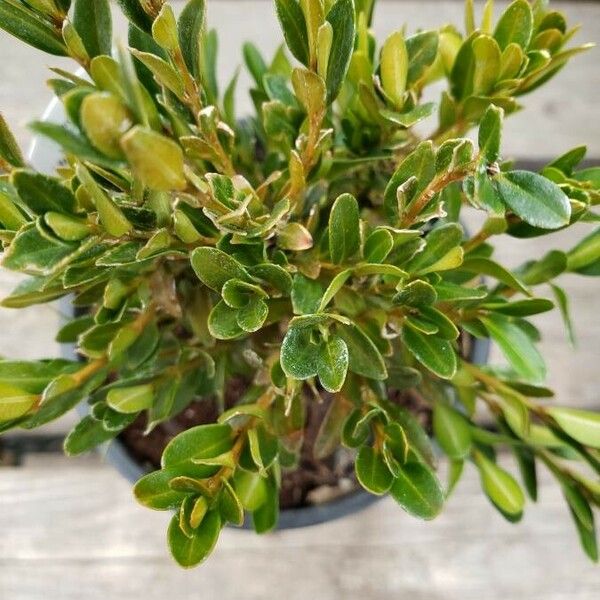
Plant Overview
Often called the Chinese Boxwood, this evergreen gem is the architectural backbone of many classical gardens. Native to the rocky slopes and thickets of East Asia, it has been cherished for centuries for its dense, emerald foliage and its willingness to be sculpted into almost any shape imaginable. Whether it's a formal low hedge or a miniature bonsai, this plant brings a sense of timeless structure and "year-round green" to any landscape.
🔍 How to Identify
- 🍃 Foliage: The leaves are small, leathery, and oval-shaped, usually measuring less than an inch. They grow in opposite pairs along the stems and have a distinctively glossy, dark green finish.
- 🌳 Growth Habit: It naturally forms a dense, rounded shrub. Because it is a slow-grower, it maintains a tidy, compact appearance for years without needing constant intervention.
- 🌼 Flowers: In early spring, you might notice tiny, inconspicuous clusters of pale yellow flowers. While they lack petals and aren't visually "showy," they emit a subtle, sweet fragrance that attracts early pollinators.
🏡 In Your Garden
- 🌬️ Winter Resilience: While this species is hardier than many other boxwoods, it can suffer from "bronzing"—a temporary shift to an orange-brown hue—if exposed to harsh, drying winter winds. Planting it in a slightly sheltered spot helps maintain that deep green color.
- ✂️ The Sculptor’s Choice: This plant is incredibly forgiving of the shears. It possesses a high density of dormant buds, meaning that even after a heavy pruning session, it will reliably sprout new, lush growth from the old wood.
- 🌱 Root Care: Buxus sinica has a relatively shallow root system. It thrives best when the soil is mulched to keep the roots cool and moist, as it can be sensitive to extreme soil temperature fluctuations and heavy foot traffic near the base.
⚠️ Safety & Toxicity
- 🐾 Toxic to Pets: The entire plant contains steroidal alkaloids that are toxic to dogs, cats, and horses. If ingested, it can cause significant digestive upset, including vomiting and lethargy.
- 🧤 Skin Irritant: The sap can cause mild skin irritation or "contact dermatitis" in sensitive individuals. It is a good practice to wear gardening gloves when performing heavy pruning or shaping.
✨ Fun Fact
- 🎻 Dense as Stone: Boxwood is one of the few woods that is so dense it can actually sink in water! Because of this incredible density and fine grain, it has been the preferred material for centuries for carving high-quality woodblocks, chess pieces, and even musical instruments like flutes.

Detailed Care Instructions
To grow Buxus sinica, also known as Chinese boxwood, you can follow these steps:
- Choose the right location: Chinese boxwood thrives in partial shade to full sun. It prefers well-drained soil with a pH range of 5.0 to 7.5.
- Prepare the soil: Ensure that the soil is well-drained and fertile. If the soil is heavy clay, mix in compost or organic matter to improve drainage and fertility.
- Planting: Dig a hole that is slightly wider and deeper than the root ball of the plant. Gently remove the plant from its container and place it in the hole. Backfill the hole with soil, firming it gently around the roots.
- Watering: After planting, water the plant thoroughly and deeply to ensure that the root ball is moist. Subsequently, water it regularly, especially during dry periods. Avoid overwatering, as it may lead to root rot.
- Mulching: Apply a layer of organic mulch around the base of the plant to help retain moisture, suppress weeds, and regulate soil temperature.
- Pruning: Regular pruning is essential to maintain the desired shape and size of the plant. You can prune Buxus sinica in early spring or late winter before new growth begins. Ensure your pruning tools are clean and sharp to avoid damaging the plant.
- Fertilizing: Feed the plant with a balanced slow-release fertilizer in early spring and again in late spring. Follow the guidelines mentioned on the fertilizer packaging for the correct dosage.
- Pests and diseases: Keep an eye out for common pests like boxwood leaf miners, boxwood mites, and boxwood psyllids. Treat any infestations promptly with insecticidal soap or horticultural oil. Additionally, monitor for diseases such as boxwood blight and root rot, and take appropriate measures if any symptoms appear.
- Winter protection: Buxus sinica is generally hardy, but extreme cold and winter winds can damage it. Consider providing protection with burlap or a windbreak if required.
Remember to be patient while growing Buxus sinica, as it may take time to establish and grow to its full potential. Regular care, including proper watering, pruning, and fertilization, will help you achieve healthy and thriving plants.

Place in a bright room that is sun drenched almost all day. Or directly in a south-facing window.

Buxus Sinica, also known as Chinese Boxwood, is a plant that requires regular watering to thrive. To ensure optimal growth, it is important to provide adequate moisture while avoiding overwatering.
When watering Buxus Sinica, it is best to wait until the soil surface has become dry to the touch before applying water. This helps prevent waterlogging and root rot, which can be detrimental to the plant’s health.
Water should be applied slowly and evenly, ensuring that the soil is thoroughly saturated without creating puddles on the surface. Aerate the soil every few days to ensure proper water distribution.
It may be necessary to adjust the frequency of watering depending on the season and weather conditions. During periods of high temperatures or drought, the plant may require more frequent watering to prevent wilting or leaf drop.
Overall, it is important to monitor the soil condition and plant health to determine the best watering schedule for Buxus Sinica.
To fertilize this plant, use a balanced, slow-release fertilizer in the spring after the last frost. Apply the fertilizer at the base of the plant, being careful not to get any on the leaves. Water the plant well after fertilizing. It is important not to over-fertilize, as this can burn the roots and harm the plant.
The best soil to use with the specific plant referred to (common names not mentioned) is a well-draining soil that is slightly acidic with a pH range of 5.5 to 6.5. The soil should be rich in organic matter and provide good aeration for the roots. It is important to avoid heavy clay soils that can cause waterlogging and root rot. A mix of loam, sandy soil, and peat moss is recommended to create a well-draining yet moisture-retentive soil. It is also advisable to incorporate a slow-release fertilizer in the soil mix to provide essential nutrients to the plant over an extended period.
Buxus sinica is a plant that can be propagated using different methods such as stem cuttings, layering, and root cuttings. Here are the basic steps to propagate the plant using stem cuttings:
- Choose healthy and mature stems to use as cuttings. Make sure to choose stems that are free from diseases, pests, and damages.
- Cut the stems into 4-6 inch lengths using a clean and sharp garden shear. Make sure to cut just below a node or a leaf joint.
- Remove the lower leaves of the stem cutting, leaving only a few leaves on the upper part.
- Dip the cut end of the stem into a rooting hormone powder to encourage root growth.
- Insert the stem cutting into a container filled with well-draining soil mix. Make sure to cover the cut end with soil and firm gently.
- Water the soil gently and place the container in a warm and bright location, avoiding direct sunlight.
- Monitor the soil moisture level and water when needed, making sure not to overwater the plant.
- After a few weeks, the stem cutting should develop roots and new leaves, indicating successful propagation.
- Once the new plant has grown a few inches, transfer it to a larger container or to the garden bed, following the recommended spacing and care guidelines for Buxus sinica plants.








