Plant Overview
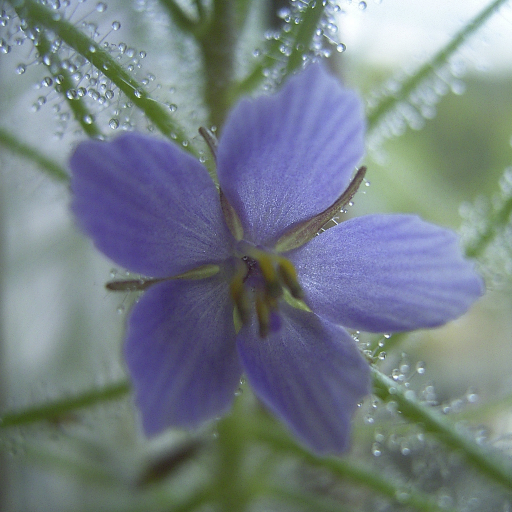
Known as the "Rainbow Plant," Byblis liniflora is a shimmering marvel of the carnivorous world. Native to the tropical wetlands of Northern Australia, it earns its name from the thousands of glue-tipped hairs that catch the sunlight, refracting it into a miniature prism of colors. While it looks like a delicate, ornamental grass, it is actually a highly efficient hunter of small flying insects.
🔍 How to Identify
- 🌈 The Rainbow Glisten: The most striking feature is the "dew" covering the stems and leaves, which sparkles with multi-colored light when viewed from the right angle.
- 🌿 Thread-like Leaves: The plant features very thin, linear leaves that grow upwards and outwards, creating a bushy, ethereal appearance.
- 🌸 Mauve Blooms: It produces charming five-petaled flowers, usually in shades of purple or pale violet, which emerge on long stalks to keep pollinators away from its sticky traps.
🏡 In Your Garden
- 🌱 Root Sensitivity: Unlike many other carnivorous plants, the Rainbow Plant has a very delicate root system. It is famous for "resenting" being moved, so it is best to sow seeds directly into their permanent pot rather than transplanting them.
- ☀️ Light is Essential: To see the "rainbow" effect, this plant needs intense, direct light. In low light, it will lose its dew and its ability to catch prey, eventually becoming weak and spindly.
- 💧 The Water Tray Method: It thrives in "wet feet" conditions. Keeping the pot in a shallow tray of distilled or rainwater mimics its natural boggy habitat, but be careful not to get the leaves wet, as this can wash away its sticky digestive enzymes.
⚠️ Safety & Toxicity
- ✅ Non-Toxic Status: Byblis liniflora is not known to be poisonous to humans, cats, or dogs.
- 🧤 Handle with Care: While safe, the "glue" on the leaves is incredibly sticky and can be difficult to wash off skin or fur. Additionally, the plant is structurally fragile and can snap easily if handled roughly by curious pets or children.
✨ Fun Fact
Unlike its lookalike cousin, the Sundew (Drosera), the Rainbow Plant is a "passive" hunter. While a Sundew will slowly curl its leaf around an insect to digest it, Byblis doesn't move at all—it simply stays still and lets its powerful adhesive and enzymes do all the work!

Detailed Care Instructions
To grow Byblis liniflora plants, you can follow these steps:
- Obtain Byblis liniflora seeds or clones: You can purchase seeds or obtain cuttings from a mature plant.
- Prepare a growing container: Use a shallow tray or pot with good drainage. Fill it with a well-draining soil mix, such as a blend of peat moss and perlite.
- Sow the seeds or plant the cuttings: If using seeds, scatter them evenly on the soil surface and lightly press them into the soil. If using cuttings, insert them about an inch deep into the soil.
- Provide the right conditions: Byblis liniflora plants thrive in warm and sunny conditions. Place the container in a location that receives at least 6-8 hours of direct sunlight per day. The temperature should be around 75-85°F (24-29°C).
- Watering and maintenance: Byblis liniflora plants prefer moist soil. Keep the soil evenly moist, but not waterlogged. Water the plants regularly, but allow the top inch of soil to dry out slightly between waterings. Mist the plants occasionally to maintain humidity.
- Fertilization: Byblis liniflora plants are carnivorous and obtain nutrients from insects they catch. However, you can also provide some foliar fertilization by occasionally misting the plants with a diluted, low-nitrogen fertilizer.
- Pruning and propagation: Trim off any dead or dying leaves. Byblis plants can be propagated by taking stem cuttings. Ensure the cuttings are at least 2-3 inches long, remove the lower leaves, and place them in a damp mix of peat moss and perlite until they establish roots.
- Pests and diseases: Byblis liniflora plants are generally quite resistant to pests and diseases. However, keep an eye out for common issues like aphids or fungal diseases. Treat these issues promptly if they occur.
By following these steps, you can successfully grow Byblis liniflora plants and enjoy their unique beauty.

To water this plant, it is important to use distilled or rainwater as tap water may contain chemicals and minerals that are harmful to it. Ensure that the soil is kept constantly moist, but not waterlogged. Over-watering may cause the roots to rot, while under-watering may cause the plant to wilt and die. It is recommended to water the plant once or twice a week, depending on the temperature and humidity levels in the environment. It is also important to avoid getting water on the leaves or trapping it in the pitcher, as this may cause fungal growth or other issues.
For optimal growth of the plant, mix a balanced and diluted fertilizer with water and apply it to the soil once every two weeks during the plant's active growing season. Be cautious not to over-fertilize, as this can harm the plant's root system.
The soil that is suitable for Byblis Liniflora plant should be well-draining and acidic. The soil should have a pH between 4 and 6. The plant prefers a soil mix of peat moss, perlite, and sand. It is essential to avoid using any fertilizer or compost in the soil mix, as it can be harmful to the plant. The plant requires moist but not waterlogged soil, so it is crucial to water it appropriately to prevent root rot. Additionally, it is recommended to repot the plant every 2-3 years to maintain its health.
Byblis Liniflora can be easily propagated by using stem cuttings. To begin the propagation process, start by selecting a healthy parent plant to take cuttings from.
Next, using clean and sharp scissors, cut a piece of stem from the parent plant that is at least 2-3 inches in length and has a few leaves attached. Make sure to cut the stem at an angle to increase the surface area for rooting.
Once you have your cutting, remove any leaves from the bottom 1-2 inches of the stem. This will help prevent the leaves from rotting and promote healthy rooting.
Prepare a pot or container with a well-draining potting mix. Make a hole in the soil with your finger or a pencil and gently insert the cutting into the hole. Firmly press the soil around the cutting to ensure good contact between the soil and the stem.
Water the cutting lightly and place it in a bright, indirect location. Avoid direct sunlight as it can be too harsh for the delicate new plant.
Keep the soil moist and mist the cutting regularly to keep the humidity up. Within a few weeks, new roots should begin to form, and you can begin to treat the plant as you would a mature plant.
With proper care and attention, your new Byblis Liniflora plant should grow into a healthy and beautiful specimen.








