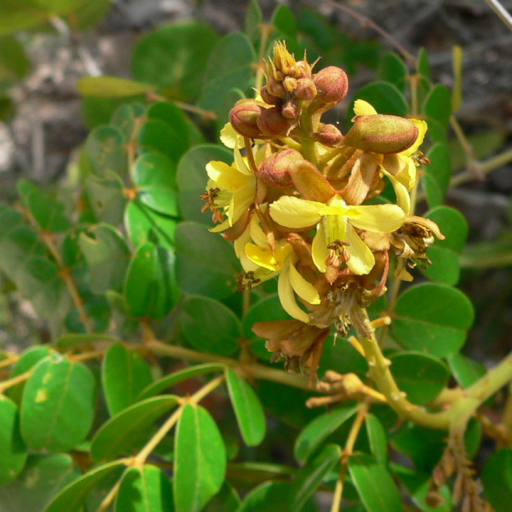
Plant Overview
Known widely as the Grey Nicker Bean or Fever Nut, Caesalpinia bonduc is a pantropical scrambling shrub that acts like a natural fortress. Often found along coastlines, it is famous for its marble-like grey seeds that are so buoyant and hardy they can drift across entire oceans and still germinate. In many cultures, these seeds are prized as "sea pearls" or used as game pieces in traditional board games like Oware.
🔍 How to Identify
- 🌿 Prickly Stems: This plant is heavily armed with sharp, recurved prickles along its branches and leaf stalks, helping it "climb" over other vegetation.
- 🍃 Feathery Foliage: It features large, bipinnate leaves (divided twice) that give it a soft, fern-like appearance from a distance, contrasting sharply with its thorns.
- 🐡 Spiny Pods: The fruit is a distinctive, flattened oval pod covered in dense, soft-looking but firm spines, resembling a tiny green blowfish.
- 🔘 The "Nicker" Seeds: Inside the pods, you’ll find 1–2 perfectly round, smooth, lead-grey seeds that feel like polished stone.
🏡 In Your Garden
- 🏝️ Coastal Survivor: Because it originates from beach-adjacent environments, it is incredibly salt-tolerant and wind-resistant, making it a rugged choice for tropical coastal landscapes.
- 🛡️ Natural Security: Due to its aggressive thorns, it is often used as a "living fence" or hedge to deter intruders, though it requires significant space to scramble.
- 🌱 Nitrogen Fixer: As a member of the legume family, it works behind the scenes to improve soil quality by "fixing" nitrogen, benefiting the plants growing nearby.
⚠️ Safety & Toxicity
- ⚔️ Physical Hazard: The primary danger of the Grey Nicker Bean is its thorns. They are hooked and can easily snag skin or clothing, causing painful scratches.
- 💊 Medicinal Caution: While the seeds are used in traditional medicine (earning the name "Fever Nut"), they contain potent bitter compounds. They should never be ingested by humans or pets without professional pharmacological guidance.
- 👶 Choking Risk: The seeds are the perfect size and shape to be a choking hazard for small children and curious dogs.
✨ Fun Fact
The seeds of Caesalpinia bonduc are famous "sea beans." They can survive for years floating in saltwater. Some seeds have been known to travel from the Caribbean all the way to the shores of Scotland via the Gulf Stream, where they were historically kept as lucky charms to ward off the "evil eye."

Detailed Care Instructions
| Humidity | Normal |
| Lighting | Full Sun |
| Difficulty | Medium |
Caesalpinia bonduc, also known as the Bonduc Nut, is a tropical and subtropical plant that can be grown in suitable climates. Here are the steps to grow Caesalpinia bonduc:
- Climate: Caesalpinia bonduc requires a warm, tropical or subtropical climate to grow, with temperatures above 60°F (15°C). It is not frost-tolerant, and temperatures below 50°F (10°C) can harm the plant.
- Planting location: Choose a sunny spot with well-drained soil to plant Caesalpinia bonduc. The soil should be nutrient-rich and slightly acidic.
- Seed collection: Collect or purchase Caesalpinia bonduc seeds. The seeds have a hard outer shell, so it's recommended to scarify them before planting. Scarification involves scratching the hard outer seed coat to allow water to penetrate and promote germination. You can use sandpaper or soak the seeds in warm water for 24 hours to soften the shell.
- Planting seeds: Plant the scarified seeds about 1 inch (2.5 cm) deep in the soil. Space the seeds at least 3 feet (1 meter) apart from each other.
- Watering: Water the seeds immediately after planting to ensure the soil is moist. Caesalpinia bonduc requires regular watering but should not be overwatered. Allow the soil to dry slightly between waterings to prevent root rot.
- Fertilizer: Apply a slow-release fertilizer during the growing season to provide nutrients to the plant. Follow the instructions on the fertilizer packaging for proper application amounts.
- Pruning: Prune the Caesalpinia bonduc plant to maintain its shape and remove any dead or diseased branches. Pruning also encourages bushier growth.
- Pests and diseases: Caesalpinia bonduc is generally resistant to pests and diseases. However, it can be susceptible to aphids, scale insects, and mealybugs. Use organic pest control methods or insecticidal soap if necessary.
- Harvesting: Caesalpinia bonduc produces hard, spiky pods containing its seeds. The pods turn brown when ripe. Harvest the pods when they are fully mature and dry. Remove the seeds from the pods and store them in a cool, dry place.
- Propagation: Caesalpinia bonduc can also be propagated through cuttings or by dividing mature plants. Take cuttings during the growing season and plant them in a well-draining potting mix. Keep the soil moist until the new plant establishes roots.
Remember to check with your local agricultural extension or nursery for specific advice based on your climate and location.

Place in a window with dappled sun or a spot in the middle of a room. Or directly in a window facing west or east.

Caesalpinia Bonduc plant requires regular watering but the soil should not be waterlogged. It prefers well-draining soil and can survive drought conditions once established. Water the plant deeply but allow the soil to dry out slightly before the next watering. Make sure to water the plant at the base and not directly on the leaves to prevent fungal diseases. Overwatering can lead to root rot and cause damage to the plant. During the dormant period, reduce watering frequency to once a month.
To fertilize this plant, begin by preparing a well-draining soil mixture. Avoid using heavy clay soils or those with excessive moisture. Use a balanced fertilizer with an N-P-K ratio of around 10-10-10. Apply the fertilizer in the spring and again in mid-summer. Be careful not to over-fertilize, as this can lead to excessive growth and weak stems. Water the plant thoroughly after fertilizing to help the nutrients reach the roots.
Caesalpinia Bonduc plant thrives in well-draining soil that is rich in organic matter. The soil should be slightly acidic with a pH range of 5.5 to 6.5. A mixture of sand, loam and peat moss or garden compost is an ideal soil medium for planting this species.
Avoid using heavy clay or compacted soils as it can restrict the plant's root growth. Ensure to amend the soil with organic matter before planting as it helps to improve the soil's structure and fertility.
It's best to avoid using soil that is contaminated with chemicals or pesticides as it can affect the plant's growth and health. Ensure that the soil is moist but not waterlogged as excess water can cause root rot.
In summary, Caesalpinia Bonduc requires a well-draining, slightly acidic soil rich in organic matter with good soil structure and fertility.
To propagate this plant, start by collecting seeds from a mature plant. Soak the seeds in water for 24 hours to soften the hard outer shell. Plant the seeds in a well-draining soil mixture in a pot or directly in the ground, making sure they are covered lightly with soil.
Place the seeds in a warm, bright location, ensuring they receive adequate sunlight daily. Water the seeds regularly, keeping the soil moist but not waterlogged. Germination should occur within a few weeks, and new plants will begin to grow.
Once the plants have grown to a reasonable size (about 6 inches tall), carefully transplant them into larger pots or into the ground. Continue to water them regularly, allowing the soil to dry out slightly between waterings. These plants prefer full sun to partial shade, so make sure they are located in an appropriate location.
With proper care, these young plants will grow into mature, healthy Caesalpinia Bonduc plants, producing beautiful flowers and seed pods.








