Plant Overview
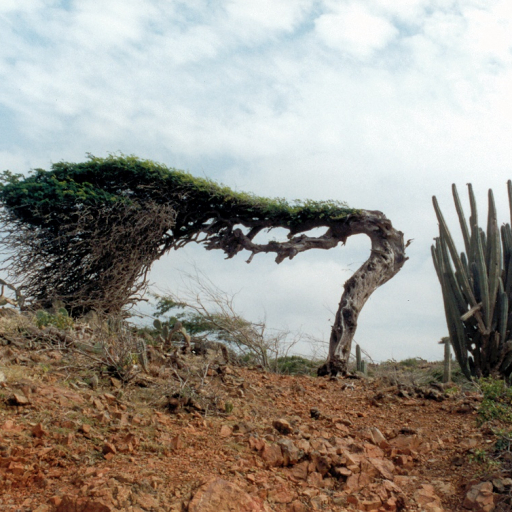
The Divi-divi tree is nature’s living weather vane. Most famous for its dramatic, wind-sculpted silhouette on the beaches of Aruba, this hardy species looks like a natural bonsai that has been bent by the hands of time. It is a symbol of resilience, thriving in salty coastal air where other plants would wither.
🔍 How to Identify
- 🌳 Growth Habit: It rarely grows straight; the trunk is often contorted and leaning, with a canopy that spreads out horizontally like an umbrella caught in a gale.
- 🌿 The Foliage: Feathery, bright green leaves are "bipinnate," meaning they look like delicate fern fronds, providing light, dappled shade.
- 🥨 The Pods: The most distinctive feature is the seed pods. They are short, flat, and thick, typically curling into distorted "S" or "C" shapes as they dry to a dark, leathery brown.
🏡 In Your Garden
- 🏖️ Coastal Champion: This plant is incredibly salt-tolerant. If you live near the ocean, it is one of the few decorative trees that can handle constant sea spray and sandy, poor-quality soil.
- ☀️ Sun Worshipper: It requires full, unobstructed sunlight to develop its iconic shape. Because it has a deep taproot to anchor itself against heavy winds, it is notoriously difficult to transplant once it reaches a few years of age—pick its "forever home" carefully!
⚠️ Safety & Toxicity
- 🛡️ General Status: Generally non-toxic to touch, but the pods are not for snacking.
- 👅 Astringent Alert: The seed pods are packed with extremely high levels of tannins (historically used for tanning leather). While not typically "poisonous" in the sense of being a deadly toxin, eating the pods will cause a very dry, puckering sensation in the mouth and may lead to stomach upset in pets or children due to the high tannin concentration.
✨ Fun Fact
In Aruba, the Divi-divi is used as a natural compass for tourists. Because the trade winds consistently blow from the Northeast, the trees almost always lean toward the Southwest. If you’re lost on the beach, just follow the direction of the tree!

Detailed Care Instructions
Caesalpinia coriaria, commonly known as divi-divi or guaracabuya, is a shrub or small tree native to the Caribbean and South America. Here are some tips on how to grow Caesalpinia coriaria plant:
- Climate: Caesalpinia coriaria thrives in warm, tropical climates. It prefers full sun and well-draining soil.
- Soil: Plant Caesalpinia coriaria in sandy or loamy soil with good drainage. It can tolerate slightly acidic to slightly alkaline soil pH levels.
- Watering: Water the plant regularly, especially during the growing season. Allow the soil to dry out slightly between waterings to prevent root rot.
- Fertilization: Fertilize Caesalpinia coriaria with a balanced, slow-release fertilizer in the spring and summer months to encourage healthy growth.
- Pruning: Prune Caesalpinia coriaria to remove dead or damaged branches and promote a bushier growth habit. Pruning can also help control the size of the plant.
- Propagation: Caesalpinia coriaria can be propagated from seeds or cuttings. Seeds should be scarified before planting to improve germination rates.
- Pests and diseases: Watch out for common pests such as aphids, spider mites, and scale insects. Treat infestations promptly with insecticidal soap or neem oil. Keep an eye out for fungal diseases like powdery mildew and rust, and treat with fungicides as needed.
By following these tips, you can successfully grow Caesalpinia coriaria plant in your garden or landscape.
Caesalpinia Coriaria plant should be watered consistently, ensuring that the soil is kept slightly moist but not waterlogged. It is important to water the plant deeply, allowing the water to penetrate the roots fully. Watering should be done in the morning to allow the plant to absorb the moisture throughout the day. It is advisable to check the moisture level of the soil regularly by inserting a finger into the soil to a depth of about an inch. If the topsoil feels dry, it is time to water the plant. Overwatering should be avoided as it can lead to root rot and other water-related issues. Additionally, consider using a well-draining potting mix to prevent water accumulation at the roots.
To fertilize Caesalpinia Coriaria, apply a balanced fertilizer with a 10-10-10 or similar ratio in the early spring before new growth appears. Follow the recommended dosage on the fertilizer package, and water the plant thoroughly after applying the fertilizer to help distribute it evenly. Repeat this fertilizing process every 4-6 weeks during the growing season to promote healthy growth and blooming. Avoid over-fertilizing as it can harm the plant.
Caesalpinia Coriaria plant is best grown in well-draining soil with a slightly acidic to neutral pH level. A sandy loam soil that is rich in organic matter is ideal for this plant, as it will provide the necessary nutrients for healthy growth. Additionally, adding some perlite or sand to the soil mixture can help improve drainage and prevent waterlogging, which can be detrimental to the plant's roots. It is important to avoid using heavy clay soils, as they can lead to poor oxygenation and root rot. Overall, a well-balanced soil mixture that retains moisture without becoming waterlogged is essential for the successful cultivation of Caesalpinia Coriaria.
Caesalpinia Coriaria plants can be propagated through the process of seed germination. Begin by collecting mature seeds from a healthy Caesalpinia Coriaria plant. To increase the chances of successful germination, scarify the seeds by gently scratching or nicking the outer seed coat with a sharp knife.
Next, prepare a well-draining potting mix consisting of equal parts sand, perlite, and peat moss. Fill small pots or trays with the potting mix and lightly water to moisten the soil. Place the scarified seeds on the surface of the soil and cover them with a thin layer of the potting mix.
Place the pots or trays in a warm and brightly lit area, ensuring they receive indirect sunlight. Keep the soil consistently moist but not waterlogged to prevent rotting of the seeds. Germination can take anywhere from 2-6 weeks, so be patient and monitor the progress regularly.
Once the seeds have germinated and the seedlings have developed a few sets of true leaves, they can be transplanted into larger pots with a well-draining potting mix. Continue to provide adequate sunlight, water, and nutrients to support the growth of the young Caesalpinia Coriaria plants.








