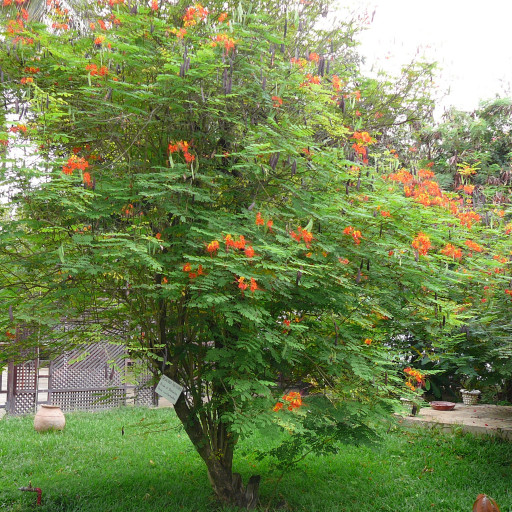
Plant Overview
Often called the "Pride of Barbados," this vibrant shrub transforms any landscape into a tropical carnival. Known for its flamboyant clusters of fiery red and sunset-orange blooms, it is so beloved that it claims the title of the national flower of Barbados. It is a resilient sun-worshipper that brings drama, height, and a touch of the exotic to warm-climate gardens.
🔍 How to Identify
- 🌿 Feathery Foliage: Features delicate, fern-like green leaves that give the plant a soft, airy texture even when it isn't in bloom.
- 🔥 Fiery Blossoms: The flowers are a striking mix of red, orange, and yellow, appearing in large upright clusters at the tips of the branches.
- 🧵 Elegant Stamens: Each individual flower has exceptionally long, dark red filaments (stamens) that extend far beyond the petals, resembling the graceful tail of a tropical bird.
🏡 In Your Garden
- ☀️ The Heat Seeker: Unlike many plants that wilt in the afternoon glare, this one thrives in intense light. In fact, the more sun it receives, the more spectacular and frequent the flower display will be.
- ✂️ Managing the Growth: It can grow quite large and "leggy" if left to its own devices. To maintain a compact, bushy shape and encourage more flowers next season, it is best to prune it back significantly in late winter or early spring.
- 🦋 Pollinator Magnet: Because of its bright colors and nectar-rich blooms, it is a favorite pitstop for migrating butterflies and hummingbirds.
⚠️ Safety & Toxicity
- 🚫 Status: Toxic if ingested.
- 🐾 Details: While beautiful, the plant produces seed pods that are dangerous. All parts, but especially the seeds, contain tannins and compounds that can cause severe gastrointestinal distress in curious pets or small children.
✨ Fun Fact
This plant is "nyctinastic," which means it has a strict bedtime routine! Its delicate leaflets fold up tightly together every evening as if the plant is going to sleep, only to reopen at the first sign of dawn.

Detailed Care Instructions
| Color | Red And Yellow |
| Soil Ph | 5.5 To 6.5 |
| Lighting | Full Sun |
| Soil Type | Any Type, Well Drained |
| Bloom Time | March Through October |
| Plant Type | Perennial Flowering Shrub |
| Mature Size | 8 Feet Tall |
| Native Area | United States Southwest |
| Sun Exposure | Full Sun |
| Hardiness Zones | 9, Usa |
To grow a Caesalpinia Pulcherrima plant, also known as the Pride of Barbados or the Red Bird of Paradise, follow these steps:
- Select a suitable location: Choose a spot with full sun exposure as Caesalpinia Pulcherrima thrives in bright sunlight and warm temperatures. The plant also prefers well-draining soil.
- Prepare the soil: Ensure the soil is well-draining by incorporating organic matter like compost or well-rotted manure into the planting area. This helps improve soil fertility and drainage.
- Sow seeds or acquire saplings: You can either sow seeds directly into the prepared soil or purchase young Caesalpinia Pulcherrima saplings from a nursery. Starting from seeds may take longer to establish.
- Plant the saplings or sow seeds: If planting a sapling, dig a hole that is slightly larger than the root ball and place the plant in the hole. Backfill the hole with soil, pressing it gently. If sowing seeds, plant them about half an inch deep and keep them well-watered.
- Watering: After planting, water the plant thoroughly to help establish the roots. During the growing season, ensure the soil remains consistently moist but not waterlogged. However, avoid overwatering to prevent root rot.
- Fertilizing: Caesalpinia Pulcherrima benefits from regular feeding with a balanced, slow-release fertilizer. Apply it according to the package instructions, typically every two to three months during the growing season.
- Pruning: Trim the plant regularly to shape it and remove any dead or damaged branches. Pruning can also encourage bushier growth and more abundant flowering.
- Mulching: Apply a layer of organic mulch, such as wood chips or straw, around the base of the plant to help conserve moisture, suppress weeds, and improve soil fertility.
- Protect from frost: Caesalpinia Pulcherrima is susceptible to frost damage. If you live in a region with cold winters, consider growing the plant in a container so you can bring it indoors during the colder months or protect it with frost cloth or other coverings.
- Pests and diseases: Monitor the plant for pests like aphids, scales, and mealybugs. Treat them immediately using organic insecticides or by manually removing them. Also, ensure proper air circulation around the plant to minimize the risk of fungal diseases.
By following these steps, you can successfully grow and care for a Caesalpinia Pulcherrima plant.

Place in a bright room that is sun drenched almost all day. Or directly in a south-facing window.

To water this plant, it is important to consider the soil moisture levels. Make sure the soil is dry to the touch before watering, as overwatering can lead to root rot. When watering, thoroughly soak the soil and allow any excess water to drain out of the bottom of the pot or container. Avoid getting water on the leaves or flowers as this can cause damage or encourage fungal growth. Watering frequency will depend on the environment and weather conditions, but generally, this plant prefers slightly drier conditions and can tolerate short periods of drought.
To properly fertilize this plant, it is recommended to use a balanced fertilizer with equal parts nitrogen, phosphorus, and potassium. Fertilize the plant every two weeks during the growing season and reduce the frequency during the dormant season. Be sure to follow the instructions on the fertilizer package and do not over-fertilize, as this can cause damage to the plant. Additionally, provide the plant with regular watering and ensure that it is receiving sufficient sunlight for optimal growth.
Caesalpinia Pulcherrima is a plant that requires well-draining soil. The soil should be nutrient rich with a pH between 6.0 and 7.5. A good soil mix for this plant would be one that contains equal parts of peat moss, perlite and sand. The peat moss will help to retain moisture, while the perlite and sand will help to improve drainage. The soil should be kept moist but not waterlogged, as this can cause root rot. Additionally, the plant prefers full sunlight, and should be grown in a warm and humid environment.
To propagate this plant, you will need to select healthy, mature stems that are at least 6 inches long. Cut the stems at a diagonal angle using sterile pruning shears, making sure to remove any leaves or buds from the bottom 2 inches of the stem. Dip the cut end of the stem into rooting hormone powder, and then plant it in a well-draining potting mix. Keep the soil moist but not waterlogged, and place the pot in a location with bright, indirect sunlight. Within a few weeks, you should see roots forming from the cut end of the stem. Once the plant has established roots, you can transplant it into a larger pot or into your garden.
Common pests of the pride-of-barbados include Spider mites, thrips, whiteflies, larvae. Make a habit of checking your pride-of-barbados frequently for pests so that any infestations can be caught and managed early.








