Plant Overview
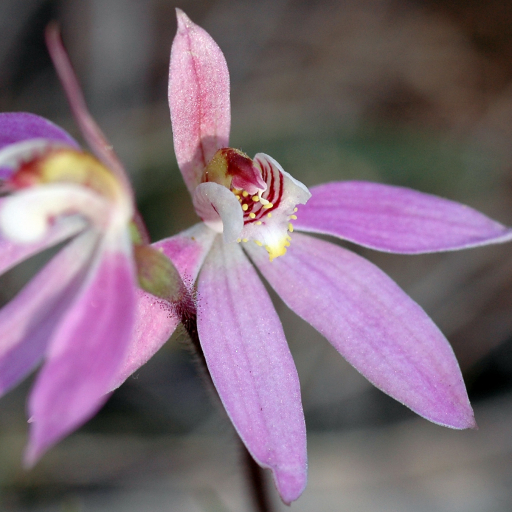
Known affectionately as "Pink Fingers," this dainty terrestrial orchid is a beloved sight across the woodlands of Australia and New Zealand. Its slender, upright petals look like a tiny hand reaching out from the forest floor, often appearing in drifts of soft pink or snowy white during the springtime. These delicate beauties are the "quiet gems" of the bush, signaling the peak of the wildflower season.
🔍 How to Identify
- 🌸 The "Fingers": The flower typically features five slender petals and sepals that are roughly equal in length, fanning out or standing upright like fingers on a hand.
- 🎀 The Labellum: Look closely at the "lip" (labellum) in the center; it is usually white or pale pink with striking transverse red-orange bars and tiny yellow tips.
- 🌿 Single Fuzzy Leaf: Each plant produces only one narrow, grass-like leaf at the base, which is covered in fine, soft hairs.
- 📏 Slender Stem: The wiry, reddish-green stem can hold anywhere from one to five blossoms, standing about 10 to 30 centimeters tall.
🏡 In Your Garden
- 🍄 A Complex Relationship: Unlike common garden flowers, Pink Fingers rely on a symbiotic relationship with specific soil fungi (mycorrhiza) to survive. This makes them nearly impossible to transplant from the wild.
- 🌳 Natural Habitat: If you have a large property with native bushland, you might find them in well-drained, sandy or gravelly soils under the dappled shade of Eucalypt trees.
- 🍃 Look, Don't Touch: Because they are so specialized, the best way to "care" for them is to protect their natural habitat from trampling or chemical runoff. They do not thrive in traditional pots or garden beds.
⚠️ Safety & Toxicity
- ✅ Safe Status: Caladenia carnea is considered non-toxic to humans and common household pets like cats and dogs.
- 🚫 Legal Protection: In many regions, these orchids are protected by law. It is illegal to dig them up or pick them in the wild. Touching the flowers can also transfer oils from your skin that may cause the bloom to wilt prematurely.
✨ Fun Fact
Pink Fingers are masters of "food deception." They produce a sweet scent to lure in native bees, but they don't actually provide any nectar! The bees visit the flower expecting a meal and end up covered in pollen, doing the plant's work for free.

Detailed Care Instructions
Caladenia carnea, commonly known as the Pink Fingers or Caladenia, is an Australian orchid that can be a bit challenging to grow, but with the right conditions and care, it's possible. Here are some tips to help you successfully cultivate this plant:
Growing Conditions
- Climate: Caladenia carnea prefers a temperate climate with distinct seasons. It thrives in areas where it can experience a winter dormancy.
- Light: Provide bright, indirect light. Direct sunlight can be too intense and may scorch the leaves.
- Soil: Use a well-draining orchid mix or a specialized mix for native Australian plants. The mix should contain coarse materials such as bark, sand, and perlite to ensure good drainage.
- Watering: Water the plant regularly during the growing season (spring to early summer) but allow the soil to dry out between waterings. Reduce watering in the dormant period (late summer to early spring).
- Humidity: A moderate level of humidity (around 50-70%) is ideal. Consider using a humidity tray or a humidifier if you're in a dry climate.
Care and Maintenance
- Fertilization: Use a diluted, balanced fertilizer (like a 20-20-20) during the growing season to promote healthy growth. Fertilize every 4-6 weeks while the plant is actively growing.
- Temperature: Ideal temperatures range from about 15-25°C (59-77°F) during the day, with slightly cooler temperatures at night.
- Potting: If you're growing them in pots, choose one that is shallow and well-draining. Repot only when necessary, as these orchids do not like to be disturbed.
- Dormancy: After the flowering period, the plant will enter dormancy. Reduce watering significantly and stop fertilizing until new growth appears in spring.
- Pest Control: Keep an eye out for common pests like aphids or scale. If any infestations occur, treat them with an appropriate insecticide or organic solution.
Propagation
Caladenia species are most commonly propagated from seed, but this is often done in controlled environments like greenhouses with specific conditions. Vegetative propagation by division is also possible.
Additional Tips
- Ensure that the growing environment mimics its natural habitat as closely as possible.
- Monitor for signs of stress, like wilting or discolored leaves.
- Patience is key, as these orchids can take time to establish and bloom.
By providing the right conditions and care, you can enjoy the unique beauty of Caladenia carnea in your garden or home.

Place in a window with dappled sun or a spot in the middle of a room. Or directly in a window facing west or east.

Watering a Caladenia carnea requires a careful approach to maintain its health and promote optimal growth. Here are detailed instructions on how to water this species:
1. Watering Schedule: This plant typically prefers a specific watering regime depending on the season. During its active growing period (usually in spring), water regularly but allow the soil to partially dry out between waterings. In contrast, reduce watering significantly or cease altogether during its dormant phase (usually in summer).
2. Soil Moisture: Use a well-draining substrate to prevent water retention, which can lead to root rot. You can mix potting soil with materials like coarse sand or perlite to enhance drainage. Before watering, check the moisture level in the top couple of inches of soil; it should feel dry before watering again.
3. Water Application: When watering, do so thoroughly until water drains out from the bottom of the pot or through the soil if planted in the ground. This ensures that the roots receive adequate moisture. Avoid waterlogging by ensuring excess water can escape.
4. Water Quality: Use clean, non-chlorinated water if possible. Rainwater or distilled water is preferable, as some tap water may have chemicals that could harm the plant over time.
5. Environmental Conditions: Consider the humidity and temperature of the environment. In drier conditions, you may need to increase the frequency of watering during the growing season. Conversely, in high humidity, water less frequently.
6. Observation: Monitor the plant for signs of overwatering or underwatering. Yellowing leaves may indicate overwatering, while shriveling or wilting could suggest that the plant is not receiving enough water.
7. Seasonal Adjustments: As temperatures rise and fall, adjust your watering frequency accordingly. During hot periods, the plant may require more frequent watering, whereas cooler or rainy periods might necessitate less frequent watering.
By adhering to these guidelines, you can ensure that your Caladenia carnea thrives in optimal conditions.
To fertilize Caladenia carnea effectively, follow these instructions:
- Timing: Apply fertilizer during the active growth phase, which is typically in spring as new growth appears.
- Fertilizer Type: Use a balanced, slow-release fertilizer with an N-P-K ratio around 10-10-10 or a specialized orchid fertilizer diluted to half strength. This provides the necessary nutrients without overwhelming the plant.
- Application Rate: Follow the manufacturer's instructions for application rates. Generally, a light application is sufficient, and it’s better to under-fertilize than over-fertilize.
- Method: Scatter the fertilizer evenly around the base of the plant, avoiding direct contact with the roots. Gently work it into the top layer of soil.
- Watering: After applying the fertilizer, water the plant to help dissolve the nutrients and promote absorption. Ensure the soil is moist but not waterlogged.
- Frequency: Fertilize every 4 to 6 weeks during the growing season, tapering off as the plant enters dormancy in late summer or fall.
- Observation: Monitor the plant for signs of nutrient deficiency or excess, such as yellowing leaves or tip burn, and adjust your fertilization practices accordingly.
By following these steps, you can provide the necessary nutrients for healthy growth.
Caladenia carnea, like many members of the orchid family, has specific soil requirements to ensure optimal growth and flowering. Here are some details regarding the soil you should use:
- Drainage: The soil must provide excellent drainage to prevent root rot. A mix that supports aeration is essential.
- Composition: A suitable mix typically includes materials such as:
- Fine-grade bark or wood chips for structure and aeration.
- Coarse sand or perlite to enhance drainage.
- Sphagnum moss can be added in small amounts to retain a little moisture while still allowing for good airflow.
- Fine-grade bark or wood chips for structure and aeration.
- pH Level: Aim for a slightly acidic to neutral pH, generally between 5.5 and 7.0. It’s important to avoid overly alkaline conditions.
- Nutrients: While orchids require some nutrients, they are generally adapted to low-nutrient environments. Therefore, the mix should not be overly rich. A slow-release fertilizer specifically formulated for orchids can be applied sparingly.
- Moisture Retention: The soil should retain some moisture without becoming soggy. This can be achieved by well-balanced components such as sphagnum moss or coconut coir, which can help maintain humidity around the roots.
- Repotting: Regularly check the condition of the mix. It typically needs to be replaced every couple of years or when it begins to break down and compact, which can negatively affect drainage and aeration.
By following these recommendations, you can create an optimal environment for the growth and health of the plant in question.
Caladenia carnea is a terrestrial orchid species that can be propagated using various methods. Here are the primary techniques for its propagation:
1. Seed Propagation:
- Collection: Collect seeds from mature seed pods once they have dried on the plant.
- Preparation: Clean the seeds to remove any debris. Note that seeds are very small and contain no endosperm, so they require specific conditions to germinate.
- Sowing Medium: Use a sterile medium, such as a mix of sphagnum moss and perlite, or a specially designed orchid mix.
- Symbiotic Germination: Given that the seeds lack nutrients, they often require a fungal partner to germinate. Inoculate the sowing medium with a suitable mycorrhizal fungus to aid in this process.
- Environment: Keep the sowing container in a warm and humid environment with indirect light. Maintain moisture but avoid waterlogging.
- Transplanting: Once the seedlings develop roots and several leaves, they can be carefully transplanted into individual pots.
2. Division:
- Timing: The best time to divide is during the plant's dormant period, typically after flowering and before new growth begins.
- Preparation: Ensure the plant is well-watered a day prior to division to reduce stress.
- Division Process: Carefully remove the plant from its pot, and gently separate the tubers or clumps of the root system, ensuring that each division has roots and healthy fan leaves.
- Replanting: Replant the divisions in suitable potting mix, allowing the new plants to acclimate to their environment.
3. Tissue Culture:
- Preparation: This method requires specialized knowledge and equipment. It involves taking small tissue samples from healthy plants.
- Culture Medium: Place the tissue samples in a sterile nutrient medium that supports orchid growth.
- Propagation: The tissue samples will develop into plantlets under controlled conditions, enabling mass propagation.
- Acclimatization: Once the plantlets are established, they must be gradually acclimated to normal conditions outside of the lab environment before transferring them to pots.
4. Considerations:
- Growing Conditions: Ensure that the environment mimics the natural habitat as closely as possible, with appropriate moisture levels, light conditions, and temperature.
- Patience: Propagating orchids, especially from seed, can be a slow process that may take several months or years before a mature plant develops.
By following these methods, you can successfully propagate Caladenia carnea and contribute to its cultivation and preservation.








