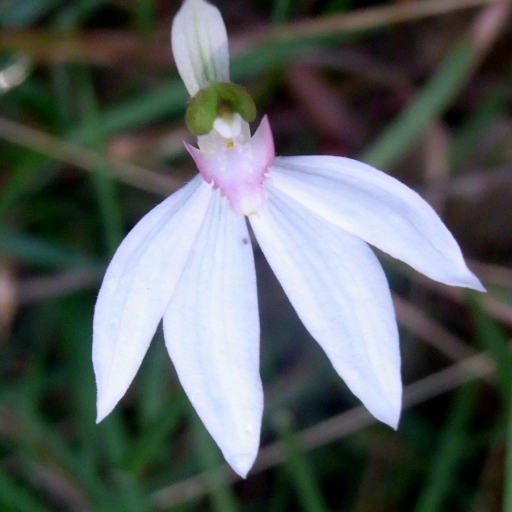
Plant Overview
Known widely as the Painted Spider Orchid, this delicate Australian native is a true masterpiece of the bushland. Its name, picta, comes from the Latin word for "painted," referring to the intricate, artistic splashes of color on its central lip. These orchids are seasonal treasures, emerging from underground tubers only when the conditions are just right.
🔍 How to Identify
- 🕷️ Spider-Like Form: The flower features long, slender petals and sepals that spread outwards like the legs of a spider, usually in shades of creamy white or pale yellow.
- 🎨 The Labellum: The "tongue" or lip of the flower is the standout feature; it is broad, fringed with tiny teeth, and decorated with bold reddish-purple stripes or spots.
- 🍃 Hairy Base: It produces a single, narrow, dull green leaf at the base of the stem, which is noticeably covered in fine, soft hairs.
🏡 In Your Garden & Habitat
- 🌲 Wild at Heart: In nature, you’ll find these orchids tucked away in dry forests and heathlands across New South Wales. They prefer well-drained, gravelly soils and the dappled shade of eucalyptus trees.
- 🍄 Microscopic Bonds: These plants are almost impossible to grow in a standard home garden. They rely on a symbiotic relationship with specific underground "mycorrhizal" fungi to survive—without these invisible roommates, the orchid cannot absorb the nutrients it needs.
- 🌦️ Seasonal Sleepers: They spend the hot, dry summer months completely dormant underground as small tubers, only showing their faces once the autumn rains arrive.
⚠️ Safety & Toxicity
- ✅ Non-Toxic: The Painted Spider Orchid is considered safe and non-toxic to humans, cats, and dogs.
- 🚫 Protection Warning: Because they are so specialized and difficult to propagate, they are often protected by environmental laws. It is illegal (and usually fatal for the plant) to dig them up from the wild, as they rarely survive transplanting.
✨ Fun Fact
The Painted Spider Orchid is a master of "Sexual Deception." It emits pheromones that mimic the scent of a female thynnine wasp, tricking male wasps into attempting to mate with the flower—a process that ensures the orchid gets pollinated!

Detailed Care Instructions

Place in a window with dappled sun or a spot in the middle of a room. Or directly in a window facing west or east.

Some plants require more regular watering than others, which should be done every few days. It's critical to maintain the soil moist all of the time. The water requirements of the same plant placed in pots with varying sizes will differ. Because the water in the smaller pot evaporates faster than the water in the larger pot, it will require more watering. Regardless of pot size, the surface should constantly be maintained moist.








