Plant Overview
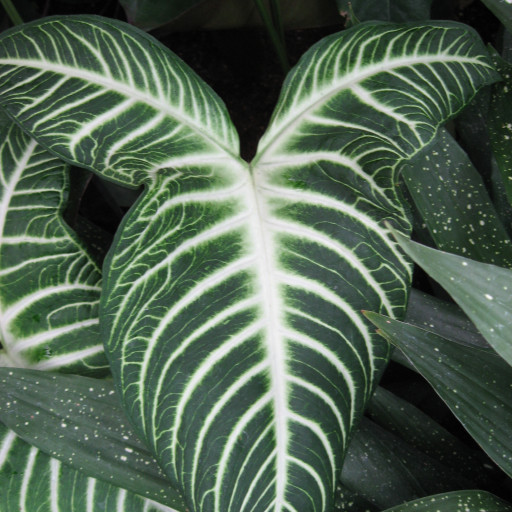
Often called the "Angel’s Wing" or "White Vein," Caladium lindenii is a showstopper from the tropical rainforests of Colombia. Unlike its more colorful, translucent cousins, this plant focuses on high-contrast elegance with deep emerald foliage and luminous, skeletal white veins. It is a favorite for collectors who want a dramatic, architectural statement that feels more "jungle-chic" than "cottage-core."
🔍 How to Identify
- 🍃 Leaf Shape: Distinctive, large arrowhead or "V" shaped leaves that can grow quite large under the right conditions.
- 🦴 Venation: Striking, thick creamy-white veins that branch out symmetrically from the midrib to the leaf margins, creating a rib-cage-like pattern.
- 🌿 Texture: The leaves are more leathery and matte than typical paper-thin Caladiums, giving the plant a sturdier, more "prehistoric" appearance.
🏡 In Your Garden
- ☁️ Humidity Obsession: This plant is a humidity snob. While some houseplants can adapt to dry indoor air, this one requires high moisture (60%+) to prevent its beautiful leaf edges from turning crispy and brown.
- 💤 Winter Dormancy: Like all Caladiums, it grows from a tuber. If the plant suddenly wilts and dies back in the winter, don't throw it away! It is likely just "sleeping" and will sprout again in the spring once the temperature rises.
- 🪴 Soil Nuance: It prefers a "chunky" but moisture-retentive mix. Because it grows from a tuber, it hates sitting in soggy, stagnant soil, which can lead to rot faster than you can say "Colombia."
⚠️ Safety & Toxicity
- 🚫 Toxic Status: Contains insoluble calcium oxalate crystals.
- 🐶 Pets & Kids: If chewed or swallowed, it causes immediate intense burning of the mouth, tongue, and throat. It can lead to swelling and drooling in pets. Always keep this plant on a high shelf or in a room restricted from curious nibblers.
✨ Fun Fact
🧪 The Identity Crisis: This plant has been through a major botanical identity crisis! For decades, it was known as Xanthosoma lindenii. After closer genetic inspection, botanists officially moved it into the Caladium genus, though you will still see it sold under its old name in many nurseries.

Detailed Care Instructions
| Humidity | Normal |
| Lighting | Part Sun |
| Toxicity | Poisonous |
| Difficulty | Medium |
| Temperature | 21°C - 28°C |
To grow Caladium Lindenii, also known as the Angel's Wings or Heart of Jesus plant, follow these steps:
- Choose a suitable location: Caladium Lindenii thrives in bright, indirect light. Place it in a spot where it receives bright, filtered sunlight or partial shade. Avoid direct sunlight as it can scorch the leaves.
- Provide the right temperature and humidity: The ideal temperature range for Caladium Lindenii is between 65-85°F (18-29°C). It prefers high humidity levels, so misting the leaves or placing the plant on a tray filled with water and pebbles can help increase humidity.
- Use well-draining soil: Caladium Lindenii prefers well-draining soil to prevent soggy roots. Use a potting mix that contains a blend of peat moss, perlite, and compost for good drainage.
- Water properly: Keep the soil consistently moist but not waterlogged. Allow the top inch of soil to dry out slightly before watering again. Avoid overwatering as it can lead to root rot. Watering requirements may vary depending on the temperature and humidity of your location.
- Fertilize occasionally: Feed your Caladium Lindenii plant with a balanced, water-soluble houseplant fertilizer every 4-6 weeks during the growing season (spring and summer). Follow the instructions on the fertilizer package for the proper dilution and application.
- Maintain proper airflow: Good air circulation helps prevent fungal diseases and keeps the plant healthy. Avoid overcrowding your Caladium Lindenii with other plants and ensure there is enough space for air movement.
- Prune as needed: Trim away any yellow or withered leaves to maintain the plant's appearance. Pruning also helps to improve airflow around the plant.
- Repot when necessary: If your Caladium Lindenii outgrows its pot or the roots become too crowded, repot it into a slightly larger container. Use fresh potting soil during the repotting process.
- Protect from extreme temperatures: Caladium Lindenii is sensitive to cold drafts and temperatures below 60°F (15°C). During winter, keep the plant away from cold drafts or heaters. If the temperature drops too low, it may cause the leaves to wilt and die.
By following these guidelines, you should be able to successfully grow and care for your Caladium Lindenii plant.

Place in a window with dappled sun or a spot in the middle of a room. Or directly in a window facing west or east.

To properly water this plant, the soil should be kept consistently moist but not waterlogged. One way to check if the plant needs water is to stick your finger about an inch into the soil. If it feels dry at that depth, it's time to water.
The best way to water is to pour enough water onto the soil so that it starts to come out of the drainage holes at the bottom of the pot. Discard any excess water that accumulates in the saucer underneath the pot.
It's important not to let the plant sit in standing water, as this can lead to root rot.
During the winter months when the plant is dormant, it may require less frequent watering. Always make sure the soil isn't completely dry before watering, even during dormancy.
To fertilize the Caladium Lindenii plant, use a balanced liquid fertilizer every two weeks during the growing season. Ensure that the fertilizer contains equal amounts of nitrogen, phosphorus, and potassium. Dilute the fertilizer by mixing it with water, and apply it directly to the soil surrounding the plant. Avoid getting any fertilizer on the leaves or stem. During the dormant season, reduce the frequency of fertilization to once a month.
Caladium Lindenii requires well-drained and slightly acidic soil with a pH level between 5.5 to 6.5. The soil should be amended with organic matter such as peat moss or compost to improve its fertility and moisture-holding capacity. The plant prefers a loamy soil that is rich in nutrients but doesn't hold too much water. Avoid using heavy clay or sandy soil as these types can negatively affect plant growth. It's also recommended to provide a layer of mulch on top of the soil to help retain moisture and regulate soil temperature. Additionally, the plant should be watered regularly, but not overwatered to prevent root rot.
Propagation of this species of plant can be achieved through division of the tuberous rhizomes. To do this, carefully remove the plant from its pot and gently separate the rhizomes. Each division should have at least one healthy shoot.
Prepare a well-draining soil mix and plant each division in its own pot. Keep the soil moist and place the pots in a bright, warm location, but out of direct sun. Roots and new growth should begin to appear in a few weeks.
Alternatively, propagating from stem cuttings can also be successful. Cut a healthy stem with at least two leaves and dip the end in a rooting hormone before planting it in a moist soil mix. Place a plastic bag over the pot to maintain humidity and keep it moist. After a few weeks, roots should begin to develop and the bag can be removed.
Common pests of the angel wings include Mealybugs, spider mites, aphids, thrips. Make a habit of checking your angel wings frequently for pests so that any infestations can be caught and managed early.








