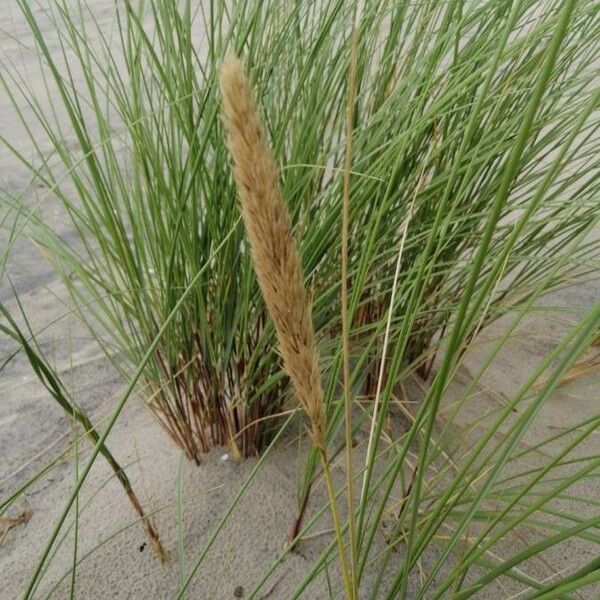
Plant Overview
Often called the "Architect of the Dunes" or Marram Grass, this resilient grass is the silent hero of the coastline. Originally hailing from the sandy shores of Europe and North Africa, it has traveled the world as nature’s primary defense against coastal erosion. Its name comes from the Old Norse words marr (sea) and halm (straw), perfectly capturing its rugged, maritime spirit.
🔍 How to Identify
- 🌾 The Foliage: Stiff, narrow, gray-green leaves that are often tightly rolled inward. This shape isn't just for show; it’s a clever adaptation to trap moisture and resist the drying salt spray.
- 🕯️ The Flowers: In summer, it sends up dense, cylindrical flower spikes that look like soft tan "candles" swaying atop sturdy stems.
- ⚓ The Root System: What you see above ground is only half the story. Beneath the sand, it develops a massive network of creeping rhizomes (underground stems) that act like a net to anchor shifting dunes.
🏡 In Your Garden
- 🏖️ Soil Context: This is a specialist plant. It thrives in poor, sandy, and well-drained soils where most other plants would wither. In a home garden, it’s best used for "Xeriscaping" (water-wise gardening) or stabilizing sandy slopes, but it will struggle in heavy, nutrient-rich clay.
- 💨 Hardiness: It is incredibly salt-tolerant and wind-resistant. However, it actually needs to be buried by blowing sand to stay healthy—the fresh sand provides a "growth signal" to its roots, keeping the plant vigorous.
⚠️ Safety & Toxicity
- ✅ Status: Non-toxic and safe for pets and children.
- ⚔️ Physical Hazard: While not poisonous, its leaves are exceptionally sharp and stiff. They can cause painful "paper cuts" on bare skin. It is best planted away from narrow walkways or areas where children frequently run barefoot.
✨ Fun Fact
Marram Grass is a biological overachiever—it can grow vertically through as much as one meter of newly deposited sand in a single year, effectively "climbing" out of its own burial to stay on top of the dune!

Detailed Care Instructions
To grow Calamagrostis arenaria (Sand reed) plants, follow these steps:
- Choose a suitable location: Calamagrostis arenaria prefers full sun but can tolerate partial shade. It requires well-draining soil and is often found in sandy or gravelly areas. Ensure that the location you choose mimics these conditions.
- Prepare the soil: Before planting, loosen the soil and remove any weeds or grasses. Add organic matter such as compost or peat moss to improve soil fertility and moisture retention.
- Planting: Dig a hole slightly larger than the root ball of the plant. Place the Calamagrostis arenaria in the hole, ensuring it is at the same depth it was in the nursery container. Fill the hole with soil and firm it gently around the plant.
- Watering: After planting, water the plant thoroughly to settle the soil around the roots. Calamagrostis arenaria is drought-tolerant once established, but regular watering is essential during the establishment period.
- Mulching: Apply a layer of organic mulch around the base of the plant to conserve moisture, suppress weed growth, and protect the roots from temperature fluctuations. Keep the mulch a few inches away from the stems to prevent rot.
- Maintenance: Calamagrostis arenaria requires minimal maintenance once established. However, to maintain its health and aesthetics, it is recommended to prune the plant in late winter or early spring. Cut back the old foliage to a few inches from the ground to allow fresh growth.
- Division: After a few years, Calamagrostis arenaria can become crowded. To maintain the plant's vigor and spread, it can be divided in early spring or early fall. Dig up the clumps, divide them into smaller sections, and replant them in the desired location.
- Pest and disease control: Calamagrostis arenaria is generally not prone to serious pest or disease issues. However, occasional checks for pests like aphids or grasshoppers and treatment with organic insecticides may be necessary if a problem arises.
Remember that different regions may have specific climate conditions that Calamagrostis arenaria may or may not tolerate. It is always beneficial to consult local gardening resources or experts for more specific guidelines tailored to your climate.

Place in a bright room that is sun drenched almost all day. Or directly in a south-facing window.

To water the Calamagrostis Arenaria plant, it is important to understand its specific watering needs. Here are the details:
1. Observe the soil: Before watering the plant, assess the moisture level of the soil. Insert your finger about an inch or two deep into the soil to check for moisture. If the soil feels dry at this depth, it is an indication that the plant requires watering.
2. Water deeply: When watering the Calamagrostis Arenaria, it is essential to ensure that water reaches the plant's roots. Hence, watering deeply is recommended. Slowly apply water around the base of the plant until you see it start to seep into the soil. Be cautious not to overwater, as excessive moisture can lead to root rot or other fungal diseases.
3. Frequency of watering: Calamagrostis Arenaria generally prefers moist soil. However, it is crucial to allow the soil surface to dry out slightly between waterings to prevent waterlogging. Depending on the climate and environmental conditions, watering once or twice a week may be sufficient. Adjust the frequency based on the plant's moisture requirements and the prevailing weather conditions.
4. Mulching: Applying a layer of organic mulch around the plant can help retain soil moisture and regulate its temperature. This aids in reducing water evaporation from the soil and helps the plant stay adequately hydrated.
5. Monitor environmental factors: Pay attention to factors like temperature and sunlight exposure, as they can influence the plant's water requirements. Hotter and drier conditions may necessitate more frequent watering, while colder and shadier conditions may require less frequent watering.
It is important to note that the Calamagrostis Arenaria plant has specific watering needs, and it is always recommended to familiarize yourself with the plant's requirements to ensure optimal care and growth.
To fertilize Calamagrostis Arenaria:
- Choose a balanced fertilizer with an equal N-P-K ratio (such as 10-10-10 or 20-20-20).
- Dilute the fertilizer according to the package instructions.
- Water the Calamagrostis Arenaria thoroughly before applying the fertilizer.
- Apply the diluted fertilizer around the base of the plant, avoiding direct contact with the foliage.
- Gently work the fertilizer into the soil using a garden fork or rake.
- Water the plant again after fertilizing to help the nutrients penetrate the soil.
- Repeat the fertilization process once every spring and early summer to provide adequate nutrients for healthy growth.
- Monitor the plant's health and adjust the fertilizer regimen if necessary, based on the plant's response and any nutrient deficiencies observed.
Calamagrostis arenaria is a perennial grass species that belongs to the Poaceae family. When selecting soil for this plant, it is important to provide the ideal growing conditions to ensure its health and vitality.
The preferred soil for Calamagrostis arenaria is well-draining and moisture-retentive. It should have a balanced composition, including a mixture of organic matter, sand, and loam. This type of soil allows for proper root development and prevents waterlogging, which can lead to root rot.
The pH level of the soil should be slightly acidic to neutral, ideally ranging between 6.0 and 7.0. However, Calamagrostis arenaria can tolerate a slightly wider pH range, from mildly acidic to mildly alkaline.
To enhance soil fertility, organic matter such as compost or well-rotted manure can be added. This helps to improve the overall structure of the soil, enhancing its ability to retain moisture while also providing essential nutrients for the plant's growth.
It is advisable to avoid using heavy clay soils or pure sandy soils, as they may either retain too much moisture or drain too quickly, respectively. The objective is to strike a balance between water retention and drainage to create the best conditions for the Calamagrostis arenaria's root system.
Before planting the Calamagrostis arenaria, it is recommended to prepare the soil by removing any weeds or large rocks. Additionally, loosening the soil to a depth of about 6-8 inches (15-20 cm) helps promote better root penetration.
Proper soil selection and preparation are crucial for the successful cultivation of Calamagrostis arenaria. By providing the ideal growing environment, you can ensure the health, vigor, and longevity of this beautiful perennial grass.
Calamagrostis arenaria is a perennial grass species that can be propagated by several methods. Here are the details on how to propagate this plant:
- Division: The most common method to propagate Calamagrostis arenaria is through division. This should be done during the early spring or fall when the plant is dormant. Start by digging up the mature plant, making sure to include as much of the root system as possible. Gently separate the clump into smaller sections, ensuring that each division has a good amount of roots and shoots. Replant these divisions immediately in a well-prepared soil, ensuring that the crown (where the roots meet the shoots) is level with the soil surface. Water the newly planted divisions thoroughly.
- Seed sowing: Calamagrostis arenaria can also be propagated from seeds. Collect the seeds from the plant when they are fully ripe, usually during late summer or early fall. Ensure that the seeds are dry before storing them in a cool, dry place. In late winter or early spring, sow the seeds in trays or pots filled with a well-draining soil mix. Cover the seeds with a thin layer of soil and provide adequate moisture. Place the trays or pots in a warm, well-lit area, but out of direct sunlight. Keep the soil consistently moist until germination occurs, which usually takes around 2-4 weeks. Once the seedlings have developed a few leaves, transplant them into individual pots or into the desired growing location.
- Rhizome cuttings: Another method of propagating Calamagrostis arenaria is through rhizome cuttings. Rhizomes are underground stems that grow horizontally, sending out roots and shoots from various points along their length. To propagate through rhizome cuttings, carefully dig up the mature plant, locating a healthy rhizome with multiple growing points. Cut the rhizome into several sections, ensuring that each section has at least one growing point and a good amount of roots attached. Plant these rhizome cuttings immediately in a well-prepared soil, burying them at the appropriate depth with the growing point facing upwards. Water the cuttings thoroughly and keep them consistently moist until they establish.
It's important to note that Calamagrostis arenaria prefers full sun to partial shade and well-draining soil. Additionally, providing regular watering and adequate space for the plant to grow will help ensure successful propagation.








