Plant Overview
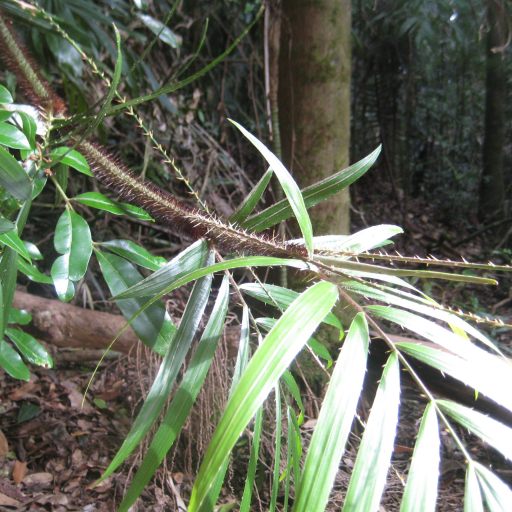
Often called the "Wait-a-while" vine or "Southern Lawyer Vine," Calamus muelleri is a notorious and fascinating climbing palm native to the subtropical rainforests of Eastern Australia. It earned its nicknames because its hooked tendrils are so effective at snagging clothing and skin that anyone caught by them must literally "wait a while" to untangle themselves. While it can be a hiker's nightmare, it is a vital component of the rainforest ecosystem, providing a vertical highway for local wildlife.
🔍 How to Identify
- 🌿 Climbing Canes: Unlike typical palms with trunks, this is a "rattan" palm with slender, flexible stems (canes) that can grow over 15 meters long as they scramble toward the canopy.
- 🪝 The "Hooks": Look for long, whip-like tendrils (flagella) armed with sharp, backward-pointing barbs. These act like botanical Velcro, allowing the plant to anchor itself to neighboring trees.
- 🍃 Spiny Foliage: The feathery, pinnate leaves are bright green, but don't let the color fool you—the leaf sheaths and even the midribs are covered in dense, needle-like dark spines.
🏡 In Your Garden & Ecology
- 🌳 Natural Scrambler: In a garden setting, this plant requires a large space and a sturdy support system, such as a mature tree or a heavy-duty trellis. It is not a plant for small, manicured spaces.
- 🦜 Wildlife Sanctuary: Because of its fierce thorns, it creates a "fortress" for small birds and mammals. They often build nests deep within the vine's thicket, knowing that larger predators cannot reach them through the prickly barrier.
⚠️ Safety & Toxicity
- 🩹 Physical Hazard: The primary danger is physical. The recurved barbs can cause deep scratches or ruin delicate clothing. If you get caught, the best strategy is to back up rather than pull away.
- 🐾 Pet & Child Safety: While not known to be chemically toxic, the sharp spines make it a significant injury risk. It should never be planted near walkways, play areas, or paths where pets and children frequently run.
✨ Fun Fact
The name "Lawyer Vine" is a piece of old Australian dark humor. It was named such because "once it gets its claws into you, it’s almost impossible to get free without losing the shirt off your back."

Detailed Care Instructions
Calamus muelleri, commonly known as rattan or climbing palm, can be a rewarding plant to grow, especially if you need a durable material for crafting or furniture. Here's a step-by-step guide on how to grow Calamus muelleri:
1. Selecting the Right Environment
- Climate: Rattan prefers tropical and subtropical climates. It thrives in high humidity and temperatures between 20°C to 30°C (68°F to 86°F).
- Light: Requires partial shade to full sunlight. Too much direct sunlight can scorch the leaves, while too little can stunt its growth.
- Soil: Prefers well-draining, fertile, and loamy soil. It grows well in mildly acidic to neutral pH conditions.
2. Sourcing Seeds or Seedlings
- Seeds: You can obtain seeds from specialized suppliers. Fresh seeds have higher germination rates.
- Seedlings: Alternatively, seedlings can be purchased from nurseries that specialize in tropical plants.
3. Planting
- Seed Preparation: Soak seeds in water for 24 hours before planting to accelerate germination.
- Germination: Seeds can be germinated in seed trays filled with a mix of peat and sand. Maintain a humid environment by covering the tray with plastic wrap.
- Transplanting: Once seedlings have germinated and are strong enough to handle, transplant them into larger pots or directly into the ground.
4. Site Preparation
- Hole Preparation: Dig a hole about 2-3 times the size of the root ball. Mix some organic compost into the original soil for better nutrient content.
- Spacing: Space plants about 1-2 meters apart to allow sufficient room for growth.
5. Care and Maintenance
- Watering: Keep the soil consistently moist but not waterlogged. Rattan plants require regular watering, especially during dry spells.
- Mulching: Apply a layer of organic mulch around the base to retain moisture and regulate soil temperature.
- Fertilizing: Use a balanced, slow-release fertilizer every few months. Organic compost or manure can also be beneficial.
- Pruning: Trim dead or yellowing leaves to promote healthy growth and prevent diseases.
- Support: Provide a sturdy support, such as a trellis, for the plant to climb.
6. Pest and Disease Management
- Pests: Watch for common pests such as scale insects, mealybugs, and spider mites. Use appropriate insecticides or organic treatments like neem oil.
- Diseases: Fungal infections can occur in overly wet conditions. Ensure good air circulation and avoid water logging.
7. Harvesting
- Timeframe: It can take several years for rattan to mature enough for harvesting, typically around 7-10 years.
- Method: Harvest by cutting the canes at the base. Young shoots can also be harvested regularly for continuous production.
8. Propagation
- Division: Mature plants can be divided to propagate new plants. Carefully divide the root ball and replant separated sections.
- Air Layering: This method can be used to propagate new plants from mature canes.
9. Sustainability
- Ethical Harvesting: Harvest mature canes without damaging the plant to ensure sustainable growth.
- Conservation: Rattan is often harvested from the wild, contributing to deforestation. Growing your own promotes conservation efforts.
By following these guidelines, you can successfully grow and cultivate Calamus muelleri, ensuring you have a sustainable source of this valuable material.
Watering Calamus muelleri, a type of rattan palm, involves understanding its natural habitat and recreating similar conditions:
- Frequency: This plant typically thrives in moist environments. Water it consistently, ensuring the soil remains moist but not waterlogged. The frequency may vary based on your local climate and the humidity levels in your area. A good rule of thumb is to water it when the top inch of soil feels dry to the touch.
- Amount: During each watering session, water thoroughly so that the soil is evenly moist. This deep watering encourages roots to grow deeper and become more robust.
- Soil: Use well-draining soil to prevent water from stagnating around the roots, which can cause root rot. A mixture containing organic matter such as compost can help retain moisture while ensuring good drainage.
- Humidity: As a plant from humid environments, it benefits from high humidity levels. Mist the leaves regularly or use a humidity tray to maintain adequate moisture in the air around the plant.
- Observation: Keep an eye on the plant for signs of over- or under-watering. Yellowing leaves can indicate over-watering, while brown, crispy edges may suggest the plant is too dry.
- Seasonal Adjustment: Adjust the watering frequency based on seasonal changes. During the warmer growing season, you may need to water more frequently. In the cooler months, reduce watering but ensure the soil doesn't completely dry out.
By closely monitoring the plant and adjusting your watering routine based on observed needs and environmental conditions, you can help ensure the healthy growth of your Calamus muelleri.
To ensure the healthy growth of your Calamus muelleri, follow these fertilizing guidelines:
- Soil: Make sure the plant is in well-draining soil with a mix of organic matter to support nutrient uptake.
- Timing: Fertilize the plant during its active growing season, typically in spring and summer. Avoid fertilizing during the dormant period in fall and winter.
- Type of Fertilizer: Use a balanced, slow-release fertilizer with an N-P-K ratio around 10-10-10 or 20-20-20. You can also use a liquid fertilizer diluted to half strength.
- Application:
- Follow the manufacturer's instructions for the specific fertilizer you're using.
- For slow-release granular fertilizers, evenly distribute the granules in the soil around the plant, being careful to keep them away from the base to avoid root burn.
- For liquid fertilizers, apply the solution directly to the soil, avoiding foliage contact to prevent leaf damage.
- Follow the manufacturer's instructions for the specific fertilizer you're using.
- Frequency:
- If using a slow-release granular fertilizer, apply it about once every three months.
- If opting for liquid fertilizer, feed the plant every 4-6 weeks during the growing season.
- If using a slow-release granular fertilizer, apply it about once every three months.
- Watering: Always water the plant thoroughly after applying fertilizer to help distribute the nutrients in the soil and prevent root burn.
- Observations: Monitor the plant for signs of nutrient deficiency or excess, such as yellowing leaves or stunted growth. Adjust the fertilizing schedule accordingly to avoid over-fertilization.
By following these instructions, you should see healthy and robust growth in your Calamus muelleri.
Calamus muelleri thrives best in well-draining soil rich in organic matter. For optimal growth, it is advisable to use a mix that ensures both good drainage and adequate moisture retention. Here are some detailed guidelines on the soil composition you should consider:
- Soil Type: Use loamy soil, which is a balanced mix of sand, silt, and clay. This type of soil provides a good balance between drainage and water retention.
- Organic Matter: Incorporate plenty of organic matter such as compost or well-rotted manure. This enriches the soil with essential nutrients and improves its structure.
- pH Level: Ensure the soil has a slightly acidic to neutral pH, ideally between 6.0 and 7.0. You can test the soil pH with a soil pH meter or pH test kit.
- Drainage: Good drainage is crucial to prevent waterlogged conditions, which can lead to root rot. If your garden soil is heavy clay, consider amending it with sand or perlite to enhance drainage.
- Mulch: Apply a layer of mulch around the base of the plant to help retain soil moisture and regulate soil temperature. Organic mulches like bark chips, leaf mold, or straw work well.
- Fertility: Use a balanced, slow-release fertilizer to provide essential nutrients. Alternatively, you can periodically apply a liquid fertilizer during the growing season.
- Moisture: Ensure that the soil remains consistently moist but not waterlogged. Regular watering is important, especially during dry periods.
- Aeration: Ensure the soil is well-aerated, as compacted soil can hinder root growth. You can achieve this by incorporating organic matter and avoiding over-tilling.
By following these guidelines, you can create an ideal growing environment for Calamus muelleri, promoting healthy growth and development.
Calamus muelleri can be propagated either through seeds or vegetative methods like division of suckers. Here’s a detailed guide for each method:
Propagation by Seeds
- Seed Collection:
- Harvest seeds from ripe fruits.
- Ensure seeds are healthy and mature.
- Harvest seeds from ripe fruits.
- Seed Preparation:
- Clean the seeds by removing the fruit pulp.
- Soak seeds in water for 24-48 hours to soften the seed coat and improve germination rates.
- Clean the seeds by removing the fruit pulp.
- Sowing Seeds:
- Prepare a well-draining potting mix, typically a mixture of sand, peat, and compost.
- Sow seeds about 1-2 cm deep in the potting mix.
- Ensure even spacing if sowing multiple seeds.
- Prepare a well-draining potting mix, typically a mixture of sand, peat, and compost.
- Germination Conditions:
- Maintain a warm, humid environment – temperatures between 25-30°C (77-86°F) are optimal.
- Keep the soil consistently moist but not waterlogged.
- Use a plastic cover or greenhouse to maintain humidity if necessary.
- Maintain a warm, humid environment – temperatures between 25-30°C (77-86°F) are optimal.
- Transplanting:
- Once seedlings have a few sets of true leaves and appear strong, they can be transplanted to individual pots or directly into the ground.
- Ensure the new location has suitable soil and adequate moisture.
Propagation by Division of Suckers
- Once seedlings have a few sets of true leaves and appear strong, they can be transplanted to individual pots or directly into the ground.
- Identification of Suckers:
- Look for young shoots emerging from the base of the parent plant.
- Look for young shoots emerging from the base of the parent plant.
- Preparation:
- The best time for division is during the plant’s active growing season.
- Water the plant thoroughly a day before dividing to reduce stress.
- The best time for division is during the plant’s active growing season.
- Division Process:
- Carefully dig around the base of the plant to expose the suckers.
- Use a sharp, sterilized knife to separate the sucker from the parent plant. Ensure each division has roots attached.
- Carefully dig around the base of the plant to expose the suckers.
- Planting the Suckers:
- Prepare planting holes or pots with a similar well-draining potting mix as described for seed propagation.
- Plant the suckers at the same depth they were growing previously.
- Water thoroughly after planting to settle the soil around the roots.
- Prepare planting holes or pots with a similar well-draining potting mix as described for seed propagation.
- Aftercare:
- Keep the newly planted suckers in a shaded area initially to reduce transplant shock.
- Gradually introduce them to more light as they establish.
- Maintain consistent moisture and monitor for any signs of stress or disease.
General Care Tips for Both Methods
- Keep the newly planted suckers in a shaded area initially to reduce transplant shock.
- Light: Prefers partial to full shade in its early stages. Can tolerate more light as it matures.
- Soil: Requires well-drained, fertile, and slightly acidic to neutral soil.
- Watering: Needs regular watering, especially during dry periods, but avoid waterlogging.
- Fertilization: Apply a balanced, slow-release fertilizer during the growing season for optimal growth.
By following these steps and providing appropriate care, you can successfully propagate Calamus muelleri and enjoy its unique characteristics in your garden or landscape.








