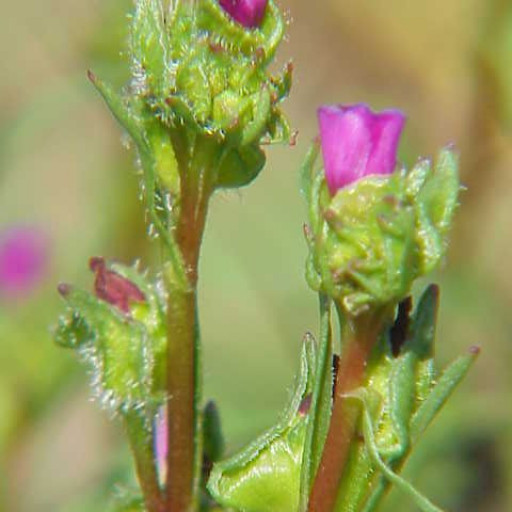
Plant Overview
Often called "Redmaids," these brilliant wildflowers are the hidden gems of Western North American grasslands. When the sun hits a field of these annuals, they unfurl neon-pink petals to create a shimmering carpet that looks like scattered rubies. They are tough survivors, frequently appearing as the first sign of life in the wake of seasonal rains or in disturbed soils.
🔍 How to Identify
- 🌸 Neon Blooms: Five-petaled flowers in shades of deep magenta or rose-red, usually less than an inch wide, with yellow centers.
- 🍃 Succulent Leaves: Fleshy, narrow, grass-like leaves that are slightly waxy to the touch, helping the plant store moisture.
- 👁️ Fringed Sepals: If you look closely at the green base of the flower, you’ll see tiny, hair-like fringes—this is the "cilia" that gives the plant its species name.
🏡 In Your Garden
- 🌞 Sun Seekers: Redmaids are diurnal, meaning they only open their flowers in full, direct sunlight; on cloudy days or in the shade, they remain tightly closed buds.
- 🌱 The Taproot Rule: Because they develop a long, sensitive taproot to find water, they absolutely hate being transplanted. It is best to sow their tiny black seeds directly into sandy or well-draining soil.
- 🦋 Pollinator Magnet: While small, their vibrant color is a homing beacon for native bees and butterflies looking for an early-season nectar snack.
⚠️ Safety & Toxicity
- 🐾 Pet Sensitivity: Redmaids contain calcium oxalates, similar to spinach. While not deadly, they can cause mouth irritation or digestive upset in pets if consumed in large quantities.
- 🚜 Livestock Note: In a pasture setting, they are generally considered safe, though excessive grazing can lead to "oxalate poisoning" in sheep or cattle if they eat nothing else.
✨ Fun Fact
Native American tribes, including the Luiseño and Chumash, highly prized Redmaid seeds as a staple food. The seeds are so rich in oil and flavor that they were often ground into a nutritious meal or pressed into small, fudge-like cakes.

Detailed Care Instructions
To grow Calandrinia ciliata plants, follow these steps:
- Choose a sunny location: Calandrinia ciliata plants thrive in full sun. Select a spot in your garden that receives at least 6 hours of direct sunlight per day.
- Prepare the soil: These plants prefer well-drained soil with low fertility. If your soil is heavy or clayey, improve it by adding organic matter like compost or well-rotted manure. This helps with drainage and nutrient levels.
- Planting: Dig a hole that is slightly larger than the root ball of the plant. Place the plant in the hole, making sure the top of the root ball is level with the surrounding soil. Backfill the hole with soil and gently firm it around the plant, avoiding excessive tamping.
- Watering: After planting, water the plant thoroughly to settle the soil and encourage establishment. Calandrinia ciliata prefers moderate watering. Water deeply when the top inch of soil feels dry.
- Mulching: Apply a layer of organic mulch, such as straw or bark chips, around the plant to help conserve moisture, control weeds, and insulate the roots.
- Fertilizing: In general, Calandrinia ciliata plants do not require extensive fertilization. However, you can apply a balanced slow-release fertilizer once a year in the spring if your soil is low in nutrients.
- Pruning: To encourage bushier growth and more flowers, pinch back the tips of the plant when it is young. This helps to promote branching.
- Protect from frost: Calandrinia ciliata is a tender perennial that is sensitive to frost. If you live in an area with cold winters, consider growing it as an annual or protect it by covering with a frost cloth or moving it indoors.
- Pests and diseases: These plants are generally less prone to pests and diseases. However, keep an eye out for snails, slugs, and aphids, and take appropriate measures if you find infestations.
- Propagation: Calandrinia ciliata can be propagated from seeds or by dividing established clumps. Sow seeds in early spring or fall, just barely covering them with soil. Transplant seedlings when they are large enough to handle. To divide clumps, carefully lift a mature plant and use a sterilized knife or spade to separate the rootball into several smaller sections. Replant the divisions immediately.
By following these steps and providing proper care, you can successfully grow Calandrinia ciliata plants in your garden.

Place in a bright room that is sun drenched almost all day. Or directly in a south-facing window.

To water the plant, use clean, room temperature water and avoid overwatering as it can damage the plant. It is recommended to let the soil dry out partially before watering. When watering, pour the water slowly directly onto the soil around the plant, making sure to moisten the root zone. Be careful not to get water on the leaves as this can cause damage and encourage disease. Ensure that the soil has proper drainage to prevent waterlogging. The frequency and amount of watering required will depend on factors such as the plant's location, temperature, and humidity levels. It is best to monitor the soil moisture level regularly and adjust the watering schedule accordingly.
To properly fertilize this plant, you should first choose a balanced fertilizer with equal amounts of nitrogen, phosphorus and potassium. Dilute the fertilizer to half the recommended strength and apply it to the plant's base once a month during its active growing season. Be sure to water the plant thoroughly before and after fertilizing. Avoid fertilizing during the plant's dormant season. Additionally, you may want to supplement with a slow release fertilizer or organic compost for extended and gradual feeding.
Calandrinia Ciliata plant is a perennial plant that thrives well in well-draining soil that is mildly acidic to neutral pH. The ideal soil mixture should be rich in organic matter and loamy with excellent water retention properties. It requires a soil blend that is not compact, heavy, or clayey, as it needs aeration and good drainage. A suitable mix for Calandrinia Ciliata plant consists of one part garden soil, one part compost, and one part coarse sand or perlite to improve soil drainage. Additionally, adding a small amount of slow-release fertilizer to the soil mix can help provide essential nutrients to the plant. With proper soil mixture, the Calandrinia Ciliata plant can thrive and produce lush foliage and vibrant-looking blooms.
One way to propagate this plant is through stem cuttings. Choose a healthy stem and cut it about 4-6 inches long with sharp, clean scissors or pruning shears. Remove the leaves from the bottom half of the cutting and dip the cut end in rooting hormone powder. Plant the cutting in well-draining soil and water it thoroughly. Keep the soil moist but not waterlogged and place the cutting in a bright, indirect light location. After a few weeks, the cutting should start to root and new growth will appear. Once roots have formed, you can transplant the new plant into its permanent location.
Common pests of the red-maids include Mealybugs, aphids, thrips, snails. Make a habit of checking your red-maids frequently for pests so that any infestations can be caught and managed early.








