Plant Overview
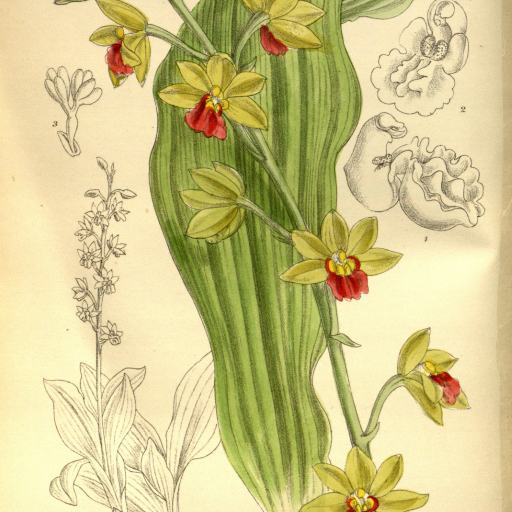
Often called the Three-ridged Calanthe, this hardy terrestrial orchid is a hidden gem of the Asian highlands, ranging from the snowy Himalayas to the forests of Japan. Unlike the delicate tropical orchids found in grocery stores, Calanthe tricarinata is a rugged survivor that thrives on the forest floor, bringing a touch of exotic elegance to shaded woodland gardens. Its striking bicolored blooms appear like tiny, hovering lanterns against its lush, pleated foliage.
🔍 How to Identify
- 🎨 The Blooms: Features unique yellowish-green sepals and petals that contrast sharply with a complex, reddish-brown or mahogany "lip" (labellum).
- ⛰️ The Ridges: Look closely at the lip; you will see three distinct fleshy ridges or "keels" running down the center, which gives the plant its scientific name, tricarinata.
- 🍃 The Foliage: The leaves are large, bright green, and deeply pleated (plicate), looking almost like a folded paper fan. They typically emerge in a basal rosette.
🏡 In Your Garden
- 🌱 Terrestrial Nature: Unlike many orchids that grow on trees (epiphytes), this is a ground-dweller. It requires "duff"—a rich, crumbly mix of leaf mold and compost—rather than standard potting bark, as it craves consistent moisture without being waterlogged.
- ❄️ Cold Resilience: This orchid is surprisingly tough; it is one of the more cold-hardy species in the Calanthe genus. It enters a dormant state in winter, tucking itself away into its pseudobulbs to survive the frost, making it a favorite for temperate "shade collectors."
⚠️ Safety & Toxicity
- 🟢 Status: Generally considered non-toxic.
- 🐾 Details: There are no documented reports of Calanthe tricarinata being poisonous to humans or common household pets. However, as with any ornamental orchid, ingesting large amounts of the foliage may cause mild digestive upset in cats or dogs. It is best kept as a visual treat rather than a snack!
✨ Fun Fact
The name Calanthe is derived from the Greek words kalos (beautiful) and anthe (flower). While many orchids rely on specific scents to attract pollinators, Calanthe tricarinata relies heavily on its high-contrast "bullseye" color pattern to signal bees in the dim light of the forest understory.

Detailed Care Instructions

Place in a window with dappled sun or a spot in the middle of a room. Or directly in a window facing west or east.

Some plants require more regular watering than others, which should be done every few days. It's critical to maintain the soil moist all of the time. The water requirements of the same plant placed in pots with varying sizes will differ. Because the water in the smaller pot evaporates faster than the water in the larger pot, it will require more watering. Regardless of pot size, the surface should constantly be maintained moist.








