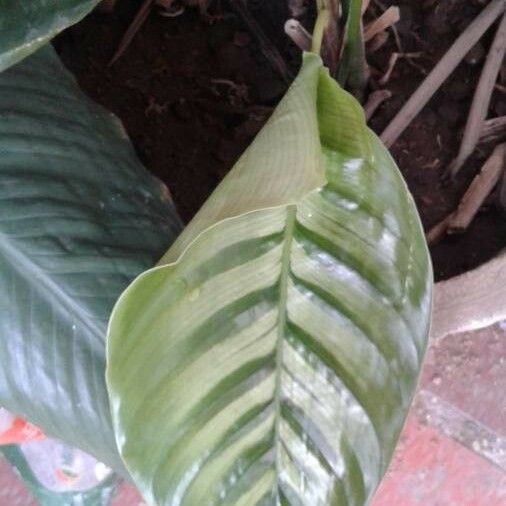
Plant Overview
Often called a variety of the "Prayer Plant," the Calathea Anulque is a living piece of tropical art. Originating from the dense, dappled shade of the Brazilian rainforest floor, this plant is famous for its rhythmic daily movements and stunningly graphic foliage. It is a top choice for indoor gardeners who want a plant that feels truly "alive," as it shifts its leaves throughout the day to follow the light.
🔍 How to Identify
- 🎨 The "Pinstripe" Pattern: The leaves are a deep forest green, decorated with thin, elegant parallel lines that look as if they were hand-painted with a fine brush in shades of cream or rose-pink.
- 🍷 Royal Undersides: If you flip a leaf over, you’ll find a stark, beautiful contrast of deep burgundy or royal purple, a common trait in the Goeppertia family.
- 📏 Compact Form: Unlike some sprawling tropicals, the Anulque grows in a tidy, upright clump, usually reaching about 2 feet in height, making it perfect for shelves and side tables.
🏡 In Your Garden (Home)
- 💧 The Water Quality Diva: This plant is famously sensitive to the minerals and chemicals found in city tap water. To prevent "burnt" brown edges on those beautiful leaves, it prefers distilled, rain, or filtered water.
- ☁️ Humidity is Non-Negotiable: Because its ancestors lived on the humid jungle floor, it dislikes dry air. It thrives in bathrooms or near a humidifier; without enough moisture, the leaves will begin to curl and crisp.
- ☀️ Dappled Light Only: Its leaves are sensitive to "sunburn." It prefers medium, indirect light—think of the light that filters through a canopy of trees rather than the harsh midday sun.
⚠️ Safety & Toxicity
- 🐾 Pet Friendly: Great news for furry friends! The Calathea Anulque is non-toxic to both cats and dogs, making it a worry-free addition to a pet-loving home.
- 👶 Child Safe: This plant is considered safe for humans as well, with no known irritating saps or toxic berries.
✨ Fun Fact
Calatheas are famous for nyctinasty. They have a tiny "joint" at the base of each leaf called a pulvinus that allows them to fold their leaves upward at night (like hands in prayer) and lower them during the day to maximize light absorption. It’s like having a plant that actually goes to sleep when you do!

Detailed Care Instructions

Place in a window with dappled sun or a spot in the middle of a room. Or directly in a window facing west or east.

To water this plant, you should wait until the top inch of soil is dry to the touch before watering. When watering, use room temperature water and pour it slowly over the soil until it starts to drain out the bottom of the pot. Ensure that the plant is not left sitting in water, as this can lead to root rot. Humidity is important for this plant, so consider using a humidifier or placing a tray of water near the plant to increase moisture in the air. Avoid using cold water or allowing the plant to dry out completely between waterings.
These plant needs regular fertilizing during growing seasons. Fertilizing your plants in dormant state during the winter, might result in scorching or browning of the leaf tips. If mature plants display signs of nutrient insufficiency, fertilizer administration is necessary to restore the plant to its previous state.
You may use All Purpose Plant Food or Green Plant Food for your Calathea Anulque
This plant prefers a well-draining soil that is rich in nutrients and organic matter. It is recommended to mix equal parts of peat, perlite, and vermiculite to create a suitable soil mix for this plant. Additionally, it is important to ensure that the soil is moist but not waterlogged, as this can lead to root rot. Regularly fertilizing the plant with a balanced fertilizer can also help to ensure that it receives the nutrients it needs to thrive.








