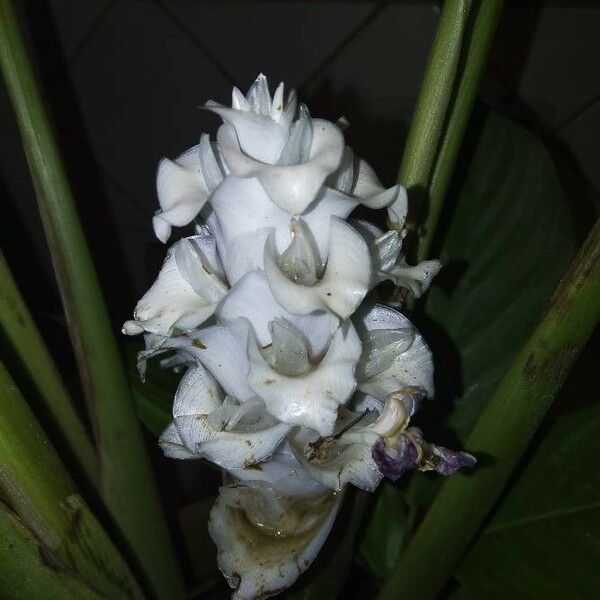
Plant Overview
Named after the legendary Brazilian landscape architect Roberto Burle Marx, this "Prayer Plant" is a living piece of tropical art. Often referred to as the Fishbone Prayer Plant, it is beloved for its rhythmic leaf movements and stunning graphic patterns that look as if they were hand-painted by a master artist. It’s a favorite for indoor jungles due to its compact, clumping growth and sophisticated color palette.
🔍 How to Identify
- 🌿 Leaf Pattern: Broad, oval leaves featuring a striking "fishbone" or chevron design of dark green stripes against a pale, silvery-green background.
- 🤲 The Prayer Pose: Like its relatives, it exhibits "nyctinasty," where the leaves fold upward vertically at night, resembling hands tucked together in prayer.
- 📏 Growth Habit: A low-growing, bushy plant that typically stays under two feet tall, making it perfect for shelves or side tables.
🏡 In Your Garden
- ☁️ Humidity is Key: Coming from the humid floor of the Brazilian rainforest, this plant hates dry air. If the leaf edges turn brown and crispy, it’s likely a "cry for help" for a humidifier or a pebble tray.
- 💧 Water Quality: This species is a bit of a "diva" regarding tap water. It is highly sensitive to fluoride and chlorine, which can cause spotting; using filtered water or rainwater will keep the foliage pristine.
- ☀️ Light Nuance: It thrives in "dappled" light. Avoid direct afternoon sun at all costs, as it will bleach the delicate silver pigment right out of the leaves.
⚠️ Safety & Toxicity
- ✅ Status: Non-toxic and Pet-Friendly.
- 🐾 Details: This is a fantastic choice for households with curious cats or dogs. It contains no harmful toxins, though it's still best to keep it out of reach to protect the plant's beautiful leaves from nibbling.
✨ Fun Fact
The man this plant is named after, Roberto Burle Marx, was not just a botanist but a world-renowned landscape architect who is credited with introducing modernist landscape design to Brazil and discovering over 50 species of plants!

Detailed Care Instructions
To successfully grow a Calathea Burle-marxii plant, follow these guidelines:
- Lighting: Provide indirect, bright light for your Calathea Burle-marxii. Avoid direct sunlight, as it can scorch the leaves. Place the plant near a north or east-facing window.
- Temperature: Maintain a warm temperature between 65-80°F (18-27°C). Avoid exposure to cold drafts or temperatures below 60°F (15°C).
- Humidity: Calathea plants thrive in high humidity. Increase humidity by misting the leaves regularly or placing a humidifier near the plant. Alternatively, you can place the pot on a tray filled with water and pebbles to elevate the humidity levels.
- Watering: Keep the soil consistently moist but not waterlogged. Check the top inch of soil, and water when it feels slightly dry. Ensure good drainage by using well-draining soil and pots with drainage holes.
- Soil: Use a well-draining and moisture-retaining potting mix. A mix containing peat moss, perlite, and organic matter would be favorable for a Calathea Burle-marxii.
- Fertilizer: Feed your Calathea Burle-marxii with a balanced, water-soluble houseplant fertilizer every month during the growing season (spring to fall). Follow the instructions on the fertilizer package for dosage.
- Pruning: Regularly remove any discolored or damaged leaves to promote healthy growth and aesthetics. Wear gloves while handling the plant as some Calathea species have irritating sap.
- Propagation: Calathea Burle-marxii can be propagated through division. During repotting, carefully divide the plant into smaller sections, each with healthy roots and leaves. Plant these divisions in separate pots with fresh soil.
- Pests: Keep an eye out for common houseplant pests such as spider mites, mealybugs, and aphids. Check the leaves regularly for any signs of infestation and take appropriate measures, such as using insecticidal soap or neem oil, to control the pests.
By following these care instructions, you should be able to successfully grow and maintain a Calathea Burle-marxii plant.
To water this plant, fill a clean watering can with lukewarm water and pour it slowly and evenly onto the soil around the base of the plant. Be careful not to splash water on the leaves. Allow the soil to fully saturate, but avoid leaving standing water in the saucer underneath the pot. Only water when the top inch of soil feels dry to the touch and avoid over-watering as it can lead to root rot.
To fertilize this plant, use a balanced fertilizer with equal amounts of nitrogen, phosphorus, and potassium. Apply the fertilizer once a month during the growing season from spring to fall. Use half of the recommended dosage on the fertilizer package and water the plant thoroughly after fertilizing. Avoid applying fertilizer during the winter months when the plant is dormant.
When planting a certain type of plant, it is important to match it with the appropriate soil that will provide the necessary nutrients, drainage, and aeration for its growth. For the plant in question, it is recommended to use a well-draining potting mix that is designed for tropical plants. The soil should be rich in organic matter, such as peat moss or coconut coir, and have a slightly acidic pH level. Additionally, adding perlite or sand can improve the soil's drainage and prevent waterlogging. It is also important to avoid using soils that are too heavy or compacted, as this can lead to root rot and other issues. Overall, the ideal soil for this plant should be loose, porous, and able to retain moisture while also allowing excess water to drain away easily.
To propagate this type of plant, you must begin by taking a healthy stem cutting that is approximately four to six inches in length. Next, remove any leaves from the base of the cutting and dip the exposed end in rooting hormone. Then, plant the cutting in a soil mix that is well-draining, such as a mixture of sand and peat moss. Keep the soil moist, but not overly wet, and place the cutting in indirect light. In a few weeks, roots should develop, and you can transplant the new plant to a larger container with fresh soil.








