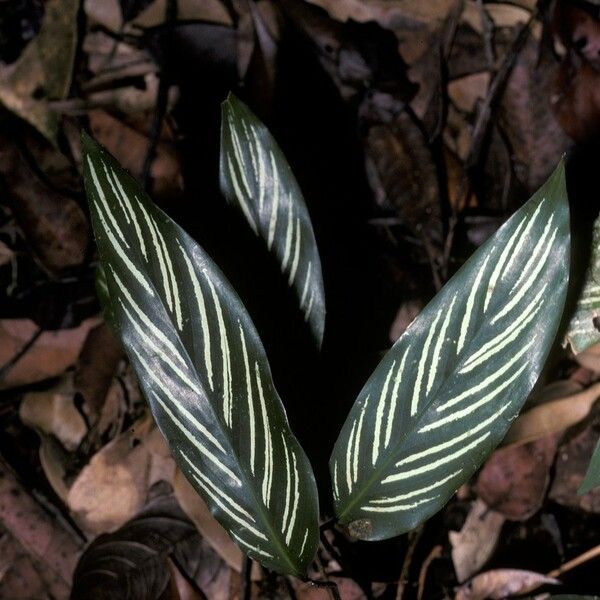
Plant Overview
Often called the "Vittata" or "Pinstripe Calathea," this Brazilian beauty looks like it was meticulously hand-painted with fine white brushes. As a member of the "Prayer Plant" family, it performs a daily ritual, folding its leaves upward at night as if in prayer. It’s a sophisticated choice for those looking to add a touch of minimalist, graphic elegance to their indoor jungle.
🔍 How to Identify
- 🍃 Leaf Pattern: The primary identifier is the series of thin, parallel, cream-white lines (stripes) that run from the midrib to the leaf edge on a deep green background.
- 📏 Shape: True to its name, the leaves are distinctly elliptical—long, smooth ovals that come to a soft point at the tip.
- 🪵 Stem Structure: It grows in a clumping habit with leaves emerging from long, slender petioles that can reach about 15 inches in height indoors.
🏡 In Your Garden
- ☁️ Humidity is King: The Calathea elliptica thrives in "jungle-like" air. If the edges of the leaves turn brown and crispy, the plant is likely protesting dry air or the minerals found in standard tap water.
- 🚿 Watering Nuance: This plant prefers its soil to stay consistently moist but never soggy. It has a sensitive root system that dislikes the "drought and drench" cycle; using filtered or rain water can prevent the foliage from spotting.
⚠️ Safety & Toxicity
- 🐾 Pet Friendly: Good news for animal lovers! This species is considered non-toxic to cats and dogs, making it a "worry-free" addition to a multi-pet household.
- 👶 Child Safe: It is also non-toxic to humans. While it won't cause harm if touched, it is best kept out of reach of toddlers to protect its delicate, easily bruised leaves.
✨ Fun Fact
The "praying" movement of the leaves is a biological process called nyctinasty. This is controlled by a small "joint" at the base of the leaf called the pulvinus, which shifts water pressure to move the leaf toward the sun during the day and upright at night to catch dew!

Detailed Care Instructions
Calathea elliptica, also known as the oval-leafed prayer plant, is a tropical houseplant that can be grown indoors. Here are some tips to help you grow Calathea elliptica successfully:
- Lighting: Place your Calathea elliptica in a location with bright, indirect light. Avoid direct sunlight as it can scorch the leaves. Filtered or shaded light is ideal.
- Temperature: Calathea elliptica prefers warm temperatures, ideally between 65-85°F (18-29°C). Avoid exposing the plant to cold drafts or sudden temperature changes.
- Humidity: This plant thrives in higher humidity levels. You can increase humidity by placing the pot on a tray filled with water and pebbles or by using a humidifier. Alternatively, group several houseplants together to create a microclimate of higher humidity.
- Watering: Keep the soil consistently moist, but avoid overwatering. Allow the top inch of soil to dry out slightly between waterings to prevent root rot. It is best to use lukewarm water to avoid shocking the plant.
- Soil: Use a well-draining potting mix with good organic matter. Avoid using heavy clay or compacted soil that can retain excess moisture.
- Fertilizer: During the growing season (spring and summer), feed your Calathea elliptica with a balanced houseplant fertilizer every 2-4 weeks. Follow the instructions on the fertilizer packaging for dosage and frequency.
- Pruning: Regularly remove any yellowing or brown leaves to maintain the plant's vitality and appearance. Pruning also helps to improve air circulation around the plant.
- Repotting: Repot your Calathea elliptica every 1-2 years, or when it becomes root-bound. Choose a slightly larger pot and use fresh potting mix to provide the plant with sufficient room for growth.
- Pests and diseases: Monitor your plant for common houseplant pests like spider mites, mealybugs, and aphids. Treat any infestations promptly with appropriate organic or chemical pest control methods.
- Rest period: Calathea elliptica may exhibit reduced growth during the winter months. Reduce watering and fertilization at this time and provide slightly lower temperatures to mimic its natural rest period.
Remember to observe your plant closely and adjust care practices according to its specific needs. With proper attention to lighting, humidity, watering, and fertilizing, your Calathea elliptica should thrive and grow beautifully.

Place in a window with dappled sun or a spot in the middle of a room. Or directly in a window facing west or east.

To water this species of plant, you should first assess the soil moisture level by feeling the soil with your fingers. If the top inch of soil feels dry, it's time to water. Fill a watering can or container with room temperature or slightly warm water. Take care not to overwater the plant and saturate the soil, as this could lead to root rot. Slowly pour the water around the base of the plant, taking care not to splash the leaves. Ensure water reaches the entire soil surface. Allow the soil to drain any excess moisture, then discard any remaining water in the container. Aim to water the plant once every 7-10 days, depending on factors such as temperature, humidity, and sunlight exposure.
To fertilize the Calathea Elliptica plant, use a balanced liquid fertilizer diluted to half strength and feed it every two weeks during the growing season. During the winter season, reduce the frequency of fertilization to once a month. Avoid over-fertilizing as it may cause salt build-up in the soil and damage the plant's roots. Always follow the manufacturer's instructions when fertilizing any plant.
It is recommended to use a well-draining soil mixture that retains moisture but does not become waterlogged. The mix should be rich in organic matter and contain a combination of peat moss, perlite, coarse sand, and/or vermiculite. It is also important to ensure that the soil pH is slightly acidic, with a range of 5.5-6.5. Regularly fertilizing the plant with a balanced, water-soluble fertilizer can also help promote healthy growth.
Calathea Elliptica plant can be propagated through division. To do this, gently remove the plant from its pot and carefully separate the roots into smaller sections. Each section should have at least one healthy stem and root system. Plant the divisions into small individual pots, with fresh potting soil, and water thoroughly. Place the newly potted plants in a warm, bright, and humid location, away from direct sunlight. Keep the soil moist but avoid overwatering to prevent root rot. Over time, the divisions will develop into new plants, growing into healthy specimens that are ready for repotting to a larger container as necessary.
Common pests of the calathea elliptica include Mealybugs, spider mites, thrips. Make a habit of checking your calathea elliptica frequently for pests so that any infestations can be caught and managed early.








