Plant Overview
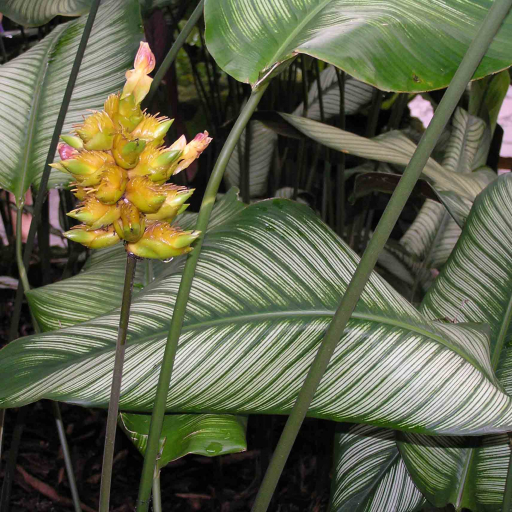
Often called the "Majestic Prayer Plant" or "Whitestar," Calathea majestica is the crown jewel of the tropical houseplant world. Hailing from the humid rainforests of South America, this plant is famous for its "living art" aesthetic, featuring leaves that look like they’ve been hand-painted with delicate white brushes. It is a plant for those who enjoy a bit of botanical drama and the rewarding rhythm of its daily movements.
🔍 How to Identify
- 🌿 Stately Foliage: Large, lance-shaped leaves that can grow significantly taller and wider than many of its Calathea cousins.
- 🖌️ Intricate Patterning: The top of the leaf features fine, elegant white or pale pink pinstripes that radiate outward from the central vein toward the margins.
- 💜 Royal Undersides: When the leaves stand tall at night, they reveal a striking, deep burgundy or purple underside, providing a beautiful color contrast.
🏡 In Your Garden
- 💧 The "Goldilocks" Hydration: This plant is notoriously sensitive to the chemicals found in tap water. To avoid unsightly brown "crispy" edges, it’s best to use rainwater, distilled water, or filtered water that has sat out overnight.
- ☁️ Humidity is Non-Negotiable: Because it originated in the misty tropics, it thrives in high humidity. Grouping it with other plants or using a pebble tray helps prevent the delicate leaves from drying out.
- 🌑 The Nightly Dance: Like all prayer plants, it practices nyctinasty. It lowers its leaves during the day to catch light and folds them upward at night, mimicking hands in prayer to conserve moisture.
⚠️ Safety & Toxicity
- ✅ Safe for All: This plant is non-toxic to humans, cats, and dogs.
- 🌱 Pet-Friendly Choice: Unlike many other popular tropicals (like Philodendrons or Monsteras), you can safely display the Calathea majestica on low tables within reach of curious paws or toddlers.
✨ Fun Fact
The "joints" at the base of the leaves are called pulvini. These act like tiny hydraulic pumps, changing the water pressure within the cells to move the heavy leaves up and down throughout the day—a feat of biological engineering!

Detailed Care Instructions
To grow a Calathea Majestica plant, you can follow these steps:
- Choose the right location: Calathea Majestica plants thrive in bright, indirect light. Avoid placing them in direct sunlight as it can scorch the leaves. A spot near a north or east-facing window is ideal. They also prefer high humidity levels, so consider placing a humidifier nearby or misting the leaves regularly.
- Provide the right temperature: These plants prefer temperatures between 65-80°F (18-27°C). Avoid exposing them to drafts or sudden temperature changes.
- Watering: Keep the soil consistently moist, but not soggy. Water the plant when the top inch of soil feels dry, usually once every 1-2 weeks. Use filtered or distilled water to avoid mineral buildup on the leaves. Ensure good drainage by using a well-draining potting mix and drainage holes in the pot.
- Humidity: Calathea Majestica plants thrive in a humid environment. You can increase humidity by placing a tray filled with water near the plant or using a humidifier. Misting the leaves daily can also provide additional humidity.
- Fertilizing: Feed the plant with a balanced, water-soluble fertilizer diluted to half strength every two weeks during the growing season (spring and summer). Reduce or stop fertilizing during the winter months.
- Pruning and maintenance: Regularly inspect the plant for yellow or damaged leaves and trim them off with clean, sharp scissors. This helps maintain the plant's appearance and allows energy to be focused on healthy growth.
- Propagation: Calathea Majestica plants can be propagated through division. Remove the plant from its pot and carefully separate the clumps of stems and roots. Plant these divisions in separate pots with fresh potting soil and keep them well-watered and in a warm environment until new growth is established.
By following these steps and providing the necessary care, your Calathea Majestica plant should thrive and grow beautifully.

Place in a window with dappled sun or a spot in the middle of a room. Or directly in a window facing west or east.

To water this plant properly, you should first check the top layer of soil to make sure it has dried out enough to need watering. Next, use room temperature water to avoid shocking the plant's roots and causing damage. Slowly pour water onto the soil around the plant, avoiding getting water on the leaves or stem. Make sure to water until the excess drains out of the bottom of the pot. Avoid letting the plant sit in standing water, as this can lead to root rot. Monitor the soil moisture level regularly and adjust your watering schedule accordingly.
To fertilize this plant, you should use a balanced, water-soluble fertilizer once a month during the growing season (spring and summer). Mix the fertilizer according to package instructions and water the plant thoroughly with it. Avoid fertilizing during the winter months when the plant is dormant. Additionally, make sure to dilute the fertilizer to half strength to prevent root burn and avoid getting any fertilizer on the foliage, which can cause damage. Finally, it's important to use well-draining soil and water your plant regularly to keep it healthy.
Calathea Majestica prefers soil that is well-draining and rich in nutrients. It is important to choose a soil mix that retains moisture without becoming waterlogged. A good soil mix for Calathea Majestica may include a blend of peat moss, perlite, and vermiculite. Other options may include a mixture of potting soil, coarse sand, and pine bark. It is important to ensure that the soil is not too compact and that air can circulate freely around the roots. It is also recommended to fertilize regularly and to repot the plant every year with fresh soil to ensure healthy growth.
Calathea Majestica plant is a popular ornamental houseplant that is known for its unique foliage patterns and colors. Propagating this plant can be done through division or stem cuttings.
Division involves separating the plant into smaller sections, each with a root system and several stems. To do this, carefully remove the plant from its pot, gently tease apart the roots, and separate the plant into smaller sections. Ensure that each section has a healthy root system and several stems before repotting them into individual pots.
Stem cuttings can also be taken from the plant to propagate new ones. To do this, take a healthy stem that has several leaves and make a clean cut using a sharp, sterile knife. Dip the cut end in rooting hormone and place it in a pot filled with moist potting mix. Water the cutting and cover it with a plastic bag or glass jar to create a humid environment. Keep the soil consistently moist and place the cutting in a warm and bright spot, but out of direct sunlight. After several weeks, roots should start to develop, and the plant can be gradually acclimated to its new pot and environment.
Propagation of this plant may be challenging, and it may take some time for the new plants to become established. However, with patience and proper care, these propagated plants can grow into beautiful and thriving specimens.
Common pests of the calathea majestica include Mealybugs, spider mites, thrips. Make a habit of checking your calathea majestica frequently for pests so that any infestations can be caught and managed early.








