Plant Overview
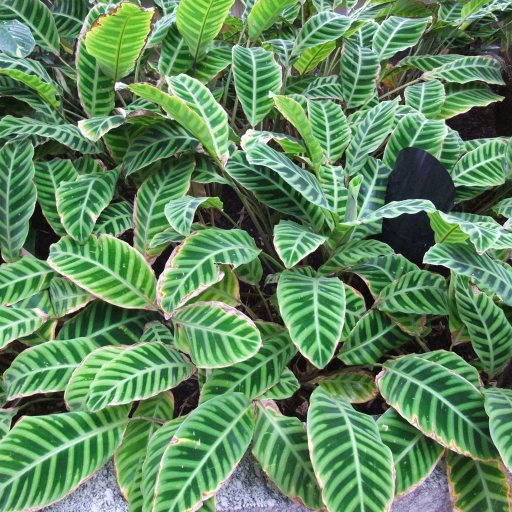
The Calathea zebrina, famously known as the "Zebra Plant," is a show-stopping tropical beauty hailing from the lush rainforests of Brazil. It is widely adored for its oversized, velvety leaves that look as though a painter meticulously brushed dark emerald stripes onto a lime-green canvas. As a member of the "Prayer Plant" family, it performs a slow, rhythmic dance every single day, adjusting its leaves to follow the sun.
🔍 How to Identify
- 🍃 Velvety Texture: Unlike many of its glossy cousins, the Zebra Plant has a distinct matte, suede-like feel to its foliage that makes it irresistible to touch.
- 🦓 Bold Striping: The top of each leaf features thick, dark-green bands radiating from the center vein, strongly resembling the stripes of a zebra.
- 💜 Purple Undertones: While the top is vibrant green, the undersides of the leaves often sport a subtle, royal purple hue, visible when the leaves fold upward at night.
🏡 In Your Garden
- ☁️ The Humidity Snob: This plant is a true jungle inhabitant and thrives on moisture. If your indoor air is too dry, the leaf edges will quickly turn brown and crispy; it loves a nearby humidifier or a steamy bathroom.
- 💧 Water Sensitivity: It is notoriously picky about water quality. It often reacts poorly to the fluoride and chlorine found in tap water, so using distilled or rainwater is the secret to keeping its leaves pristine.
- 🪴 Soil Stability: It prefers to stay "snug" in its pot and hates having its roots disturbed. Only repot when absolutely necessary, and use a chunky, well-draining mix to prevent the roots from sitting in stagnant water.
⚠️ Safety & Toxicity
- ✅ Non-Toxic: The Zebra Plant is completely safe and non-toxic for both cats and dogs, making it a perfect choice for pet owners.
- 👶 Safe for Humans: It poses no threat to children. However, because the leaves are so delicate and velvety, they can be easily damaged by curious little hands.
✨ Fun Fact
The Zebra Plant practices a movement called "nyctinasty." At the base of each leaf is a tiny "joint" called a pulvinus. This allows the plant to fold its leaves straight up toward the ceiling at night as if it were praying, only to lower them again when the morning sun hits!

Detailed Care Instructions
| Soil Ph | Acidic |
| Humidity | Normal |
| Lighting | Part Sun |
| Toxicity | Non-Toxic |
| Soil Type | Moist But Well-Drained |
| Difficulty | Medium |
| Plant Type | Herbaceous Perennial |
| Hibernation | Cold Period |
| Mature Size | 6 In.–3 Ft. Tall, 6 In.–2 Ft. Wide |
| Temperature | 18°C - 25°C |
| Sun Exposure | Partial Sunlight, Full Shade |
| Hardiness Zones | 11-12 |
To grow a Calathea Zebrina plant, follow these steps:
- Light: Place the plant in a bright, indirect light location. Avoid direct sunlight as it can scorch the leaves. Calathea Zebrina thrives in medium to low light conditions.
- Temperature and humidity: These plants prefer warm and humid environments. Keep the temperature between 65-80°F (18-27°C) and humidity levels around 50-60%. If the air is dry, you can mist the plant occasionally or place a humidifier nearby.
- Watering: Keep the soil consistently moist but not soaked. Water the plant when the top inch of soil feels dry. Ensure good drainage by using well-draining soil and a pot with drainage holes.
- Soil: Use a well-draining, organic potting mix that retains some moisture but does not become waterlogged. A mix of peat moss, perlite, and compost works well for Calathea Zebrina.
- Fertilizer: Feed the plant with a balanced, water-soluble fertilizer once a month during the growing season (spring and summer) at half the recommended strength. Avoid fertilizing during winter.
- Pruning: Trim off any yellow or damaged leaves regularly to maintain the plant's health and appearance. You can also remove any leggy or overly long stems to encourage bushier growth.
- Propagation: Calathea Zebrina can be propagated by division. Carefully separate the plant into smaller sections, ensuring each section has enough roots attached. Plant the divisions in separate pots with fresh potting soil.
- Repotting: Repot the Calathea Zebrina when it outgrows its current pot. Choose a pot that is slightly larger with good drainage. Repotting can be done every 1-2 years during spring.
- Pest control: Monitor the plant for common pests like spider mites and mealybugs. If any infestation occurs, treat it with an appropriate organic pesticide or neem oil, following the manufacturer's instructions.
By providing the right conditions and care, your Calathea Zebrina plant should grow and thrive. Remember to observe its response and adjust the care accordingly to ensure its optimal growth.

Place in a window with dappled sun or a spot in the middle of a room. Or directly in a window facing west or east.

The plant should be watered regularly, but not excessively, as it prefers moist but not soggy soil. Allow the top layer of soil to dry slightly before watering again. Avoid letting the soil completely dry out or become waterlogged. Use room temperature or slightly warm water, and water at the base of the plant, being careful to avoid getting water on the leaves. If the plant is kept in a pot that does not have drainage holes, it is especially important to water in moderation to prevent root rot.
- Use a balanced liquid fertilizer diluted to half strength.
- Water the plant thoroughly before fertilizing to prevent root burn.
- Apply the fertilizer evenly around the edge of the pot, avoiding the center.
- Repeat the process every two months during the growing season.
- Do not fertilize during the winter months.
Calathea Zebrina plants thrive in potting soil that is rich in organic matter and allows for good drainage. The soil should be well-aerated and have a slightly acidic pH level ranging between 6.0 and 6.5. It is recommended to use a mixture of peat moss, perlite, and vermiculite to create a lightweight and well-draining soil that will avoid waterlogging and root rot. Avoid using soil that is too heavy or contains too much clay, as this can cause the roots to suffocate and prevent water absorption. Additionally, adding a layer of mulch to the soil surface can help to retain moisture, while also suppressing weed growth and providing a source of nutrients for the plant.
Calathea Zebrina plant can be propagated by division or stem cuttings. To propagate by division, carefully remove the plant from its pot and gently separate the root ball into smaller sections. Each section should have healthy roots and leaves. Repot each section in a new container with fresh soil.
To propagate by stem cuttings, select a healthy stem with a few leaves and make a clean, angled cut just below a node. Remove the lower leaves, leaving only the top few. Dip the cut end in rooting hormone and plant it in a pot filled with damp soil. Cover the pot with a plastic bag to create a humid environment for the cutting to root. Keep the soil moist and place the pot in a warm, bright location. Once the cutting has rooted and begun to grow new leaves, remove the plastic bag and continue to care for it as you would an established plant.
Common pests of the zebra plant include Mealybugs, spider mites, thrips. Make a habit of checking your zebra plant frequently for pests so that any infestations can be caught and managed early.








