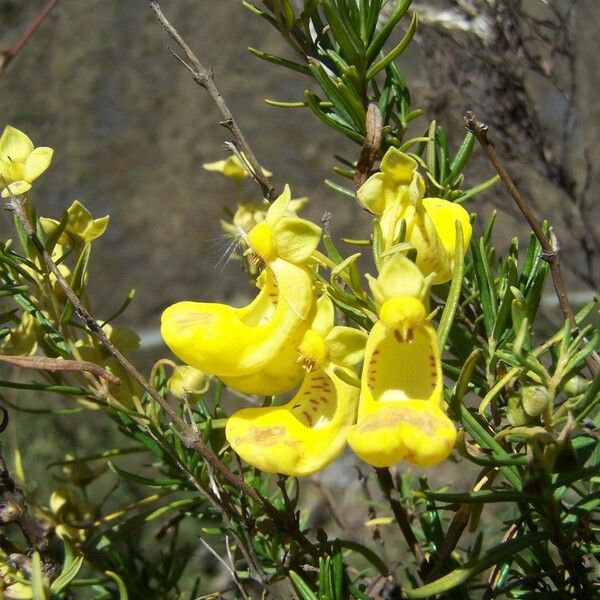
Plant Overview
Known affectionately as the Slipper Flower or Pocketbook Plant, Calceolaria buchtieniana is a high-altitude gem hailing from the rugged slopes of the Bolivian Andes. Its quirky, inflated blooms look like tiny, sunshine-colored purses waiting to be filled with gold. This charming sub-shrub brings a touch of "fairytale forest" to any garden, looking more like a botanical art piece than a typical wildflower.
🔍 How to Identify
- 👝 The Blooms: Its most striking feature is the bright yellow, two-lipped flowers. The lower lip is dramatically inflated into a hollow, pouch-like shape that gives the genus its name (from the Latin calceolus, meaning little shoe).
- 🌿 The Foliage: The leaves are small, deep green, and often have a slightly wrinkled or "rugose" texture. They grow densely along the stems, providing a lush backdrop for the vibrant flowers.
- 🪴 Growth Habit: Unlike the soft, annual varieties found in grocery stores, this species is more woody and shrub-like, forming a neat, upright mound that stands out in a rock garden or container.
🏡 In Your Garden
- 🏔️ Mountain Roots: Because it originates from the Andes, it thrives in "Goldilocks" conditions—it loves bright light but absolutely despises sweltering heat. It performs best in regions with cool nights and moderate daytime temperatures.
- 💧 The Moisture Balance: This plant is a bit of a diva regarding its roots. It requires consistently moist soil to keep its pouches plump, yet it will quickly succumb to root rot if the soil is heavy or waterlogged. Using a gritty, well-draining mix is the secret to success.
⚠️ Safety & Toxicity
- 🟢 General Status: Calceolaria buchtieniana is generally considered non-toxic to humans and animals.
- 🐾 Pet Precaution: While it isn't listed as a "poisonous" plant, the textured leaves can sometimes cause mild digestive upset if a curious cat or dog decides to have a snack. As with any ornamental plant, it’s best kept out of reach of nibbling pets to avoid tummy aches.
✨ Fun Fact
The unique "pocket" of the flower isn't just for show—it is a specialized evolutionary tool. Some species of Calceolaria produce a unique floral oil instead of nectar, attracting specific "oil-collecting" bees that are the only ones capable of navigating the pouch to ensure pollination!

Detailed Care Instructions








