Plant Overview
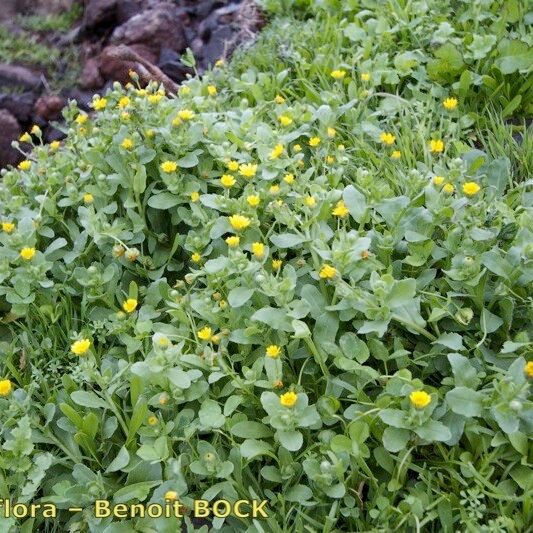
Often called the Madeira Marigold, this radiant perennial is a proud endemic of the Madeira archipelago. Unlike its common garden cousins, this species is a rugged coastal survivor, evolved to handle the salty Atlantic breeze with grace. It acts like a "living sun," capable of blooming almost year-round in Mediterranean climates, brightening up even the stoniest landscapes.
🔍 How to Identify
- 🌼 Sunny Blooms: It produces large, daisy-like flowers with vibrant yellow or orange ray florets surrounding a slightly darker central disk.
- 🍃 Fleshy Foliage: The leaves are thick, spatula-shaped, and somewhat succulent—a clever adaptation to store water and resist the drying effects of sea salt.
- 🪵 Woody Base: As the plant matures, it develops a semi-woody base, forming a low, sprawling shrub rather than the soft, floppy stems seen in common annual marigolds.
🏡 In Your Garden
- 🌊 Coastal Champion: Because it originates from volcanic sea cliffs, it is incredibly salt-tolerant. It is one of the best choices for seaside gardens where salt spray often kills more delicate species.
- 🏜️ The "Dry Feet" Rule: This plant thrives on neglect and hates "wet feet." It requires exceptionally well-draining, sandy, or rocky soil. If planted in heavy clay, it may suffer from root rot.
- ☀️ Sun Seeker: To keep its growth compact and its flower count high, place it in the brightest spot available. In shade, it tends to get "leggy" as it stretches toward the light.
⚠️ Safety & Toxicity
- ✅ Generally Safe: Calendula maderensis is considered non-toxic to humans, cats, and dogs, making it a "worry-free" addition to family gardens.
- 🌿 Skin Sensitivity: Like many members of the Aster (Asteraceae) family, some individuals may experience mild skin irritation or "contact dermatitis" if they handle the crushed leaves or sap extensively.
✨ Fun Fact
In its native Madeira, this plant is a specialized "cliff-dweller." It has evolved to grow directly out of vertical basaltic rock faces, using its deep root system to anchor itself against powerful Atlantic gales!

Detailed Care Instructions








