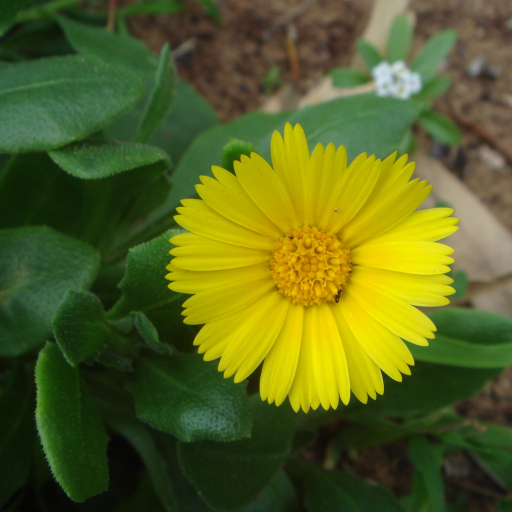
Plant Overview
Known as the Woody Marigold or Shrubby Marigold, Calendula suffruticosa is the wild, resilient cousin of the common garden pot marigold. Native to the sun-drenched coasts of the Mediterranean, this perennial sub-shrub is a survivor, often found clinging to rocky cliffs or sandy shores. While its garden relatives are often treated as fleeting annuals, this variety builds a sturdy, woody base that allows it to return season after season with cheerful, sun-like blooms.
🔍 How to Identify
- 🌼 The Blooms: Features classic daisy-like flower heads, usually in a bright, buttery yellow or soft orange. They are slightly smaller and more delicate-looking than the bulky double-petaled cultivars.
- 🌿 The Foliage: The leaves are elongated, slightly fleshy, and covered in fine, sticky hairs. This texture helps the plant trap moisture and deter thirsty pests.
- 🪵 The Habit: Unlike common marigolds, this species becomes "suffruticose," meaning it develops a woody stem at the base. It has a sprawling, decumbent growth habit, often forming a dense silver-green mat.
🏡 In Your Garden
- 🏖️ Coastal Resilience: This plant is a champion of seaside gardening. It is remarkably salt-tolerant and thrives in poor, sandy soils where other flowers might wither under the salt spray.
- ☀️ Sun Seeker: To keep it from becoming "leggy" or sparse, it requires full, unadulterated sunlight. In the shade, the woody stems tend to stretch and lose their compact, ornamental shape.
- ✂️ Pruning Nuance: Because it is woody, it doesn't respond well to being hacked back to the ground. Light, frequent pinching of the tips encourages a bushier shape and more prolific flowering throughout the year.
⚠️ Safety & Toxicity
- ✅ Generally Safe: Calendula suffruticosa is considered non-toxic to humans, dogs, and cats. It is a "friendly" addition to family gardens.
- 🧤 Skin Sensitivity: The sticky resin on the leaves and stems can cause mild skin irritation or "contact dermatitis" in people with sensitive skin or those allergic to the Asteraceae (daisy) family. Wearing gloves while pruning is recommended.
✨ Fun Fact
The genus name Calendula is derived from the Latin word calendae, meaning "the first day of the month." This refers to the plant’s incredible ability to produce flowers almost every month of the year in its warm Mediterranean home, acting like a living, golden calendar.

Detailed Care Instructions
To grow Calendula Suffruticosa, also known as the Calendula officinalis, follow these steps:
- Select a suitable location: Choose a sunny spot in your garden that receives at least 6-8 hours of direct sunlight daily. Calendula plants prefer well-draining soil, so ensure that the soil is loose and rich in organic matter.
- Prepare the soil: Before planting, loosen the soil by digging it up to a depth of about 8-10 inches. Mix in compost or aged manure to improve soil fertility and drainage.
- Plant the seeds: Calendula seeds can be sown directly into the garden bed in early spring or fall. They can also be started indoors 4-6 weeks prior to the last frost date. Sow the seeds at a depth of 1/4 inch and keep the soil moist until germination occurs, usually within 7-14 days.
- Watering: Once the seedlings emerge, water them consistently to keep the soil evenly moist. However, be mindful not to overwater, as it may cause root rot. Allow the top inch of soil to dry out before watering again.
- Maintenance: Regularly remove weeds around the plants to prevent competition for nutrients and water. Mulching around the base of the plants can help retain moisture and suppress weed growth.
- Fertilizer: Calendula plants generally do not require heavy fertilization. However, you can apply a balanced, water-soluble fertilizer once every 4-6 weeks to promote healthy growth.
- Deadheading: Removing faded flowers (deadheading) encourages the plant to produce more blooms. Pinch off the spent flowers where they meet the stem to stimulate further blooming.
- Pests and diseases: Calendula plants are relatively resistant to pests and diseases. However, you should regularly check for common garden pests like aphids or spider mites. If required, treat with organic insecticides or control methods.
- Harvesting: Once the flowers are fully open and at their peak, you can harvest the blooms. Cut the flowers just above a leaf node to encourage further blooming.
By following these steps, you can successfully grow Calendula Suffruticosa in your garden and enjoy its vibrant flowers throughout the growing season.

Place in a bright room that is sun drenched almost all day. Or directly in a south-facing window.

When watering this plant, ensure that the soil stays moderately moist but never waterlogged. Take care not to disturb the roots while watering. Water the plant deeply once a week or whenever the top inch of soil feels dry. It is important to water the plant at its base rather than spraying the leaves, as wet foliage can lead to fungal diseases. Avoid watering during the hottest part of the day to prevent water evaporation and sunscald. During periods of high humidity, reduce watering to prevent overwatering.
When fertilizing this plant, use a balanced fertilizer with equal parts nitrogen, phosphorus, and potassium. Apply a small amount of fertilizer to the soil around the base of the plant, being careful not to over-fertilize. Water the plant thoroughly after fertilizing, but do not allow the soil to become waterlogged. Fertilize the plant once or twice a month during the growing season. Avoid fertilizing during periods of drought or extreme heat.
Calendula Suffruticosa plant prefers well-draining, slightly sandy soil that is rich in organic matter. It grows best in a soil pH range of 6.0 to 7.0. The soil should be moist but not waterlogged, as excess water can lead to root rot. Furthermore, regular additions of compost or other organic matter will help maintain soil fertility and improve the growth of the plant. It's important to avoid heavy or compacted soils, which can restrict root growth and cause stress to the plant. Therefore, it's recommended to use a loose and friable soil mix, such as a well-draining potting mix or a blend of sandy loam and compost. Proper soil preparation is essential for a thriving, vibrant Calendula Suffruticosa plant.
Calendula Suffruticosa is a plant that can be propagated through several methods such as seed propagation, stem cuttings, and division. To propagate this plant without using common names, you can follow the below guidelines:
Seed Propagation:
- Collect mature seeds from the flower head of the plant
- Fill a seed tray with well-draining soil mix and water it until moist but not waterlogged
- Sow the seeds on the soil and cover them with a thin layer of soil
- Keep the tray in a warm and bright location but away from direct sunlight
- Water the soil regularly to keep it moist but not waterlogged
- In 7-14 days, the seeds should germinate and grow into small plants
Stem Cuttings: - Take a stem cutting from the plant that is at least 4 inches in length
- Remove the lower leaves from the cutting and dip the cut end in rooting hormone powder
- Fill a small pot with well-draining soil mix and water it until moist
- Make a hole in the soil mix with a pencil and insert the cutting in it
- Firmly press the soil mix around the cutting and water it
- Keep the pot in a warm and bright location but away from direct sunlight
- Water the soil regularly to keep it moist but not waterlogged
- In 2-3 weeks, the cutting should develop roots and grow into a new plant
Division: - Carefully dig out a clump of the plant that has several shoots and roots
- Use a sharp knife or garden shears to divide the clump into smaller sections
- Plant each section in a pot or directly into the ground, at the same depth as it was before
- Water the soil regularly to keep it moist but not waterlogged
- Keep the plants in a warm and bright location but away from direct sunlight
- In a few weeks, each section should develop roots and grow into a new plant








