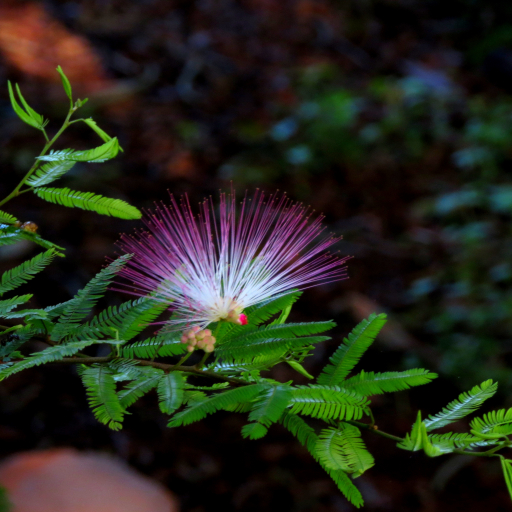
Plant Overview
Known affectionately as the Pink Powder Puff, this Brazilian native looks like it belongs in a Dr. Seuss book. With its delicate, feathery foliage and explosive bursts of silky pink-and-white blooms, it brings a whimsical, tropical charm to any landscape. It is a favorite among hummingbird enthusiasts and gardeners who appreciate high-texture, "touchable" plants.
🔍 How to Identify
- 🌸 The "Puff": The most striking feature is the flower, which is actually a cluster of long, vibrant pink and white stamens. These look like a soft makeup brush or a fuzzy pom-pom rather than traditional petals.
- 🌿 Feathery Foliage: The leaves are "bipinnate," meaning they are divided into tiny leaflets like a fern or a mimosa tree, giving the shrub a soft, airy appearance.
- 🪵 Growth Habit: It typically grows as a multi-stemmed evergreen shrub with fine, woody branches that can be easily pruned into a dense hedge or trained into a small, decorative tree.
🏡 In Your Garden
- ☀️ Sun & Bloom: While it survives in partial shade, this plant is a sun-lover at heart. It needs plenty of direct light to trigger its heavy flowering cycles; the more sun it gets, the more "puffs" it produces.
- 🦋 Pollinator Magnet: The nectar-rich flowers are high-energy stops for butterflies and hummingbirds. It is an excellent choice for a "living classroom" or a biodiversity-focused backyard.
- ✂️ Pruning Nuance: It is a fast grower but handles pruning exceptionally well. Gardeners often use it for bonsai because its small leaves and woody trunk create a perfect miniature tree aesthetic.
⚠️ Safety & Toxicity
- ✅ Low Risk: Calliandra brevipes is generally considered non-toxic to humans and most domestic animals.
- 🐾 Pet Watch: While it isn't listed as a poisonous species, the ingestion of any fibrous plant material can cause mild stomach upset in curious cats or dogs. It is best kept as an ornamental rather than a snack!
✨ Fun Fact
This plant is a "sleepyhead!" Like many of its relatives in the pea family, it exhibits nyctinasty, meaning its leaves fold up tightly together every night and "wake up" to open again at sunrise.

Detailed Care Instructions

Place in a bright room that is sun drenched almost all day. Or directly in a south-facing window.

Some plants require more regular watering than others, which should be done every few days. It's critical to maintain the soil moist all of the time. The water requirements of the same plant placed in pots with varying sizes will differ. Because the water in the smaller pot evaporates faster than the water in the larger pot, it will require more watering. Regardless of pot size, the surface should constantly be maintained moist.








