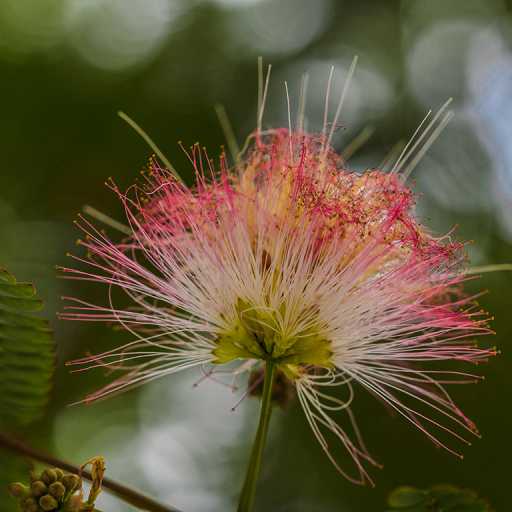
Plant Overview
Known as the Small-leaf Powderpuff, this South American beauty looks like it was plucked straight from a Dr. Seuss book. Its delicate, feathery foliage provides a soft, airy backdrop for the star of the show: fuzzy, globe-shaped flowers that appear like bursts of pink and white fireworks. It is a darling of the botanical world, frequently sought after by bonsai enthusiasts for its naturally miniature leaves and graceful, sweeping branches.
🔍 How to Identify
- 🌸 The "Powderpuff" Blooms: The flowers are not made of petals, but rather clusters of long, silky stamens that form a soft sphere, usually transitioning from white at the center to a soft rose-pink at the tips.
- 🌿 Fern-like Foliage: The leaves are "bipinnate," meaning they are divided into tiny, feather-like leaflets that give the shrub a delicate, lacey appearance.
- 🪵 Growth Habit: It typically grows as a multi-stemmed evergreen shrub. In the wild, it can reach several feet, but it is easily kept compact through pruning.
🏡 In Your Garden
- ☀️ Sun-Seeking Nature: To produce a high volume of "puffs," this plant requires significant light. However, it appreciates a bit of dappled shade during the hottest part of the afternoon to prevent its thin leaves from scorching.
- 💧 Drainage is Key: While it enjoys consistent moisture, it is highly sensitive to "wet feet." Using a sandy or gritty soil mix is essential to prevent root rot, as the roots need constant access to oxygen.
- ✂️ Structural Versatility: Because it responds so well to clipping and has naturally small leaves, it is one of the premier tropical species for bonsai styling, allowing growers to create the illusion of a giant ancient tree in a tiny pot.
⚠️ Safety & Toxicity
- 🐾 Pet Friendly: Calliandra parvifolia is generally considered non-toxic to cats and dogs, making it a much safer alternative to other "mimosa-lookalikes" that can be poisonous.
- 👶 Mild Irritant: While not toxic, the seed pods that follow the flowers can be a choking hazard or cause mild stomach upset if swallowed by curious children.
✨ Fun Fact
- 😴 The "Sleeping" Plant: This species practices "nyctinasty." Every evening as the sun sets, the tiny leaflets fold upward and press against one another to "sleep," a behavior thought to protect the plant from nocturnal predators and conserve moisture.

Detailed Care Instructions
To grow Calliandra Parvifolia, also known as Powderpuff tree or Fairy Duster, follow these steps:
- Choose the right location: Calliandra Parvifolia thrives in full sun to partial shade. Find a spot in your garden that gets at least 6 hours of direct sunlight per day.
- Prepare the soil: The plant prefers well-draining soil. Amend the soil with organic matter like compost to improve the drainage and nutrient content.
- Planting: Dig a hole that is slightly wider and deeper than the root ball of your young plant. Gently place the plant in the hole and backfill with soil. Pat down the soil around the base to secure the plant.
- Watering: Keep the soil consistently moist but not waterlogged, especially during the plant's establishment period. Water deeply and provide watering only when the topsoil feels dry to the touch. Avoid overwatering as it can lead to root rot.
- Mulching: Apply a layer of organic mulch around the base of the plant to help retain moisture, inhibit weed growth, and regulate soil temperature.
- Fertilizing: Feed Calliandra Parvifolia with a balanced, slow-release fertilizer in early spring and mid-summer. Follow the instructions on the fertilizer packaging and avoid over-fertilizing, as excessive nutrients can harm the plant.
- Pruning: Light pruning can be done to maintain the desired shape and promote bushier growth. Prune away any dead or damaged branches as they occur.
- Protection: If you live in a region with cold winters, protect the plant from freezing temperatures by covering it with a frost cloth or bringing it indoors during the colder months.
- Pests and diseases: Calliandra Parvifolia is generally pest and disease resistant. However, keep an eye out for common issues such as aphids or powdery mildew. If pests or diseases are detected, treat them promptly with suitable insecticides or fungicides.
- Propagation: If you want to propagate more plants, you can do so by taking softwood cuttings in late spring or early summer. Dip the cuttings in a rooting hormone, plant them in a well-draining potting mix, and keep them in a warm, humid environment until they develop roots.
With proper care and attention, your Calliandra Parvifolia plant should grow well and reward you with its lovely blooms.
Calliandra parvifolia is a tropical plant that requires proper watering to thrive. Here's how to water it effectively:
- Understand the watering needs: Observe your Calliandra parvifolia plant closely to determine its watering requirements. Factors like pot size, weather conditions, and soil moisture levels will influence how often and how much water your plant needs.
- Monitor the soil moisture: Before watering, check the soil moisture by inserting your finger about an inch into the soil. If it feels dry at this depth, it's time to water the plant.
- Watering frequency: Calliandra parvifolia generally prefers a consistent watering schedule rather than sporadic watering. Aim to water the plant every 7-10 days during the growing season or when the top few inches of soil feel dry.
- Watering technique: To avoid overwatering, use a gentle watering technique. Slowly pour water onto the soil around the plant, making sure it reaches the root zone. Avoid getting water on the plant's foliage as this can lead to disease or fungal issues.
- Adequate drainage: Ensure that the pot or container your Calliandra parvifolia plant is in has proper drainage holes. This helps prevent water from pooling at the bottom and causing root rot.
- Adjust during different seasons: Consider adjusting your watering routine during different seasons when the plant's water requirements may change. In cooler months or winter, reduce the frequency of watering to prevent waterlogged soil.
- Mulching: Applying a layer of organic mulch around the base of the plant can help retain moisture in the soil and reduce water evaporation. This can be particularly beneficial during hot and dry periods.
- Observing plant response: Pay close attention to how your Calliandra parvifolia plant responds to watering. Avoid letting it wilt excessively between watering sessions, as this can stress the plant. On the other hand, be cautious not to overwater, which can lead to root rot and other issues.
By following these guidelines, you can ensure that your Calliandra parvifolia plant receives the appropriate amount of water to flourish and stay healthy.
To fertilize your Calliandra Parvifolia plant, follow these instructions:
- Choose a balanced, water-soluble fertilizer with equal ratios of nitrogen (N), phosphorus (P), and potassium (K). Look for a fertilizer labeled as "10-10-10" or similar.
- Dilute the fertilizer according to the package instructions. Usually, you'll need to mix a specific amount of fertilizer with a certain volume of water to create a solution.
- Water your plant thoroughly before applying the fertilizer. This helps prevent potential root burn caused by applying fertilizer to dry soil.
- Pour the diluted fertilizer solution carefully onto the soil around the plant, avoiding the foliage or flowers. Ensure the entire root zone gets irrigated with the fertilizer solution.
- After applying the fertilizer, water the plant again to allow the nutrients to penetrate the soil.
- Repeat the fertilization process every four to six weeks during the growing season, which typically spans from spring to fall. Avoid fertilizing during the plant's dormant period.
- Monitor your plant for any signs of over-fertilization, such as wilting, burned or yellow leaves, or stunted growth. If you observe these symptoms, reduce the frequency or strength of fertilizer application.
Remember, it's essential to follow the specific needs of your Calliandra Parvifolia plant, including light, water, and temperature requirements, to ensure optimal growth and health.
Calliandra Parvifolia is a tropical flowering plant that requires specific soil conditions to thrive. The ideal soil type for this plant is a well-draining, loamy soil. Loamy soil consists of a balanced mixture of sand, silt, and clay, allowing for optimal drainage while retaining sufficient moisture.
The pH level of the soil should be slightly acidic to neutral, preferably ranging between 6.0 and 7.5. This range ensures that the plant can readily absorb essential nutrients from the soil.
To enhance the soil's fertility and provide necessary nutrients, it is advisable to amend the soil with organic matter. Adding well-decomposed compost or aged manure to the soil can improve its overall quality, increase water retention capacity, and promote healthy root development.
Furthermore, incorporating perlite or vermiculite in the soil mix can boost drainage and aeration, preventing the soil from becoming overly compacted.
It is important to note that Calliandra Parvifolia prefers soil that does not become waterlogged. Therefore, maintaining proper drainage is crucial. Waterlogged soil can lead to root rot and other fungal diseases, which can adversely affect the plant's health.
Regularly monitoring the moisture level of the soil and adjusting watering accordingly is essential. Allow the top inch of the soil to dry out between waterings to prevent overwatering.
In summary, Calliandra Parvifolia thrives in a well-draining, loamy soil with a slightly acidic to neutral pH. Incorporating organic matter and amendments like compost, aged manure, perlite, or vermiculite can improve soil fertility, drainage, and aeration. Proper moisture management is vital to maintain the plant's health.
To propagate Calliandra Parvifolia plant, follow these steps:
- Start by selecting a healthy and mature parent plant from which you will take cuttings. Ensure the plant has no signs of disease or pest infestation.
- Prepare a clean and sharp pair of pruning shears or scissors. Sterilize them using rubbing alcohol or a diluted bleach solution to prevent the spread of any potential pathogens.
- Locate a suitable stem to take a cutting from. Look for a non-flowering stem that is at least 6-8 inches long and has several sets of healthy leaves.
- Make a clean diagonal cut just below a pair of leaves, ensuring that you leave behind enough stem to handle. This will be your cutting.
- Remove the leaves from the bottom third of the cutting, as these will be buried in the propagation medium. Cut the remaining leaves in half horizontally to reduce water loss through transpiration.
- Prepare a suitable propagation medium. A mix of equal parts peat moss and perlite, or peat moss and coarse sand, provides good drainage and aeration for the developing roots. Moisten the medium slightly, but avoid excessive water saturation.
- Dip the cut end of the cutting in a rooting hormone powder or gel to promote root development. Shake off any excess powder.
- Create a hole in the propagation medium using a pencil or your finger. Insert the treated end of the cutting into the hole, ensuring that at least two nodes (where leaves were attached) are buried in the medium.
- Gently firm the medium around the cutting to provide stability and optimal contact for root formation.
- Place the cutting in a warm and humid environment, such as a greenhouse or a warm area indoors. Avoid direct sunlight, as it can cause excessive drying. You can cover the cutting with a transparent plastic bag or place it in a propagator to create a mini greenhouse effect.
- Maintain a consistently moist environment around the cutting by misting the leaves and the medium with water. Avoid over-watering, as it can lead to rot and fungal diseases. Ensure good air circulation to prevent the growth of mold or mildew.
- Over the next few weeks, monitor the cutting for signs of root development. New growth emerging from the above-ground portion of the cutting indicates successful rooting.
- After the roots have sufficiently developed, which may take anywhere from four to eight weeks, you can carefully transplant the new plant into a well-draining potting mix.
- Provide the newly propagated plant with bright, indirect light and gradually acclimate it to more intense sunlight. Water it regularly, allowing the top inch of soil to dry between watering sessions.
By following these steps, you can successfully propagate Calliandra Parvifolia and grow new plants from cuttings.








