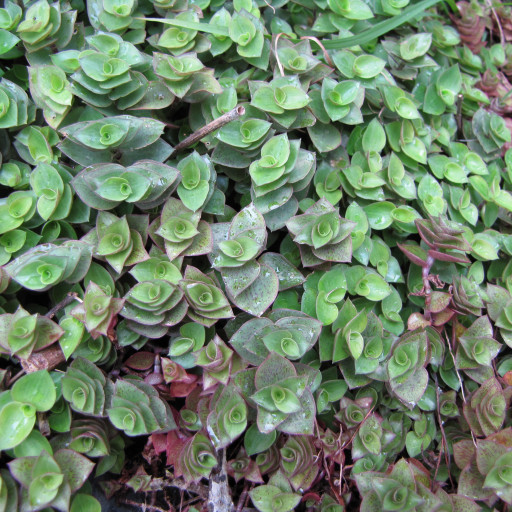
Plant Overview
Known as the "Turtle Vine" or "Creeping Inchplant," this charming succulent-like trailer is a favorite for those who love "miniature" aesthetics. Native to Central and South America, it creates a dense, cascading rug of foliage that looks like a waterfall of tiny coins pouring out of a hanging basket. It is beloved for its rapid growth and its ability to transform a plain shelf into a lush, purple-tinted jungle in just one season.
🔍 How to Identify
- 🍃 Leaf Structure: Teeny-tiny, heart-shaped, fleshy leaves that grow in a tight, alternating pattern along thin, succulent stems.
- 🎨 Color Contrast: The top of the foliage is typically a bright olive or waxy green, while the undersides feature a striking deep purple or burgundy hue.
- 📏 Growth Habit: A vigorous "creeper" that forms thick mats; the stems are quite brittle and will snap easily, a natural tactic the plant uses to spread and root elsewhere.
🏡 In Your Garden
- ☀️ Light Logic: To keep those iconic purple undersides vibrant and the leaves packed tightly together, it needs plenty of bright, indirect light. In low light, the plant becomes "leggy," stretching its stems and losing its bushy charm.
- 💧 Watering Wisdom: Because it has semi-succulent leaves, it stores its own moisture. It prefers to dry out significantly between waterings; sitting in soggy soil will quickly lead to "melting" stems and root rot.
- ✂️ Pinching for Fullness: To prevent the top of the pot from going bald as the stems trail downward, regularly "pinch back" the growing tips. This forces the plant to branch out from the base, keeping the crown thick and healthy.
⚠️ Safety & Toxicity
- 🐾 Pet Warning: This plant is considered mildly toxic to cats and dogs. It can cause "Contact Dermatitis," meaning your pet might develop a red, itchy rash just by brushing against the foliage.
- 👄 Ingestion: If chewed, the calcium oxalate crystals in the leaves can cause minor mouth irritation or stomach upset. It is best kept in a hanging planter out of reach of curious paws.
✨ Fun Fact
- 🐢 The Edible Name: Its common name "Turtle Vine" isn't just a nickname based on its looks—it is actually a highly nutritious supplemental food source for pet turtles, tortoises, and bearded dragons! If you own a reptile, this plant is often grown specifically as a "snack bar" for them.

Detailed Care Instructions
| Humidity | Normal |
| Lighting | Shade |
| Soil Type | Moist |
| Bloom Time | Late Spring - Early Fall |
| Difficulty | Medium |
| Plant Type | Angiosperm (Flowering Seed) |
| Hibernation | Cold Period |
| Mature Size | Up To 11 In. In Height And 3 Ft. Spread |
| Native Area | Central And South America |
| Temperature | 18°C - 25°C |
| Sun Exposure | Indirect Sunlight |
| Hardiness Zones | 9A - 11B |
To grow Callisia Repens, also known as Turtle Vine or Inch Plant, you can follow these steps:
- Start with a healthy cutting or small plant from a garden center or nursery. Ensure that the cutting has 3-4 nodes (joints) on the stem.
- Choose a suitable pot or container with drainage holes at the bottom. Fill it with well-draining potting soil or a mix of peat moss and perlite.
- Make a hole in the soil and gently place the cutting into it, ensuring that at least one node is covered. Press the soil lightly around the stem to hold it in place.
- Water the plant thoroughly after planting. It is important to keep the soil consistently moist, but not waterlogged. Allow the top inch of soil to dry out between watering to prevent root rot.
- Place the pot in a location that receives bright, indirect sunlight. Callisia Repens can tolerate some shade, but it prefers filtered light.
- Maintain temperatures between 60-85°F (15-29°C) for optimal growth.
- Fertilize the plant every 2-4 weeks during the growing season (spring and summer) with a balanced houseplant fertilizer. Follow the instructions on the fertilizer package for correct dosage.
- To encourage bushy growth, prune the plant regularly by pinching off the tips of long stems. This will also help prevent leggy growth.
- Callisia Repens is a trailing plant that can be grown as a hanging plant or in a hanging basket. If desired, you can provide a trellis or support for the plant to climb.
- Repot the plant when it becomes root-bound, typically every 1-2 years. Use a slightly larger pot with fresh potting soil.
With proper care and maintenance, Callisia Repens can grow vigorously and cover large areas with its attractive trailing foliage.

Place in a bright room that is sun drenched almost all day. Or directly in a south-facing window.

Callisia Repens is a plant that requires regular watering to thrive and stay healthy. When watering, it is important to ensure that the soil remains moist but not saturated, as over-watering can lead to root rot and other issues.
To water Callisia Repens, start by selecting a well-draining potting soil and pot with drainage holes to promote healthy root growth and prevent excess water buildup. When watering, ensure that the potting soil has dried out to a depth of about 1 inch before watering again. You can test this by sticking your finger into the soil and feeling for moisture.
When watering, use room temperature water and pour directly onto the soil, avoiding getting water on the leaves as this can promote fungal growth. Water slowly and evenly until water emerges from the drainage holes at the bottom of the pot. Allow the plant to drain completely before returning it to its normal location.
In general, Callisia Repens should be watered about once per week, although this may vary depending on the temperature and humidity levels in your home. During hot, dry weather, you may need to water more frequently to ensure that the soil remains moist. Conversely, during cooler, more humid weather, you may be able to water less frequently.
In summary, watering Callisia Repens requires regular attention and care to ensure that the plant remains healthy and vibrant. By following these tips, you can help your plant thrive and enjoy its beauty for years to come.
To fertilize this plant, use a balanced liquid fertilizer once a month during the growing season. Dilute the fertilizer to half of the recommended strength and apply it to the soil around the plant. Water the plant thoroughly after fertilizing. Avoid over-fertilizing as it can cause the plant to become leggy and weak.
Callisia Repens prefers a well-draining soil that is rich in organic matter. The soil should have a pH level between 5.5 and 7, which is slightly acidic to neutral. It can grow in a variety of soil textures, from sand to loam, but it thrives in a soil that retains some moisture while also allowing excess water to drain away easily. A soil mix with peat moss, perlite, and vermiculite can be a good choice. One may also add compost or other organic materials to the soil to enhance its fertility and texture. It is important to avoid overwatering the plant, as this can lead to root rot and other problems with its growth and health.
To propagate this plant, you will need to take stem cuttings from a mature plant. Using a clean, sharp knife, cut a section of stem that is several inches long, making the cut just below a node (where a leaf was attached). Remove any leaves from the bottom half of the cutting. Dip the cut end in rooting hormone powder (optional). Plant the cutting in a pot filled with moist potting soil, burying it deep enough to cover the bare section of stem. Keep the soil moist and the cutting in bright, indirect sunlight. In a few weeks, you should see new growth and roots forming. Once the cutting has rooted and is growing well, you can transplant it into its own pot.
Common pests of the turtle vine include Scale insect, mealybugs, spider mites, fungus gnats. Make a habit of checking your turtle vine frequently for pests so that any infestations can be caught and managed early.








