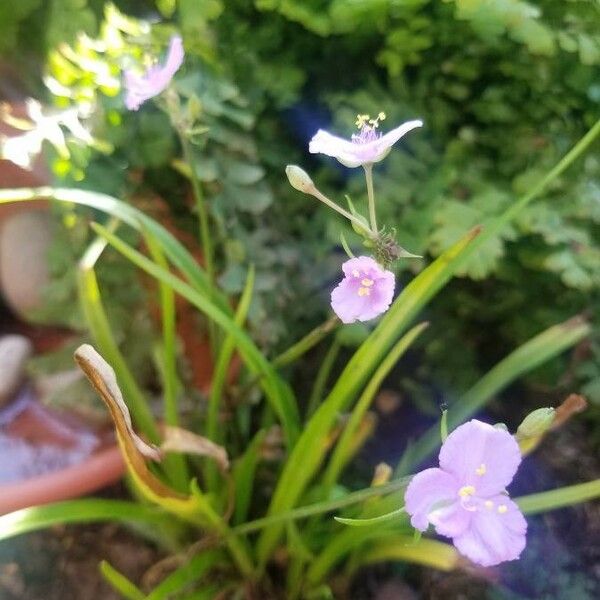
Plant Overview
Commonly known as the Rose Inch Plant or Pink Spiderwort, this delicate groundcover is a master of color and texture. While it belongs to the same family as the famous Tradescantia, it offers a more refined, succulent-like appearance that creates a lush, "shabby-chic" aesthetic in any home. In various cultures, plants in this family are often associated with resilience because they possess an incredible ability to "inch" their way across the soil, claiming new territory with ease.
🔍 How to Identify
- 🌸 The "Three-Petal" Bloom: It produces small, delicate flowers with three symmetrical petals, typically in shades of soft pink or rose-purple, appearing at the tips of the stems.
- 🍃 Fleshy Rosettes: The leaves are semi-succulent, lance-shaped, and arranged in tight, spiraling rosettes that give the plant a dense, geometric look.
- 🎨 Sun-Kissed Pigment: While the leaves start as a vibrant green, they often develop a beautiful reddish or purple underside, especially when grown in high-light conditions.
🏡 In Your Garden
- 🏜️ The Drainage Secret: Because of its fleshy, water-storing leaves, this plant is prone to "wet feet." It thrives best in a gritty, well-draining cactus mix rather than standard heavy potting soil.
- ☀️ Color Therapy: To maintain its compact shape and rosy hues, give it plenty of bright, indirect light. If kept in a dark corner, it will become "leggy," stretching its stems out and losing its vibrant color.
- ✂️ Self-Starting Nature: It is a champion of propagation. If a piece breaks off, you can simply tuck it back into the soil, and it will likely grow a new root system within a week without any special hormones.
⚠️ Safety & Toxicity
- 🐾 Mild Irritant: Like many members of the Commelinaceae family, the sap contains calcium oxalate crystals.
- 👅 Pet Warning: Keep it out of reach of cats and dogs; while rarely fatal, nibbling on the leaves can cause drooling, mouth irritation, or a mild skin rash.
✨ Fun Fact
The flowers of Callisia rosea are incredibly punctual! They usually open in the morning and wither by the late afternoon. This fleeting beauty has earned them the nickname "Dayflowers" in many regions, as each individual blossom lives for only a single day.

Detailed Care Instructions
Callisia Rosea, also known as Pink Lady or Pink Panther, is a relatively low-maintenance plant that can easily be grown indoors or outdoors. Here are some tips on how to grow and care for Callisia Rosea:
- Light: Callisia Rosea prefers bright, indirect light. It can also tolerate some direct sunlight, but be sure to protect it from harsh, intense sunlight.
- Watering: Water your Callisia Rosea once the top inch of soil feels dry. Be sure not to overwater, as this can lead to root rot. Allow excess water to drain out of the bottom of the pot to prevent waterlogged soil.
- Temperature: Callisia Rosea prefers temperatures between 65-75°F (18-24°C). Keep it away from drafty windows or doors as well as air conditioning or heating vents.
- Soil: Use a well-draining potting mix for your Callisia Rosea. You can also add perlite or sand to improve drainage.
- Humidity: Callisia Rosea prefers high humidity levels, so misting the plant regularly or placing it on a pebble tray filled with water can help increase humidity levels.
- Fertilizing: Fertilize your Callisia Rosea once a month during the growing season (spring and summer) with a balanced fertilizer diluted to half strength.
- Pruning: Trim back any leggy or overgrown stems to encourage bushier growth. You can also propagate new plants from the cuttings.
- Repotting: Repot your Callisia Rosea every 1-2 years or when it outgrows its current pot. Choose a slightly larger pot with fresh soil.
By following these tips, you can successfully grow and care for your Callisia Rosea plant. Enjoy its beautiful pink and green foliage and delicate flowers!

Place in a bright room that is sun drenched almost all day. Or directly in a south-facing window.

Callisia Rosea plants should be watered regularly to ensure they remain healthy and hydrated. When watering, be sure to thoroughly saturate the soil, allowing excess water to drain out through the bottom of the pot. It is important to water the plant at the base and avoid getting the leaves wet, as this can lead to mold or rot. Check the soil regularly to ensure it does not dry out completely between waterings, as this can stress the plant. Additionally, consider using distilled or filtered water to prevent the buildup of salts and minerals in the soil. Overall, provide consistent, moderate watering to keep your Callisia Rosea plant thriving.
Fertilize the plant with a balanced liquid fertilizer every two weeks during the growing season, following the instructions on the label for dilution and application. Make sure to water the plant thoroughly after fertilizing to prevent fertilizer burn. Reduce fertilization during the dormant winter months to allow the plant to rest.
Callisia Rosea plant prefers a well-draining potting mix that is rich in organic matter. A good soil mix for this plant should contain a combination of peat moss, perlite, and sand to promote good drainage while retaining enough moisture for the roots. Avoid using heavy or compacted soils that may cause water to pool at the roots, leading to root rot. It is also important to ensure that the soil pH is slightly acidic to neutral, as acidic soils can limit nutrient uptake in the plant. Amend the soil with organic matter like compost or aged manure to improve its fertility and overall health. Regularly check the moisture levels in the soil and water the plant when the top inch of soil feels dry to the touch.
Propagation of this plant can be done through stem cuttings. Start by selecting a healthy and mature stem from the mother plant. Use a sharp and clean pair of scissors or pruners to make a clean cut just below a node on the stem.
Remove any lower leaves from the stem cutting to prevent rotting and encourage root growth. Dip the cut end of the stem in a rooting hormone to promote faster root development.
Prepare a pot with well-draining soil mix, such as a combination of perlite and peat moss. Make a hole in the soil with a pencil or your finger, and gently insert the stem cutting into the hole.
Water the cutting thoroughly after planting, and place the pot in a location with indirect sunlight. Keep the soil consistently moist, but not waterlogged, to encourage root growth.
After a few weeks, new roots should start to develop, indicating that the cutting has successfully rooted. At this stage, you can transplant the new plant into a larger pot with regular potting soil and continue to care for it as you would with a mature plant.








