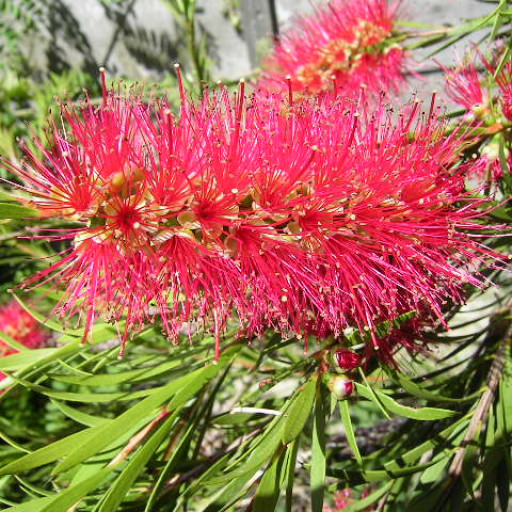
Plant Overview
The Callistemon Citrinus, famously known as the Crimson Bottlebrush, is an Australian icon that brings a burst of fiery energy to any landscape. Named for its stunning cylindrical flower spikes that look exactly like the brushes used to clean bottles, this hardy evergreen is a favorite for those wanting to attract a party of pollinators. Its narrow, leathery leaves release a refreshing, citrusy aroma when crushed, giving it its specific name, citrinus.
🔍 How to Identify
- 🔴 The "Brush" Bloom: Large, vibrant red flower spikes composed of hundreds of long, colorful stamens rather than traditional petals.
- 🍋 Aromatic Foliage: Pointed, lance-shaped green leaves that smell distinctly of lemon when bruised or broken.
- 🪵 Woody Seed Pods: Clusters of small, hard, cup-shaped grey-brown seed capsules that hug the woody stems and can stay attached for years.
🏡 In Your Garden
- ☀️ Sun Lover: To get those iconic red brushes, this plant demands full sun; in shade, it becomes leggy and the flowering will be sparse and disappointing.
- ✂️ Pruning Nuance: It responds beautifully to pruning right after the flowers fade. However, avoid cutting back into the very old, leafless wood, as it may struggle to produce new growth from the "dead" center.
- 🐝 Nature’s Buffet: It is an ecological powerhouse, acting as a magnet for hummingbirds, butterflies, and bees who find the nectar-rich stamens irresistible.
⚠️ Safety & Toxicity
- ✅ Status: Generally Non-Toxic.
- 🐾 Details: Unlike many ornamental shrubs, the Crimson Bottlebrush is considered safe for cats, dogs, and horses. While not intended for human consumption, it won't cause harm if a curious toddler touches the soft bristles.
✨ Fun Fact
The name Callistemon is derived from the Greek words kallos (beauty) and stemon (stamen), perfectly describing a plant where the "petals" are hidden and the reproductive stamens are the true stars of the show!

Detailed Care Instructions
| Lighting | Full Sun |
| Hardiness Zones | 8A - 11 |
To grow Callistemon citrinus (Crimson Bottlebrush), you can follow these steps:
- Climate and Location: Callistemon citrinus prefer a sunny location, so choose a spot in your garden that receives full sun, ideally with protection from strong winds. They can tolerate a range of soil conditions, but well-draining soil is ideal.
- Planting: Dig a hole twice the size of the root ball of the plant. Place the plant in the hole, making sure the top of the root ball is level with the soil surface. Backfill the hole with soil, pressing it down gently to remove any air pockets. Water thoroughly after planting.
- Watering: Water your Callistemon citrinus deeply but infrequently. Allow the soil to dry between watering sessions to prevent overwatering or waterlogging. Once established, they are somewhat drought-tolerant but will benefit from regular watering during dry periods.
- Fertilization: Apply a slow-release, balanced fertilizer during the growing season, following the manufacturer's instructions. This will provide the necessary nutrients for healthy growth.
- Pruning: Callistemon citrinus does not require heavy pruning but can be lightly pruned after flowering to promote bushier growth. Trim the tips of the branches to maintain the desired shape or remove any dead or damaged branches.
- Disease and pest control: Callistemon citrinus is generally disease and pest-resistant. However, keep an eye out for common garden pests like aphids or spider mites. If you notice any issues, you can use organic insecticides or soapy water to control them.
- Propagation: You can propagate Callistemon citrinus by collecting seeds from mature seed capsules. Soak the seeds in water for a few hours before planting them in a well-draining potting mix. Keep the soil moist until germination occurs.
Remember to regularly monitor your plant for signs of stress, and adjust watering and care accordingly. With proper care, your Callistemon citrinus should grow into a beautiful and vibrant plant.

Place in a bright room that is sun drenched almost all day. Or directly in a south-facing window.

To water this plant, gently pour room temperature water onto the soil around the base of the plant until the soil feels moist to the touch. Avoid getting water on the leaves or flowers as this can damage them. Water this plant regularly, ensuring that the soil remains consistently moist, but not saturated. Monitor the moisture level in the soil by touching it regularly and adjust watering frequency as needed. During periods of drought or hot weather, increase watering frequency to ensure that the plant remains healthy and well-hydrated.
- Choose a high-quality, slow-release fertilizer formulated for flowering plants.
- Apply the fertilizer in early spring, just as new growth begins, and again in midsummer.
- Follow the instructions on the fertilizer package carefully, as different brands may have varying application rates.
- Spread the fertilizer evenly around the base of the plant, avoiding getting any on the foliage.
- Water the plant thoroughly after applying the fertilizer to help it absorb the nutrients.
- Monitor the plant for signs of nutrient deficiencies, such as yellowing leaves, and adjust the fertilizing schedule or amount as needed.
The best soil to use with the plant in question is one that is well-draining and nutrient-rich. It should be loamy and have a slightly acidic pH level, between 5.5 and 6.5. The soil should also be able to retain moisture, yet not become waterlogged. To achieve this, it is recommended to mix the soil with organic materials such as compost, peat moss, or perlite to improve drainage. It is important to note that the plant is sensitive to salt, so the soil should not be too salty. Additionally, the plant prefers full sun to partial shade and requires regular watering to maintain healthy growth.
To propagate the plant, start by taking a cutting from a healthy, mature plant in the spring or summer. Use sharp, clean pruning shears to cut a stem that is approximately 4-6 inches long.
Remove any leaves from the bottom half of the stem and dip the cut end in rooting hormone powder.
Plant the cutting in a pot filled with a well-draining soil mix, making sure that the soil is moist but not waterlogged. Cover the pot with a plastic bag or place it in a propagator to create a humid environment.
Place the pot in a warm, bright location with indirect sunlight. Water the cutting regularly, making sure the soil stays evenly moist.
After a few weeks, the cutting should begin to develop roots. You can gently tug on the stem to check that it has taken root. Once the cutting has established roots, you can transplant it into a larger pot or into a well-prepared garden bed.
Common pests of the crimson bottlebrush include Scale insect, mealybugs, spider mites, aphids. Make a habit of checking your crimson bottlebrush frequently for pests so that any infestations can be caught and managed early.








