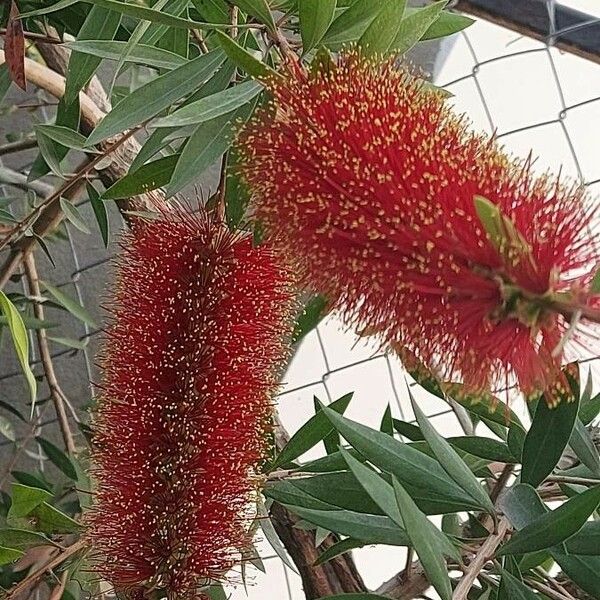
Plant Overview
Known as the Gold-tipped Bottlebrush, this Australian native is a botanical showstopper that looks like it has been dipped in glitter. It is a tropical standout that brings a fiery energy to any landscape, acting as a high-energy buffet for nectar-loving birds and butterflies. While many bottlebrushes look similar, the Polandii is prized for its distinctively large, "glowing" flower spikes.
🔍 How to Identify
- 🏮 Flower Brushes: It produces dense, cylindrical flower spikes that are deep crimson. The "gold" in its name comes from the bright yellow anthers at the tip of each filament, making the flowers look like they are sparkling.
- 🍃 Velvety Foliage: The leaves are broader and more lance-shaped than common bottlebrushes. When new leaves emerge, they have a beautiful bronze tint and are covered in fine, silky hairs.
- 🌳 Growth Habit: This is a hardy, woody shrub that can eventually reach the size of a small tree. It tends to have a slightly more open, spreading canopy compared to the denser hedge-style varieties.
🏡 In Your Garden
- ✂️ Pruning for Blooms: This plant can become "leggy" or thin if left to its own devices. The secret to a thick, flower-heavy shrub is to prune it back significantly right after the flowers fade—this forces the plant to double its branches for the next season.
- 🐦 The Honeyeater Effect: In its native habitat, this plant is a primary food source for birds. In a garden setting, it is one of the best tools for "rewilding" a space, as the nectar production is prolific enough to support several species of pollinators.
- 🧊 Frost Sensitivity: Unlike some of its mountain-dwelling cousins, Callistemon polandii is a northern Queensland native. It handles heat and humidity like a pro but will struggle or die back in areas with heavy, prolonged frost.
⚠️ Safety & Toxicity
- ✅ Non-Toxic: This plant is generally considered safe and non-toxic for dogs, cats, and horses. It is an excellent choice for family-friendly landscaping.
- 🐝 Sting Risk: Because the flowers are so rich in nectar, they are often swarming with bees. If you or a family member are allergic to bee stings, it is best to plant this away from high-traffic walkways or doorways.
✨ Fun Fact
The species was named after Frederick Poland, a 19th-century missionary and plant collector who spent years documenting the unique flora of the Cape York Peninsula in Australia.

Detailed Care Instructions








