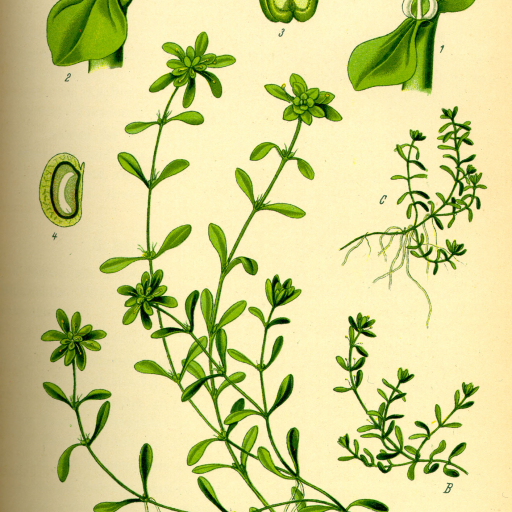
Plant Overview
Often called the "Vernal Water-starwort," this delicate aquatic herb transforms quiet ponds into a constellation of green. It is a master of adaptation, literally changing its physical form depending on how deep it is submerged. In folklore and old nature guides, these floating clusters were often described as the resting places for tiny forest spirits or water nymphs seeking a dry spot.
🔍 How to Identify
- 🌿 Floating Rosettes: At the water's surface, the leaves form a tight, star-shaped pattern that looks like a miniature green flower floating on the top.
- 💧 Leaf Dimorphism: This plant is a "shape-shifter." The submerged leaves are narrow and ribbon-like to resist currents, while the surface leaves are broader and oval to maximize sunlight.
- 🌸 Hidden Flowers: The flowers are incredibly tiny and lack petals; they are tucked away at the base of the leaves and are often so small they go unnoticed by the naked eye.
🏡 In Your Garden
- 🐢 The Habitat Hero: It is a fantastic "oxygenator" for backyard ponds. It helps keep the water clear and provides a perfect nursery for tadpoles, small fish, and beneficial aquatic insects.
- 🌱 Anchoring Needs: While it looks like a floater, it prefers to have its roots tucked into soft, silty mud or organic-rich substrate at the bottom of shallow water or along soggy banks.
- 🌡️ Cool Water Preference: It thrives in the spring (hence "Vernal") and may die back or struggle if the water temperature becomes too hot during mid-summer.
⚠️ Safety & Toxicity
- ✅ Safe Status: Callitriche palustris is generally considered non-toxic to humans, dogs, and cats. It is a safe addition to a family pond.
- 🦠 Wild Collection Caution: If you are "rescuing" this plant from a local stream for your home aquarium, be sure to rinse it thoroughly. The dense mats can harbor wild snails, leeches, or parasites that you might not want in your home tank.
✨ Fun Fact
The genus name Callitriche comes from the Greek words kallos (beautiful) and thrix (hair). This refers to the plant's fine, elegant stems that look like swaying tresses of hair when moved by a gentle underwater current.

Detailed Care Instructions
| Humidity | Dry |
| Lighting | Full Sun |
| Difficulty | Easy |
| Temperature | 14°C - 30°C |
| Hardiness Zones | 5 - 9 |
To successfully grow Callitriche palustris, also known as the water starwort or star-fruit, you will need to follow these steps:
- Choose an appropriate pond or water garden: Callitriche palustris prefers still or slow-moving, nutrient-rich water bodies like ponds or water gardens. Ensure that the water is clean, free from pollutants, and receives ample sunlight.
- Obtain suitable planting material: You can acquire Callitriche palustris plants from a local nursery specializing in aquatic plants or from online vendors. Alternatively, you can collect them from natural water bodies, but make sure it is legal to do so and always maintain biodiversity.
- Prepare the planting area: Clear the planting area of any debris or unwanted vegetation. Make sure there is a suitable substrate for the plant to anchor its roots. Ideally, the substrate should be rich in organic matter such as muddy soil or sand.
- Planting: Bury the Callitriche palustris plant's roots securely in the substrate or gently press it into the muddy soil/sand, allowing the foliage to float freely on the water surface. If you are planting in a container, ensure it has holes for water circulation.
- Water and light requirements: Ensure that the plant receives at least 4-6 hours of direct sunlight each day. This will promote healthy growth and photosynthesis. Ensure the water level is maintained at an appropriate depth; generally, it should not exceed 12 inches.
- Nutrient supply: Since Callitriche palustris prefers nutrient-rich water, consider adding aquatic plant fertilizers or organic matter such as compost to the water periodically. Avoid using excessive amounts of fertilizers, which can lead to algae growth or harm other aquatic organisms.
- Monitor water conditions: Monitor water temperature, pH levels, and oxygen levels regularly, as they can affect the health of the plant. Aim for a pH range between 6.5 and 8.5 and maintain proper oxygenation through the use of an air pump or other devices if necessary.
- Control pests and diseases: Check for any signs of pests or diseases on the plant regularly. Act promptly if you notice any issues, such as discolored or damaged foliage. Remove any infected or dead plant material to prevent the spread of disease.
- Pruning and maintenance: Regularly trim the excess foliage to prevent the plant from overgrowing and shading out other plants. Maintain water quality by removing excess algae or debris that can accumulate on the surface.
By following these guidelines, you should be able to grow Callitriche palustris successfully in your water garden or pond. Remember to always respect local regulations and maintain a sustainable approach to aquatic plant cultivation.

Place in a bright room that is sun drenched almost all day. Or directly in a south-facing window.

To water this particular plant species, it is recommended to provide a consistent supply of moisture to the soil. This can be achieved through frequent watering, ensuring that the soil remains evenly moist without becoming waterlogged. It is important to avoid letting the soil dry out completely between watering sessions, as this can lead to stress and damage to the plant. Additionally, it is important to avoid overhead watering, as this can lead to disease and fungal growth. Instead, water the plant directly at the soil level using a watering can or hose with a fine spray nozzle. Pay careful attention to the moisture needs of the plant during periods of hot weather or low humidity, as these conditions can increase the plant's water requirements. Finally, be sure to select a well-draining soil mix that is appropriate for this plant species, as this will help to prevent waterlogging and promote healthy root growth.
To fertilize this aquatic species, first dilute a liquid aquatic plant fertilizer in the desired concentration according to the product instructions. Second, apply the fertilizer to the water column or directly into the substrate where the plant is rooted. Finally, repeat the fertilization every other week during the growing season, being careful not to over-fertilize as this can harm the plant.
The Callitriche Palustris plant prefers soil that is moist and nutrient-rich. It thrives in soils that are well-draining and have a pH between 6.0 and 7.5. It is best to use a mixture of organic soil and sand or perlite to promote drainage and aeration in the soil. Additionally, the plant benefits from regular application of a balanced fertilizer to promote healthy growth and development. It is important to avoid overwatering the plant, as this can lead to root rot. Overall, providing the Callitriche Palustris plant with nutrient-rich, well-draining soil is essential to its growth and health.
To propagate this aquatic plant, you will need to gather healthy and mature specimens from its natural habitat or from a reliable source. Carefully remove the plant from the water, taking care not to damage the roots or foliage. Gently separate the plant into small sections, ensuring that each section has a healthy root system.
Plant the individual sections into a suitable substrate, such as coarse sand or gravel, in a shallow container filled with water. Ensure that the water level covers the roots but not the leaves. Place the container in a warm and bright area, but not under direct sunlight. Change the water every few days to ensure it remains clean and free from pollutants.
Over time, the plant will begin to develop new roots and start to spread, forming a beautiful aquatic garden. With proper care, this plant is easy to propagate and will thrive in a moist, sunny location.








