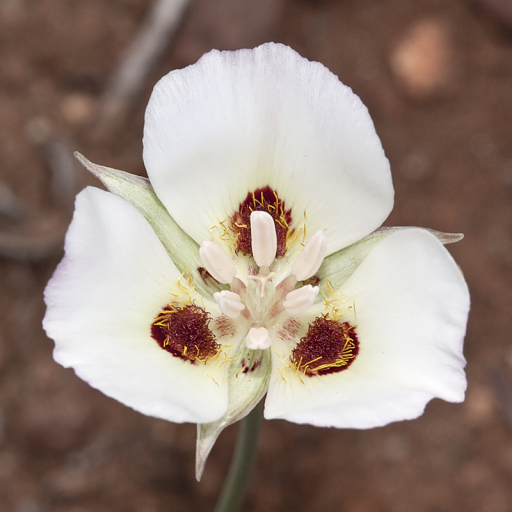
Plant Overview
Named the Dunn’s Mariposa Lily, this rare and delicate wildflower is a true "hidden gem" of the Southern California and Baja mountains. Its name, Mariposa, is the Spanish word for butterfly, a nod to how its petals flutter like wings in the coastal breeze. Because it is a highly specialized species, seeing one in the wild is considered a lucky event for hikers and botanists alike.
🔍 How to Identify
- 🌸 The Bloom: Features three elegant, bell-shaped petals that range from white to a soft, pale lavender or pink.
- 🎯 The "Eye" Spot: At the base of each petal, you’ll find a distinctive, dark maroon or purple crescent-shaped spot that guides pollinators inward.
- 🌿 The Foliage: The leaves are thin, grassy, and subtle, often beginning to wither just as the flower reaches its peak beauty to conserve energy.
🏡 In Your Garden
- ⛰️ Specialized Soil: This lily is a "specialist," meaning it rarely grows in standard potting soil. In the wild, it clings to gabbro or metavolcanic soils—stony, nutrient-poor ground that other plants find inhospitable.
- 💤 Summer Dormancy: Like many California bulbs, it disappears entirely during the hot summer months. It survives underground as a bulb, waiting for winter rains to wake it up, so it is extremely sensitive to "wet feet" or overwatering during its nap.
⚠️ Safety & Toxicity
- 🟢 Non-Toxic Status: There are no records of Calochortus dunnii being toxic to humans or common pets; in fact, many Mariposa Lily bulbs were historically used as a food source by Indigenous groups.
- 🛑 Legal Protection: Because this plant is rare and endangered, the biggest "safety" concern is for the plant itself. It is protected by law in many areas—picking the flowers or digging up the bulbs is strictly prohibited to prevent extinction.
✨ Fun Fact
Dunn’s Mariposa Lily is a "fire-follower" cousin. While it doesn't strictly require fire to sprout, it often puts on its most spectacular floral displays in the years immediately following a chaparral wildfire, as the ash provides nutrients and the cleared brush allows more sunlight to reach the soil.

Detailed Care Instructions
To grow Calochortus dunnii (Dunn's mariposa lily) plant, you can follow these steps:
- Climate and location: Check if the plant is suitable for your climate. Calochortus dunnii is native to California and prefers a Mediterranean climate with dry summers and mild, wet winters. Ensure it receives full sun or partial shade.
- Soil preparation: Prepare well-draining soil with a neutral to slightly acidic pH. Amend the soil with organic matter like compost to enrich it and improve drainage.
- Planting: Plant the bulbs in the fall, ideally in October or November, so they have a cold period before the growing season. Dig holes or trenches that are around twice the depth of the bulbs and around 6 inches apart. Place the bulbs in the holes with the pointed side facing upwards, and cover them with soil.
- Watering: Water the bulbs well after planting, and provide regular irrigation throughout the growing season. However, remember to avoid overwatering as it can lead to bulb rot. Allow the soil to dry out slightly between waterings.
- Mulching: Apply a layer of organic mulch, like straw or bark chips, around the plants to conserve moisture, suppress weed growth, and protect the bulbs during extreme temperatures.
- Fertilization: Apply a balanced, slow-release fertilizer once a year in the spring, when the plant emerges. Follow the instructions on the fertilizer package for proper dosage.
- Maintenance: Remove any weeds that compete with the plant for nutrients and water. If necessary, you can gently dig up and divide the bulbs after several years to prevent overcrowding.
- Protection: Protect the plant from pests like gophers and deer by using barriers or repellents if needed. Monitor for any signs of disease or pest infestation, and take appropriate measures to mitigate the issue.
- Harvesting seeds: If you want to grow Calochortus dunnii from seeds, you can harvest them after the flower has withered. Allow the seed capsules to dry on the plant, then gently remove them and collect the seeds.
Remember that Calochortus dunnii is a protected species in some areas, so it is essential to ensure you are growing it legally and responsibly.

Place in a bright room that is sun drenched almost all day. Or directly in a south-facing window.

Calochortus Dunnii plants are a type of flowering plant that require regular watering to stay healthy. To properly water this plant, you should first take note of the soil type. If the soil is dry to the touch, you should water the plant deeply, until the water is running out from the bottom of the pot or soil. However, if the soil is moist, it's best to wait a few days before watering again to avoid overwatering. It's also important to water this plant at the base, rather than over the leaves or flowers, as wet leaves and flowers can lead to rot and disease. Additionally, you should avoid getting water on the plant's stem, as this can also lead to rot. Finally, it's important to water this plant early in the day to help prevent evaporation and to allow the plant to dry before darker conditions arrive, which can lead to fungal growth.
To fertilize this plant, first ensure that the soil is moist. Then, use a balanced fertilizer with equal amounts of nitrogen, phosphorus, and potassium. Apply the fertilizer in a ring around the base of the plant, avoiding contact with the stem or leaves. Water the plant thoroughly after fertilizing. Repeat this process every 4-6 weeks during the growing season, typically in spring and summer.
Calochortus Dunnii plants prefer soil that is well-drained and moderately fertile. The ideal soil should be loamy with a pH level between 6.0 to 7.5. It is important to avoid soils that are too heavy or clay-like as they can retain too much water and lead to root rot. Sandy soils may also not be ideal as they don't hold enough moisture or nutrients for the plant to grow. Organic matter such as compost, leaf mold or aged manure can be added to improve soil structure and fertility. When planting, ensure that the soil is loose and crumbly to allow for good root development. It is also recommended to mulch around the plant to help retain moisture and control weeds.
- Collect seeds: One way to propagate Calochortus Dunnii is by collecting its seeds. Wait until the seed pods turn brown and gently shake the seeds into a container.
- Prepare soil: Choose a well-draining soil that is rich in organic matter. Calochortus Dunnii likes a slightly acidic soil, so add some peat moss or compost to adjust the pH if necessary. Mix the soil well and moisten it.
- Sow the seeds: Sprinkle the seeds on top of the soil and then cover them with a thin layer of soil. Pat down the soil gently to ensure good contact between the seeds and the soil.
- Water the seeds: Water the seeds gently using a watering can or spray bottle. Ensure that the soil stays moist but not soggy.
- Cover with plastic wrap: Cover the container with plastic wrap to create a mini-greenhouse and retain moisture. Place the container in a spot with bright, but indirect sun.
- Transplant seedlings: After two to three weeks, the seeds should germinate, and small seedlings will appear. Wait until the seedlings have grown two to three sets of true leaves before transplanting them into individual containers.
- Plant outside: Once the seedlings have grown, and the danger of frost has passed, you can plant them outside in your preferred location. Ensure that the soil is well-draining, and the area gets bright sun for most of the day.








