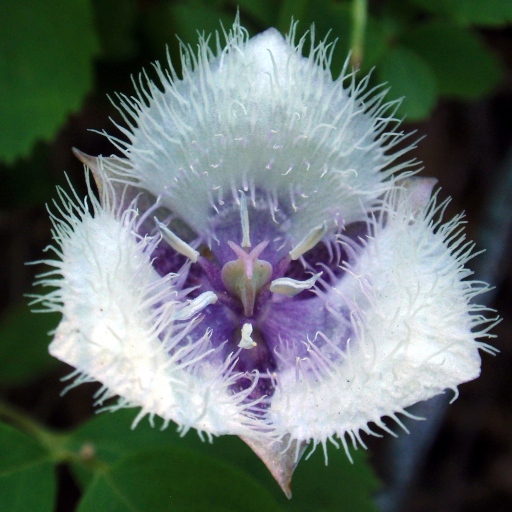
Plant Overview
Known affectionately as "Elegant Cat’s Ear," this tiny mountain gem looks like it stepped out of a miniature fairytale. Its petals are covered in soft, fuzzy hairs that invite a gentle touch, making it one of the most endearing wildflowers of the Western United States. Often found tucked away in subalpine meadows, it belongs to the Mariposa lily family and brings a touch of delicate whimsy to the rugged wilderness.
🔍 How to Identify
- 🐱 Petal Texture: The most striking feature is the three creamy-white to pale lilac petals, which are densely covered in long, soft hairs that look remarkably like the inside of a kitten's ear.
- 🍃 Single Leaf: Unlike many plants with lush foliage, the Elegant Cat's Ear typically produces just one long, grass-like leaf that often arches over the ground.
- 💜 The Gland: If you look closely at the base of each fuzzy petal, you’ll find a distinct, dark purple or greenish crescent-shaped gland that helps identify it from its lily cousins.
🏡 In Your Garden
- 🏔️ Alpine Aspirations: This plant is a specialist of high-altitude meadows and open forests. It requires very gritty, well-draining soil—think rocky scree or a dedicated rock garden—to prevent the bulb from rotting during the winter.
- 💤 Seasonal Disappearance: It is a "vernal" grower, meaning it finishes its life cycle early. Once the flower fades in late spring or early summer, the entire plant will wither away and go dormant underground to survive the heat.
⚠️ Safety & Toxicity
- ✅ Non-Toxic Status: There are no records of Calochortus elegans being toxic to humans. In fact, many Indigenous tribes historically harvested the small bulbs of various Calochortus species to be eaten raw, boiled, or roasted.
- 🐾 Pet Protection: While not considered dangerous, it is best to discourage pets from digging up the bulbs. Consuming large amounts of any wild bulb can lead to mild digestive upset in dogs or cats.
✨ Fun Fact
The genus name Calochortus is derived from the Greek words kalos, meaning "beautiful," and chortos, meaning "grass"—a perfect description for a plant that looks like a common blade of grass until it erupts into a stunning, fuzzy masterpiece.

Detailed Care Instructions
To grow Calochortus elegans, also known as Elegant Mariposa Lily, follow these steps:
- Choose the right location: Calochortus elegans thrives in full sun to partial shade. It prefers well-draining soil with good organic content.
- Prepare the soil: Ensure the soil is loose and well-draining by adding compost or well-rotted manure. This will provide necessary nutrients and improve moisture retention.
- Planting method: You can grow Calochortus elegans from bulbs or fresh seeds.
- Bulbs: Plant the bulbs in autumn, about 4-6 inches deep and 6-8 inches apart. Make sure the pointed end is facing upwards. Cover lightly with soil and water gently.
- Seeds: Collect fresh seeds after the flowering period. Scarify the seeds by nicking or rubbing lightly with sandpaper or using a small file. Soak the seeds in a bowl of water overnight to soften the hard seed coat. Sow the seeds in spring, pressing them lightly into the soil surface. Do not bury them deep; they need light to germinate. Water gently.
- Bulbs: Plant the bulbs in autumn, about 4-6 inches deep and 6-8 inches apart. Make sure the pointed end is facing upwards. Cover lightly with soil and water gently.
- Watering: Once planted, water the bulbs or seeds gently. Avoid over-watering, as soggy soil can cause rotting. Water sparingly during the dormant period in summer.
- Mulching: Apply a layer of organic mulch around the plants to conserve moisture, suppress weed growth, and regulate soil temperature.
- Fertilization: Calochortus elegans generally doesn't require much fertilization. However, if your soil is low in nutrients, you can apply a balanced, slow-release fertilizer during the growing season.
- Maintenance: Regularly remove weeds from the planting area to prevent competition with Calochortus elegans. Protect the plant from slugs and snails, as they can damage the foliage.
- Blooming and dormancy: Calochortus elegans typically blooms in late spring to early summer. After flowering, the plant goes dormant during the warm summer months. During this period, reduce watering and allow the foliage to wither naturally. Do not remove the dried foliage, as it helps the bulb store energy for next year's growth.
By following these steps, you should be able to successfully grow Calochortus elegans and enjoy its beautiful blooms.

Place in a bright room that is sun drenched almost all day. Or directly in a south-facing window.

To properly water this type of plant, it will require approximately an inch of water each week during its growing season. It should be watered deeply so that the soil remains moist but not soggy. It's important to feel the soil about an inch below the surface to ensure it's still moist before watering. In the winter months, the plant should be allowed to rest and it will require less frequent watering. It's crucial to avoid getting water on the leaves or flowers of the plant, as this may cause them to rot. It's best to water directly onto the soil around the plant.
Calochortus elegans should be fertilized in early spring before new growth appears and again after flowering has finished in late summer or early fall. Use a balanced fertilizer with a ratio that is equal parts nitrogen, phosphorus, and potassium. Apply the fertilizer around the base of the plant, making sure not to get any on the leaves or flowers. Water well after fertilizing to help the nutrients soak into the soil. Avoid over-fertilizing, as this can damage the plant and cause excess leaf growth at the expense of flower production.
Calochortus elegans plant needs a well-draining soil that is not too wet or too dry. A mix of sandy loam soil that contains organic matter, such as peat moss, is suitable. The pH should be slightly acidic, around 6.0-6.5. The plant prefers a fertile and nutrient-rich soil, so adding compost or fertilizer to the soil before planting can be beneficial. It is important to avoid using heavy, clay soils as this can cause waterlogging of the roots and potentially cause root rot. Additionally, the soil should not be compacted as this can hinder root growth and water absorption. Overall, the soil should be loose, airy, and have good drainage to ensure the Calochortus elegans plant thrives.
Calochortus Elegans can be propagated through various methods such as seed propagation, bulb division, and offsets. For seed propagation, harvest the seeds from the flowers once they have dried out. Sow the seeds in well-draining soil and water regularly. Germination typically occurs within two to three weeks. To propagate through bulb division, dig up the bulbs and separate them into smaller sections, ensuring each section has roots and shoots. Replant the sections in well-draining soil, and water regularly. For offsets, wait until the plant has produced small bulbils, then gently remove them and plant them in well-draining soil. Provide regular moisture until the new plants have established themselves.








