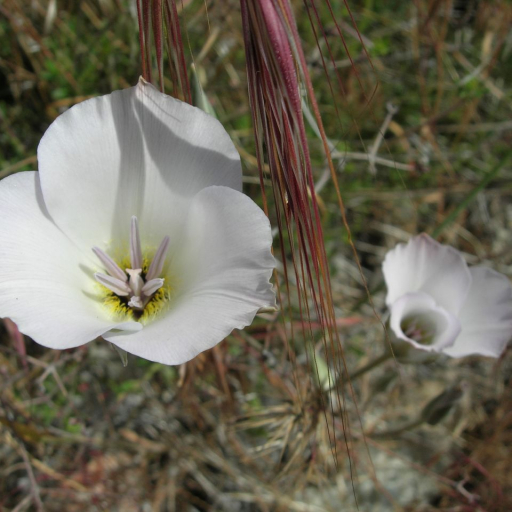
Plant Overview
Often called the Plain Mariposa Lily, this resilient wildflower is a native treasure of the high mountain ranges of California and Nevada. While its Latin name invenustus translates to "unlovely" or "unattractive," nature lovers find this to be a bit of a snub; the plant produces delicate, bell-shaped blooms that provide a splash of smoky lilac to the rugged Sierra Nevada landscape. It is a hardy survivor, thriving in the thin, rocky air of high-altitude pine forests.
🔍 How to Identify
- 🌸 The Petals: Look for three broad, fan-shaped petals that range in color from a pale, almost translucent white to a soft, smoky lavender or pinkish-purple.
- 👁️ The Nectary Gland: At the base of each petal, there is a distinct, square-shaped "spot" or gland covered in short hairs, often surrounded by a darker purple or yellowish smudge.
- 🌱 The Stem and Leaf: It typically grows on a slender, upright stem reaching about 4 to 20 inches, accompanied by a single, grass-like leaf that often begins to wither just as the flower opens.
🏡 In Your Garden
- 🏔️ High-Altitude Needs: This lily is a specialist of the "subalpine" zone. It is difficult to grow in humid or low-elevation coastal gardens because it craves the intense light and cold winters of the mountains.
- 🏜️ The Dry Cycle: In its natural habitat, the soil becomes bone-dry after the spring snowmelt. If you are cultivating it, you must stop watering entirely once the plant goes dormant in late summer to prevent the bulb from rotting.
- ⏳ Patience Required: Like many bulb-based wildflowers, it can take several years to reach flowering size from a seed, as it focuses most of its energy on building a nutrient-rich bulb underground.
⚠️ Safety & Toxicity
- 🟢 Non-Toxic Assessment: There are no records of Calochortus invenustus being highly toxic to humans or common household pets, though it is not considered an edible garden plant.
- 🐾 Wildlife Foraging: While the bulbs were historically used as a food source by some Indigenous groups (often roasted), the plant is vital for local pollinators and should never be foraged from the wild.
- 🛑 Conservation Note: Because they are slow-growing and site-specific, they are sensitive to habitat disruption. Always "take only pictures" when spotting them on a hike.
✨ Fun Fact
The botanist Edward Lee Greene gave the plant its "unlovely" name in 1888, likely because the dried herbarium specimens he was studying looked drab and shriveled compared to the vibrant, living flowers in the wild!

Detailed Care Instructions
To grow Calochortus Invenustus, also known as the butterfly mariposa lily, follow these steps:
- Climate: Determine if your climate is suitable for growing this plant. Calochortus Invenustus is native to California and prefers a Mediterranean climate with mild, wet winters and dry summers.
- Soil: Prepare well-draining soil that is slightly acidic to neutral. Sandy or loamy soil with good drainage is ideal.
- Planting time: Plant the bulbs in late summer or early fall, just before the rainy season begins. This will allow the bulbs to establish their roots before the growing season.
- Bulb planting: Dig holes about 4-6 inches deep and spaced about 6 inches apart. Place the bulbs with the pointed side facing up and gently cover them with soil. Avoid planting too deep, as this may hinder growth.
- Watering: After planting, water the area thoroughly. Keep the soil lightly moist during the rainy season or when it's actively growing. However, ensure that the soil drains well to prevent rotting.
- Sunlight: Calochortus Invenustus thrives in full sun or partial shade. Choose a location in your garden that receives at least 6-8 hours of direct sunlight each day.
- Mulching: Apply a layer of organic mulch around the plants to help conserve moisture, suppress weed growth, and moderate soil temperature.
- Care and Maintenance: During the growing season, it is important to provide regular water to encourage healthy growth and flowering. Once the plant has finished blooming, reduce watering gradually as it enters dormancy.
- Fertilizer: Generally, Calochortus Invenustus does not require heavy fertilization. However, you can apply a slow-release balanced fertilizer, following the manufacturer's instructions, during the growing season to support the plant's growth.
- Protection: Protect the plant from extreme cold, excess moisture, and strong winds, as it may negatively affect its health.
- Propagation: Calochortus Invenustus can be propagated by division in the fall. Dig up the bulbs, separate the smaller bulbs from the parent bulb, and replant them, ensuring they are adequately spaced.
- Enjoy the blooms: In spring or early summer, your efforts will be rewarded with beautiful, orchid-like flowers that attract pollinators like bees and butterflies to your garden.
By following these steps, you can successfully grow Calochortus Invenustus in your garden and enjoy its gorgeous blooms.

Place in a bright room that is sun drenched almost all day. Or directly in a south-facing window.

Calochortus Invenustus, commonly known as the butterfly mariposa lily or plain mariposa lily, is a beautiful flowering plant native to California and Baja California. Proper watering is essential for the healthy growth and development of this plant. Here are some guidelines on how to water Calochortus Invenustus:
1. Watering frequency: It is important to strike a balance between keeping the soil moist but not soggy. Watering should be done when the soil becomes dry to a depth of about 1-2 inches. However, the frequency may vary depending on factors such as climate, soil type, and pot size.
2. Watering method: Use a watering can or a hose with a gentle spray attachment to water the plant. This helps avoid excess water pressure that may harm the delicate roots. Water evenly across the soil surface.
3. Watering technique: Avoid excessive watering that leads to waterlogging, as it can cause root rot and other diseases. Instead, provide a deep watering session, ensuring that the water penetrates the root zone. This encourages the roots to grow deeper, resulting in a stronger and more resilient plant.
4. Soil moisture levels: After watering, check the moisture level in the soil by sticking your finger into the soil about an inch. If it feels moist, refrain from watering for a few more days. If it feels dry, it's time to water again.
5. Mulching: Applying a layer of organic mulch around the base of the plant helps retain soil moisture, reducing the frequency of watering. Additionally, mulch prevents weed growth and regulates soil temperature.
6. Rainwater utilization: If possible, use rainwater to water Calochortus Invenustus. Rainwater is naturally free from the chemicals often present in tap water and provides additional beneficial nutrients to the plant.
7. Seasonal variations: Adjust the watering routine according to seasonal changes. During the hotter summer months, the plant may require more frequent watering, while in cooler months, reduce the watering frequency.
Remember, it is always better to underwater than overwater Calochortus Invenustus. the plant prefers well-draining soil, so it is crucial to avoid waterlogged conditions. The above tips will ensure that the plant receives the appropriate amount of water for its optimal growth and blooming.
To fertilize Calochortus Invenustus plant, follow these instructions:
- Choose a balanced and water-soluble fertilizer with equal parts of nitrogen, phosphorus, and potassium (N-P-K ratio of 10-10-10 or similar).
- Dilute the fertilizer according to the package instructions. Typically, a tablespoon of fertilizer per gallon of water is recommended, but adjust accordingly based on the plant's size and the concentration of the fertilizer.
- Water the plant thoroughly before applying fertilizer. This helps prevent fertilizer burn and ensures the nutrients are evenly distributed.
- Pour the diluted fertilizer solution around the base of the plant. Avoid getting the fertilizer on the leaves or flowers, as it may cause damage.
- Repeat the fertilization process every 4-6 weeks throughout the growing season, starting in early spring and ending in late summer or early fall.
- Monitor the plant's response to the fertilizer. If the leaves become yellow, reduce the amount of fertilizer or frequency of application. If the plant shows signs of nutrient deficiency, increase the amount or frequency.
- Always follow the package instructions and recommended dosages, as too much fertilizer can harm the plant. Remember, less is often better than too much when it comes to fertilization.
Calochortus invenustus plants thrive in well-drained soil with a slightly acidic to neutral pH level. The ideal soil for these plants should be loamy or sandy, allowing water to drain easily and preventing the roots from sitting in waterlogged conditions. Too much moisture in the soil can cause root rot and hinder the plant's growth.
When it comes to moisture retention, the soil should have moderate water-holding capacity to provide ample hydration to the plant without saturating the roots. Incorporating organic matter such as compost or well-rotted manure into the soil can improve its water-holding capacity while also enhancing nutrient availability.
Maintaining good soil fertility is essential for the Calochortus invenustus plant's overall health and vigor. Adding balanced, slow-release fertilizers to the soil can provide the necessary nutrients for optimal growth. These fertilizers typically contain macronutrients like nitrogen (N), phosphorus (P), and potassium (K), along with micronutrients such as iron, magnesium, and zinc.
It is worth noting that these plants are native to regions with Mediterranean climates, experiencing hot, dry summers and cool, wet winters. Hence, the soil should have good drainage to prevent waterlogging during the winter months when rainfall is higher.
Regularly monitoring the moisture level of the soil is crucial. Avoid overwatering, as it can lead to root rot, which is detrimental to the plant's survival. It is generally recommended to water when the top inch or so of soil feels dry.
In summary, Calochortus invenustus plants prefer well-drained, slightly acidic to neutral soil with moderate water-holding capacity and good nutrient availability. Regularly incorporating organic matter and monitoring moisture levels can help promote proper growth and longevity for these plants.
Calochortus invenustus, commonly referred to as a specific plant species, can be propagated using various methods. Here is a detailed explanation of how to propagate this plant without mentioning its common names:
- Obtaining seeds: Start the propagation process by obtaining viable seeds of Calochortus invenustus. Seeds can be collected from mature plants or purchased from a reputable seed supplier.
- Seed preparation: To improve germination rates, it is recommended to provide a period of cold stratification for the seeds. Place them in a moist paper towel or a dampened medium such as vermiculite and refrigerate for 4-6 weeks.
- Soil preparation: Prepare a well-draining soil mixture for sowing the seeds. A mix of equal parts peat moss, perlite, and sterile potting soil can provide suitable conditions.
- Sowing seeds: Fill small pots or seed trays with the prepared soil mixture. Sow the seeds on the surface, gently pressing them into the soil without burying them. Keep the seeds evenly spaced to allow room for growth.
- Moisture and temperature: After sowing, thoroughly water the pots or trays. Maintain consistent moisture levels without over-watering, as excessive moisture can lead to fungal diseases. Place the containers in a warm location where temperatures range between 60-70°F (15-21°C).
- Light requirements: Calochortus invenustus seeds require light for germination. Position the pots or trays in a location that receives indirect sunlight or provide supplemental light with the help of grow lights.
- Germination and seedling care: Germination typically occurs within 2-4 weeks. Once the seedlings emerge, ensure they receive sufficient light, water, and humidity. Protect them from extreme temperatures and frost.
- Transplanting: After the seedlings have developed a few sets of true leaves and are large enough to handle, they can be transplanted into individual pots or a prepared garden bed. Make sure to harden off the seedlings by gradually exposing them to outdoor conditions before transplanting.
- Continued care: Calochortus invenustus prefers a sunny location with well-draining soil. Provide regular watering, but avoid waterlogging. Apply a balanced fertilizer during the growing season to promote healthy growth.
It is important to note that propagation success can vary, and it may be beneficial to research specific techniques for the Calochortus invenustus plant species to maximize your chances of success.








