Plant Overview
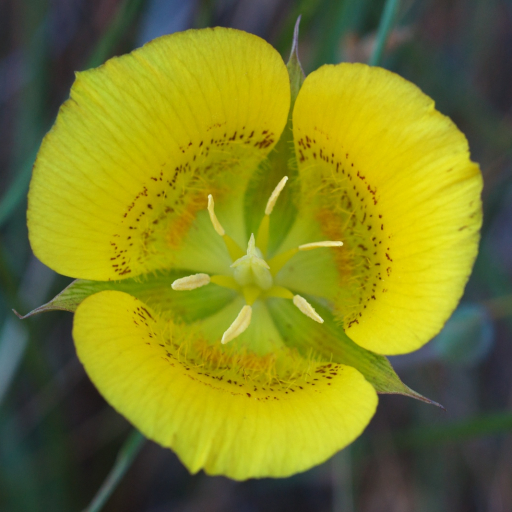
Known as the Yellow Mariposa Lily, this California native is a true "butterfly of the grasslands." The name Mariposa is Spanish for butterfly, a nod to the way these bright, delicate blooms seem to hover above the drying grasses of late spring. While it looks fragile, this wildflower is a hardy survivor, perfectly adapted to the rugged cycle of Mediterranean climates.
🔍 How to Identify
- 🌼 The Bloom: Look for three large, fan-shaped petals of a brilliant lemon-yellow. Most specimens feature a striking deep-purple or mahogany "eye" or series of spots near the base of the petals.
- 🧶 Internal Fuzz: If you peek inside the cup of the flower, you’ll notice fine, intricate hairs (trichomes) near the base, which help guide pollinators toward the nectar.
- 🍃 The Foliage: The leaves are slender, grass-like, and often solitary. By the time the flower reaches full bloom, the leaves may already be starting to wither as the plant shifts its energy to the flower.
🏡 In Your Garden
- 💤 Summer Dormancy: This plant operates on a "wet winter, dry summer" clock. Once the flowering is over, the bulb goes completely dormant. It is vital to stop watering during this period; summer moisture is the quickest way to rot the bulb.
- ⛰️ Soil & Drainage: Unlike many garden favorites, the Yellow Mariposa Lily actually thrives in heavy clay soils, provided they are on a slope or in a spot that doesn't hold standing water. It loves being baked by the sun in a rocky, open meadow setting.
⚠️ Safety & Toxicity
- ✅ Status: Generally non-toxic.
- 🐾 Details: There are no known toxic effects for cats, dogs, or horses. Historically, the small, starchy bulbs were harvested and eaten by indigenous Californian tribes, often roasted like potatoes. However, in a modern garden context, they should be treated as ornamental rather than edible to avoid accidental ingestion of garden chemicals.
✨ Fun Fact
The bulbs of the Calochortus genus are incredibly patient; they can remain dormant underground for several years during severe droughts, waiting for the perfect sequence of winter rains before finally sending up a flower.

Detailed Care Instructions

Place in a bright room that is sun drenched almost all day. Or directly in a south-facing window.

Some plants require more regular watering than others, which should be done every few days. It's critical to maintain the soil moist all of the time. The water requirements of the same plant placed in pots with varying sizes will differ. Because the water in the smaller pot evaporates faster than the water in the larger pot, it will require more watering. Regardless of pot size, the surface should constantly be maintained moist.








