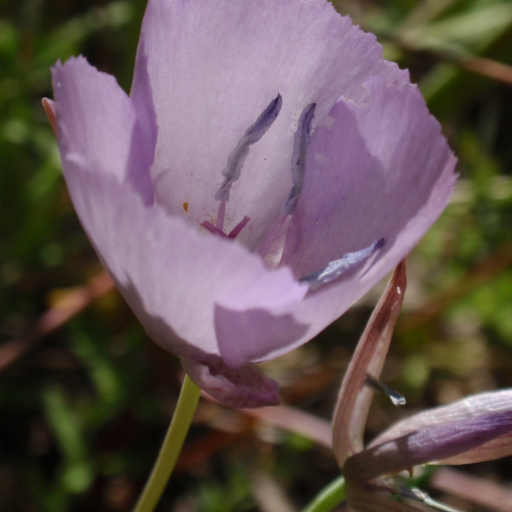
Plant Overview
Often called the Naked Mariposa Lily, this delicate wildflower is a hidden gem of the high-altitude meadows in the Sierra Nevada and southern Cascade ranges. While its cousins are known for being fuzzy or "hairy," this species earns its name from its smooth, hairless petals. It is a graceful representative of the California mountains, often appearing like a tiny, pale butterfly resting among the damp grasses of a spring meadow.
🔍 How to Identify
- 🌸 The Petals: Look for three fan-shaped petals that range from pure white to a soft, pale lavender. Unlike many other Mariposa lilies, the inner surface is smooth and "naked," lacking the dense fringe of hairs typical of the genus.
- 🍃 Solitary Leaf: Each plant typically produces just one long, narrow, grass-like leaf that grows from the base and often begins to wither by the time the flowers bloom.
- 💜 The Nectary: At the base of each petal, you’ll find a small, dark purple or reddish crescent-shaped gland, which acts as a bullseye for specialized pollinators.
🏡 In Your Garden
- 💧 Moisture Mimicry: In the wild, this plant thrives in "vernal" conditions—wet meadows that are soggy in the spring but dry out in the summer. If you are lucky enough to grow it, ensure it has plenty of water during its growth phase but stays relatively dry once it goes dormant.
- 🏔️ High Altitude Specialist: This isn't a typical "set and forget" garden plant. It prefers the cool nights and distinct seasonal shifts of montane environments. It struggles in humid, low-elevation heat where the soil doesn't mimic its native rocky, organic-rich mountain home.
⚠️ Safety & Toxicity
- 🟢 Safe Assessment: Calochortus nudus is generally considered non-toxic to humans and pets. In fact, many Indigenous tribes historically used the bulbs of various Calochortus species as a food source (roasted or boiled).
- 🛑 Wild Sensitivity: While safe to touch, these plants are ecologically sensitive. Because they grow from deep bulbs and have a slow reproductive cycle, they should never be foraged or dug up from the wild. Enjoy them with your camera, not your shovel!
✨ Fun Fact
The genus name Calochortus is derived from Greek words meaning "Beautiful Grass." Even when not in bloom, the slender, swaying stems blend so perfectly with meadow grasses that the flowers seem to float in mid-air when they finally open.

Detailed Care Instructions
To grow Calochortus nudus, also known as the naked mariposa lily or yellow mariposa, you can follow these steps:
- Planting: Obtain Calochortus nudus bulbs or seeds from a reputable nursery or online source. Plant bulbs in well-draining soil in the fall, preferably in an area with full sun or partial shade. Place the bulbs about 2-4 inches deep, with the pointed end facing upwards. If using seeds, follow the specific instructions provided by the source.
- Soil and Watering: Calochortus nudus prefers well-draining soil. Ensure the soil is not waterlogged as it can cause the bulbs to rot. Water the plant regularly during its active growing period, keeping the soil slightly moist but not overly saturated. During the dormant season, reduce watering.
- Temperature and Climate: Calochortus nudus is native to California and is adapted to Mediterranean climates. It prefers mild temperatures, typically between 60-80°F (15-27°C) during the growing season. In colder regions, protect the bulbs during winter by covering them with mulch or transporting containers indoors.
- Fertilizer: Calochortus nudus doesn't usually require excessive fertilization. However, you can apply a balanced, slow-release fertilizer in early spring as new growth emerges. Follow the instructions on the fertilizer packaging for application rates.
- Mulching: Apply a layer of organic mulch, such as dried leaves or wood chips, around the planted area. This helps retain moisture, suppress weeds, and keep the soil temperature stable.
- Pests and Diseases: Calochortus nudus is relatively resistant to pests and diseases. However, you may need to watch out for slugs and snails, especially during the new growth stage. Use organic pest control methods if necessary.
- Propagation: Once established, Calochortus nudus may produce offsets or small bulbs around the main bulb. These can be carefully separated and replanted to propagate new plants. Allow the offset bulbs to develop fully before separation.
- Pruning: After the plant blooms and the flowers wither, allow the foliage to naturally die back. This ensures the nutrients are stored in the bulbs for the next season's growth. Trim back the dead foliage only when it has completely yellowed.
With proper care and attention, Calochortus nudus should thrive and produce beautiful flowers year after year.

Place in a bright room that is sun drenched almost all day. Or directly in a south-facing window.

To water this plant, first determine the type of soil it is planted in. If the soil is sandy or well-drained, it may need more frequent watering than if it is planted in heavier, clay-like soil.
The best time to water this plant is either in the early morning or late evening when temperatures are cooler and evaporation is lower. Avoid watering during the heat of the day.
When watering, aim to moisten the soil to a depth of about 6-8 inches. Allow the soil to dry out slightly before watering again, as over-watering can lead to root rot.
Use a watering can or hose with a gentle spray attachment to avoid damaging the plant or disturbing the soil. Be careful not to get water on the leaves or flowers, as this can encourage fungal growth and damage the delicate blooms.
During periods of drought or hot weather, this plant may require more frequent watering. It is also important to note that this plant is native to Mediterranean regions and may be adapted to drier conditions.
To fertilize this plant, first prepare the soil with a mixture of compost and a slow-release, balanced fertilizer. Apply the fertilizer during the active growth period, typically in the spring after the first leaves have appeared. Be careful not to over-fertilize, as this plant prefers a lean soil. Water the plant thoroughly after applying the fertilizer.
Calochortus Nudus plant requires a well-draining soil mix that is rich in organic matter. A soil pH of 6 to 7.5 is ideal for this plant. A good soil mix can be made by combining equal parts of sandy loam, peat moss, and perlite or vermiculite. The soil should be kept moist but not waterlogged, as excessive moisture can lead to root rot. It is important to ensure that the soil is free from any pathogens or weed seeds, as this can affect the growth of the plant. Adding a layer of mulch around the plant can help to retain moisture and suppress weed growth. The soil mix should be replenished with fresh compost or organic matter annually to ensure the continued health and growth of the plant.
To propagate this plant, start by collecting its seeds when the seed pods are dry and brown. Clean the seeds by removing any plant debris and allow them to dry for about a day.
Next, prepare a planting pot by filling it with well-draining soil. Plant the seeds about an inch deep into the soil and cover them lightly.
Water the soil thoroughly and place the pot in a sunny spot. Keep the soil moist but not waterlogged.
Germination should occur in about 2 to 4 weeks, after which the seedlings will start to grow. Once the seedlings have a few sets of leaves, they can be transplanted into their own pots.
When transplanting, be sure to use well-draining soil and provide plenty of sunlight. Keep the soil consistently moist but not waterlogged, and allow the plant to grow until it is large enough to be planted in the ground.








