Plant Overview
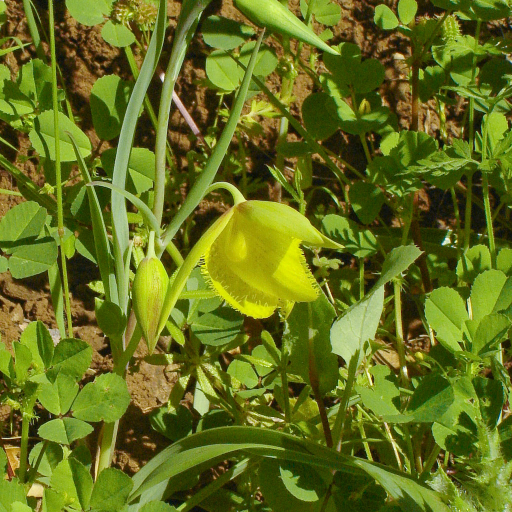
Known affectionately as the Mount Diablo Fairy Lantern, this rare California endemic looks like a golden ornament hanging from a woodland branch. It belongs to the Lily family and is celebrated for its shy, nodding blooms that seem to glow in the dappled light of oak woodlands. Unlike many of its cousins that reach for the sun, the Fairy Lantern keeps its secrets tucked inside its closed, globe-shaped flowers.
🔍 How to Identify
- 🌼 The "Lantern" Bloom: The flowers are deep lemon-yellow and spherical. Unlike typical lilies, the petals curve inward and touch at the tips, creating a hollow, lantern-like chamber.
- 🧶 Fringed Petals: If you were to peek inside the nodding flower, you would see that the inner margins are lined with delicate, golden hairs that give the bloom a fuzzy texture.
- 🌿 Sword-like Foliage: The plant produces a single, long, narrow basal leaf that can be over a foot long. It often looks like a stray blade of grass until the flower stalk emerges.
🏡 In Your Garden
- ⛰️ The Drainage Dilemma: These plants are adapted to rocky, shale-heavy slopes. They loathe "wet feet," especially during their dormant summer period. If planting in a garden, ensure the soil is extremely well-draining or plant them on a slope to mimic their natural hillside habitat.
- 💤 Summer Slumber: Once the flowers fade and the seeds set, the entire plant will wither and disappear. Do not be tempted to "revive" it with extra water; it is simply entering a necessary dormancy to survive the dry season. It will return from its bulb when the winter rains arrive.
⚠️ Safety & Toxicity
- 🐾 Low Risk: Calochortus pulchellus is generally considered non-toxic to humans and pets. However, the bulbs are sensitive and should not be consumed, as they can cause mild stomach upset if ingested in quantity.
- 🛡️ Conservation Status: Because this plant is rare and endemic to a small geographic area, it is protected in many regions. Never harvest this plant from the wild; only purchase bulbs from reputable, licensed native plant nurseries.
✨ Fun Fact
The name Calochortus is derived from Greek words meaning "beautiful grass." While it is a true lily, its long, thin leaves so closely resemble grass that hikers often step right over them until the spectacular yellow globes appear in late spring!

Detailed Care Instructions

Place in a bright room that is sun drenched almost all day. Or directly in a south-facing window.

To water this plant, you should first take note of the soil moisture level and the environmental conditions. If the soil feels dry to the touch, and the plant is in a hot and dry environment, it may require watering. Use a watering can or hose to gently water the plant at its base, making sure not to get water on the foliage or flowers. Be careful not to overwater, as this can lead to root rot. It is best to water deeply and infrequently rather than in small amounts frequently. In addition, this plant prefers well-draining soil to prevent waterlogging, so make sure to plant it in an appropriate location.
The Calochortus Pulchellus plant requires well-draining soil with good soil structure. It prefers a soil pH that is slightly acidic to neutral. This plant will thrive in soils that are rich in organic matter and have good moisture retention, but it cannot tolerate waterlogged soils. Adding coarse sand or small rocks to the soil can help improve drainage. It is important to avoid using soil that is heavy in clay or that has poor drainage since this will cause root rot and reduce the health of the plant.







