Plant Overview
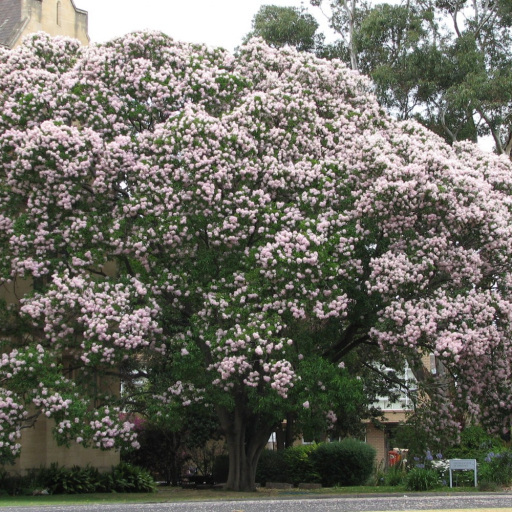
Often called the "Jewel of the Forest," the Cape Chestnut is one of Africa’s most spectacular flowering trees. Despite its name, it isn’t a true chestnut; it actually belongs to the citrus family. When in full bloom, the entire canopy can disappear under a cloud of vibrant pink blossoms, making it a show-stopping centerpiece for large gardens and parks.
🔍 How to Identify
- 🌸 The Blooms: Large, star-shaped flowers that range from pale blush to orchid-purple. Each of the five petals is delicately "painted" with tiny crimson or maroon speckles.
- 🍃 Aromatic Foliage: The leaves are large, elliptic, and dark green. If you hold a leaf up to the light, you can see tiny translucent oil glands—a signature of the citrus family—that release a faint scent when crushed.
- 🌰 Warty Seed Pods: The fruit is a hard, woody, five-lobed capsule with a bumpy, "warty" texture. When mature, these pods explode open to scatter smooth, jet-black seeds.
🏡 In Your Garden
- ⏳ Patience is Key: The Cape Chestnut is a slow grower in its youth and may take several years before it produces its first floral display. It is a tree for the patient gardener who wants to leave a legacy.
- 🛡️ Shelter and Space: While it is relatively hardy once established, young trees are sensitive to heavy frost and salt spray. Because of its wide, spreading canopy and non-invasive root system, it’s perfect for providing deep shade, but it needs plenty of room to stretch.
⚠️ Safety & Toxicity
- ✅ Safe Profile: The Cape Chestnut is generally considered non-toxic to humans, dogs, and cats. It is frequently planted in public parks due to its safety and beauty.
- 🦶 Physical Hazard: The primary "danger" is the fallen seed pods. They are extremely hard and woody; stepping on one with bare feet can be painful, and they can be a tripping hazard on paved walkways.
✨ Fun Fact
The explorer William Burchell named the tree "Chestnut" simply because the prickly green fruit reminded him of the Spanish Chestnuts he knew from Europe. In reality, it is much more closely related to an orange tree than a nut tree!

Detailed Care Instructions
| Humidity | Normal |
| Lighting | Full Sun |
| Difficulty | Easy |
| Hibernation | Cold Period |
| Temperature | 18°C - 30°C |
| Hardiness Zones | 9 - 11 |
To grow Calodendrum Capense plant, follow these steps:
- Choose a suitable location: Calodendrum Capense prefers full sun or partial shade. Select a well-draining spot in your garden that receives at least 6-8 hours of sunlight per day.
- Prepare the soil: The plant thrives in fertile, loamy soil. Amend the soil with organic matter, such as compost, to improve its quality and drainage. Ensure the soil is not waterlogged as it can cause root rot.
- Planting: Dig a hole twice as wide and slightly deeper than the root ball of the plant. Gently remove the plant from its container and place it in the hole. Backfill the hole with soil, ensuring that the crown of the plant is level with the ground. Tamp down the soil around the plant to eliminate any air pockets.
- Watering: Give the newly planted Calodendrum Capense a good soak immediately after planting to help settle the soil. Afterward, water the plant deeply once or twice a week, especially during dry spells. Avoid overwatering as it can lead to root rot.
- Mulching: Apply a layer of organic mulch, such as wood chips or bark, around the base of the plant. This helps conserve moisture, suppress weeds, and maintain a more even soil temperature.
- Pruning: Prune the plant during its dormant season, typically in late winter or early spring. Remove any dead or damaged branches, as well as any crossing or crowded branches to improve air circulation and overall plant health.
- Fertilizing: Apply a balanced, slow-release fertilizer in spring to provide the plant with essential nutrients. Follow the package instructions for proper application amounts.
- Protection: If you live in an area with frost or freezing temperatures, protect the plant by covering it with a frost blanket or moving it indoors during extreme weather.
- Pest and disease control: Monitor the plant regularly for any signs of pests or diseases. Common problems include aphids, mealybugs, and powdery mildew. Use appropriate organic or chemical-based treatments to control the issue if required.
- Enjoy: Calodendrum Capense produces vibrant, fragrant flowers that attract pollinators. Enjoy the beautiful blooms and the unique foliage of this stunning plant.
Remember to consult local gardening resources or experts for specific guidance tailored to your region's climate and conditions.

Place in a bright room that is sun drenched almost all day. Or directly in a south-facing window.

To water this plant, fill a watering can with room temperature water and slowly pour the water onto the soil around the base of the plant. Avoid getting water on the leaves or flowers as this can lead to fungal diseases. Allow the soil to dry out slightly between waterings, but do not let it completely dry out. During the growing season, typically spring to fall, the plant may require more frequent watering than during the dormant season. It is important to provide good drainage to prevent the roots from sitting in water, which can lead to root rot.
To successfully fertilize this plant, it is recommended to use a slow-release fertilizer with a balanced ratio of nitrogen, phosphorus, and potassium. Apply the fertilizer once in the spring and once in the fall, following the instructions on the label. Avoid over-fertilizing as it can damage the roots and foliage. Always water the plant thoroughly after fertilizing to ensure the nutrients reach the roots.
Calodendrum capense is a plant that requires a specific type of soil to thrive. The soil should be well-drained and loamy, with a pH range between 6.0 and 7.0. It should be packed with nutrients, such as ammonium, nitrate, phosphate, and potassium. The soil should also have a high level of organic matter to support the plant's growth and development.
It is recommended that you use a soil mix that is specifically designed for flowering trees and shrubs. The mix should consist of a blend of high-quality organic materials, such as compost, peat moss, and perlite. These ingredients will ensure that the soil is well-aerated, sufficiently moist, and nutrient-rich.
The soil should be prepared before planting by removing any debris and adding a layer of organic matter to the surface. It is also important to ensure that the soil is not excessively compacted, which can impede water and nutrient uptake by the plant's roots.
Proper soil preparation is crucial to the successful growth and development of Calodendrum capense. Using the right soil mix will help to ensure that the plant receives the nutrients and moisture it needs to thrive, and will help to prevent stress and disease.
Calodendrum Capense is a plant that can be propagated through various methods. One of the most common ways is through stem cuttings. To do this, select a healthy stem and cut a piece of it around 6 inches long. Remove any leaves from the lower half of the stem and dip the cut end into rooting hormone powder. Plant the stem into a pot filled with well-draining soil and keep it moist. Place the pot in a warm, bright location and wait for roots to develop.
Another way to propagate Calodendrum Capense is through layering. This involves bending a branch down towards the ground and covering it with soil, leaving the tip exposed. Over time, new roots will develop along the covered section of the branch. Once the roots have developed, the branch can be cut from the parent plant and transplanted.
Lastly, Calodendrum Capense can also be propagated through seeds. Collect the seeds from the plant and sow them in well-draining soil. Keep the soil moist and place the pot in a bright location. The seeds should germinate within a few weeks and can be transplanted once they have grown a few inches tall.








